Farewell to Keigo Higashino: Revisiting Colorectal Cancer and Common Clinical Assessment Tools

Source: EClinCloud. Author: EClinCloud.
Renowned Japanese author Keigo Higashino passed away from colorectal cancer on the 23rd local time at the age of 68.
As one of Asia's most influential writers, Keigo Higashino wrote numerous classic works, including "Journey Under the Midnight Sun," "The Devotion of Suspect X," and "The Miracles of the Namiya General Store." Translated into dozens of languages, his works have accompanied countless readers and shaped the reading memories of a generation.
As news of his passing spread, countless readers mourning this master of mystery fiction also seriously asked for the first time: What exactly is colorectal cancer?
Keigo Higashino (File photo)
1
What Is Colorectal Cancer?
Colorectal cancer (CRC) is a malignant tumor originating in the colorectal mucosal epithelium and is one of the most common malignant tumors in clinical practice[1]. Also known as large bowel cancer, it includes colon cancer and rectal cancer.
Globally, it ranks third in cancer incidence and second in cancer mortality. In China, it is the second most common cancer after lung cancer. According to data released by the National Cancer Center in 2024, there were 517,100 new colorectal cancer cases in China in 2022, accounting for 10.7% of all new malignant tumor cases[2].
Clinically, approximately 90% of colorectal cancers develop from the malignant transformation of adenomatous polyps; progressing from normal mucosa to a polyp and then to cancer typically takes a long period of 5–10 years[3].
The progression from a polyp to colorectal cancer generally goes through 4 stages: small polyp → large polyp → dysplasia → colorectal cancer.
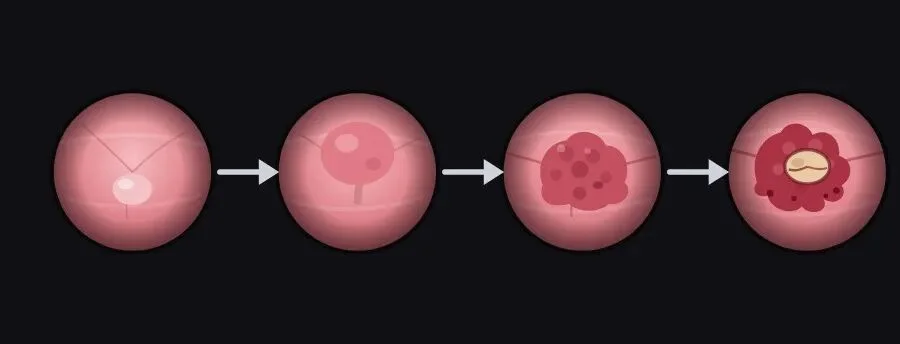 Image generated by AI for illustration purposes only
Notably, early-stage symptoms are insidious and often lack specificity, so many patients are already at an intermediate or advanced stage by the time they are diagnosed.
Age: Adults aged 40–74 (age 40 is a key milestone for screening)
Sex: Men have a higher incidence rate than women
Diet and lifestyle habits: Individuals with a high-fat, low-fiber diet, high intake of red or processed meat, obesity, or smoking and alcohol consumption
Family history: First-degree relatives with colorectal cancer
Hereditary syndromes: Patients with Lynch syndrome or familial adenomatous polyposis
Inflammatory bowel disease: Long-standing inflammatory bowel disease, ulcerative colitis, Crohn's disease, or other intestinal diseases
Early Screening Methods
Because colorectal cancer mostly develops from adenomatous polyps, early screening and intervention are regarded as one of the most effective "treatments."
Colonoscopy remains the "gold standard" for screening, as it allows direct detection and removal of precancerous lesions; non-invasive approaches such as fecal occult blood testing and stool DNA testing can also serve as supplementary screening methods.
The treatment of colorectal cancer emphasizes multidisciplinary team (MDT) management, integrating surgery, chemotherapy, radiotherapy, imaging assessment, pathological diagnosis, and other modalities; the MDT model can significantly improve the quality of diagnosis and treatment.
2
Selected Clinical Trial Information on Colorectal Cancer
As the incidence of colorectal cancer continues to rise, clinical research on new drugs and therapies is steadily advancing worldwide, bringing more treatment options to patients.
The following clinical trial information is from ClinicalTrials.gov, representing selected clinical studies retrieved using the search terms "colorectal cancer" and "completed".
Drug name: Encorafenib + Cetuximab
Sponsor: Pierre Fabre Medicament
Trial ID: NCT05004350
Dates: 2021.09–2023.12
Phase: Phase II
Scales used: EORTC QLQ-C30, EQ-5D-5L, PGIC
Drug name: FOLFIRI + Sunitinib
Sponsor: Pfizer
Trial ID: NCT00457691
Dates: 2007.06–2010.03
Phase: Phase III
Scales used: EQ-5D, VAS, QoL
Drug name: Primary Tumor Resection + Chemotherapy
Sponsor: Hospices Civils de Lyon
Trial ID: NCT02314182
Dates: 2014.11–2018.02
Phase: Phase III
Scales used: EORTC QLQ-C30, QLQ-CR29
Drug name: Trifluridine/tipiracil (TAS-102)
Sponsor: Servier
Trial ID: NCT03665506
Dates: 2018.06–2021.08
Phase: Observational study
Scales used: PRO-CTCAE, QoL
3
Clinical Endpoint Assessment in Colorectal Cancer
Objective Imaging Assessment
In colorectal cancer clinical trials, imaging assessment is an important method for evaluating efficacy. Using imaging examinations such as CT and MRI, study teams evaluate tumor changes according to criteria such as RECIST 1.1 to calculate key efficacy endpoints including objective response rate (ORR) and progression-free survival (PFS).[8-9]
Because imaging equipment, assessment criteria, and image readings may vary across multicenter studies, trials typically introduce an IRC in which independent experts perform image reads according to unified criteria to reduce assessment bias and improve the consistency and reliability of study data.[10-11]
Common Assessment Scales
In addition to objective endpoints, tools such as scales are needed to evaluate patient symptoms, quality of life, and related outcomes across multiple dimensions. As shown in the clinical trial summary above, scale selection often varies depending on study objectives. We have summarized information on commonly used scales.
Assessment method: Patient-reported outcome (PRO)
Main content: QLQ-C30 covers core items including 5 functional domains, 3 symptom categories, and global health status; QLQ-CR29, as its colorectal cancer supplementary module, specifically assesses domains such as bowel symptoms, urinary problems, and sexual function.
Assessment purpose: Comprehensively and specifically measures quality of life in patients with colorectal cancer during treatment, covering both general dimensions and disease-specific symptoms.
Assessment method: Patient-reported outcome (PRO)
Main content: Comprises five dimensions: mobility, self-care, usual activities, pain/discomfort, and anxiety/depression; the 3L version has 3 levels per dimension, while the 5L version has 5 levels, and is accompanied by a visual analog health scale (EQ-VAS).
Assessment purpose: Generates health utility values, primarily used for health economic evaluation, cost-utility analysis, and population health surveys.
PRO-CTCAE
Assessment method: Patient-reported outcome (PRO)
Main content: Based on the CTCAE adverse event terminology, selects common symptom items and grades patient-reported symptomatic toxicities across three dimensions: frequency, severity, and interference with daily activities.
Assessment purpose: Enables patients to directly report symptomatic adverse events in clinical trials, complementing clinician assessments and supporting drug safety monitoring and symptom management.
Traditional paper scales are gradually shifting toward electronic clinical outcome assessment (eCOA), and in recent years an increasing number of oncology clinical trials have begun using eCOA/ePRO for data collection[12].
In 2023, a prospective multicenter study published in *Journal of Cancer Research and Clinical Oncology* conducted ePRO symptom follow-up in patients with colorectal cancer receiving adjuvant oxaliplatin chemotherapy[13]. The study results showed:
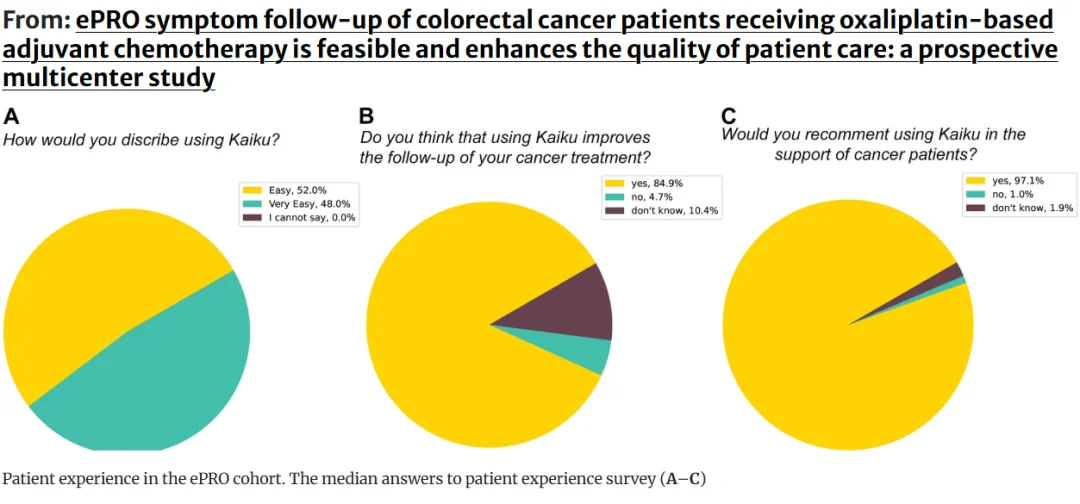 |
• 100% of patients considered the ePRO system easy or very easy to use;
• 84.9% of patients believed that ePRO improved follow-up management during treatment;
• 97.1% of patients were willing to recommend the system to other patients with cancer.
• Compared with traditional follow-up, the proportion of patients requiring telephone follow-up decreased from 100% to 42%, and chemotherapy-related peripheral neurotoxicity could also be identified earlier.
The study concluded that ePRO not only has good patient acceptability and feasibility, but also streamlines follow-up workflows and helps the study team detect symptom changes more promptly, thereby improving the quality of patient care.
EClinCloud
Endpoint Assessment Solutions
EClinCloud has extensive project experience in colorectal cancer, other oncology, and non-oncology areas.
For subjective clinical endpoint assessment data collection, EClinCloud provides integrated services covering scale due diligence, copyright acquisition, translation and linguistic validation, scale delivery, eCOA implementation, and rater training.
For objective imaging clinical endpoint assessment, EClinCloud offers a one-stop IRC solution built on an integrated independent review management platform, paired with a service team covering multiple therapeutic areas and experienced reading experts, bringing together "product technology + professional services."
Closing Note:
Keigo Higashino created countless stories exploring human nature through his writing, and his passing also leaves the world with a reminder about life.
May every discussion about disease go beyond regret and translate into action. May medicine continue to advance, and may more people enjoy good health.

EClinCloud has considerable experience in colorectal cancer projects.
Please feel free to contact us with any inquiries.
[1] Chinese Society of Digestive Endoscopy, Chinese Medical Association; Committee of Oncological Endoscopy, Chinese Anti-Cancer Association. Guidelines for Early Colorectal Cancer Screening and Endoscopic Diagnosis and Treatment in China (2014, Beijing) (中国早期结直肠癌筛查及内镜诊治指南). *National Medical Journal of China*, 2015, 95(28): 2235–2252. DOI: 10.3760/cma.j.issn.0376-2491.2015.28.002.
[2] Colorectal Cancer Screening, Early Diagnosis, and Early Treatment Protocol (2024 Edition) https://www.nhc.gov.cn/ylyjs/gzdt/202408/42f43b5f0c4c4ebe90c78ee127959b92.shtml
[3] Medical-Engineering Interdisciplinary Collaborative Group, Chinese Society of Gastroenterology, Chinese Medical Association. Expert Consensus on Outpatient Management of Colorectal Polyps (2025, Chengdu) (结直肠息肉门诊管理专家共识). *Chinese Journal of Digestive Endoscopy*, 2025, 42(5): 337–347.
[4] Cancer - Features - Colorectal Cancer Awareness. Centers for Disease Control and Prevention (CDC). 2025.03.11.
[5] Guidelines Working Committee of the Chinese Society of Clinical Oncology. *Chinese Society of Clinical Oncology (CSCO) Guidelines for the Diagnosis and Treatment of Colorectal Cancer (2026 Edition)* (中国临床肿瘤学会结直肠癌诊疗指南).
[6] Shanghai Anti-Cancer Association, Fudan University Shanghai Cancer Center. *Recommendations for Screening and Prevention of Common Malignant Tumors in Residents (2026 Edition)* (居民常见恶性肿瘤筛查和预防推荐).
[7] Committee of Colorectal Cancer, Chinese Anti-Cancer Association (CACA-CRCPC). *Popular Science Guidelines for the Prevention and Treatment of Colorectal Cancer in China (2025, Healthcare Professional Edition)* (中国结直肠癌防治科普指南). 2025.12.31.
[8] Eisenhauer EA, Therasse P, Bogaerts J, Schwartz LH, Sargent D, Ford R, et al. New Response Evaluation Criteria in Solid Tumours: Revised RECIST Guideline (Version 1.1). European Journal of Cancer. 2009;45(2):228-247. doi:10.1016/j.ejca.2008.10.026.
[9] ESMO Clinical Practice Guideline for metastatic colorectal cancer. Metastatic colorectal cancer: ESMO Clinical Practice Guideline for diagnosis, treatment and follow-up. Annals of Oncology. 2023.
[10] U.S. Food and Drug Administration (FDA). Clinical Trial Imaging Endpoint Process Standards: Guidance for Industry. Silver Spring, MD: U.S. Food and Drug Administration; 2018.
[11] International Council for Harmonisation of Technical Requirements for Pharmaceuticals for Human Use (ICH). ICH E9(R1): Addendum on Estimands and Sensitivity Analysis in Clinical Trials to the Guideline on Statistical Principles for Clinical Trials. 2019.
[12] Boni-Saenz AA, et al. Global adoption of remote technologies to enable patient-centric oncology clinical trials: Analysis by the Bloomberg New Economy International Cancer Coalition. Journal of Clinical Oncology. 2023;41(16_suppl):1584. doi:10.1200/JCO.2023.41.16_suppl.1584.
[13] Iivanainen S, et al. ePRO symptom follow-up of colorectal cancer patients receiving oxaliplatin-based adjuvant chemotherapy is feasible and enhances the quality of patient care: a prospective multicenter study. Journal of Cancer Research and Clinical Oncology, 2023. DOI: 10.1007/s00432-023-04622-4. Springer Nature: https://link.springer.com/article/10.1007/s00432-023-04622-4
EClinCloud is a leading AI company in the clinical research industry, building an AI-driven, integrated intelligent clinical cloud platform and endpoint assessment technologies. It provides global pharmaceutical companies and research institutions with technology products—including eCOA, CTMS, eTMF, EDC, RTSM, IRC, and RM—as well as scale management, linguistic validation, rater training, and data quality analysis services to build efficient, accurate digital solutions, and relies on AI predictive models and an intelligent data platform to dynamically evaluate and help improve drug clinical trial success rates, helping shorten drug and medical device R&D cycles for the benefit of patients.