Essential Knowledge on Hemophilia Assessment Scales
Source: EClinCloud. Author: EClinCloud.
In our previous post, we introduced the basics of hemophilia, its therapeutic drugs, and clinical trials for gene therapies (for details, click What Surge of Interest Followed Sequential EMA and FDA Approvals of New Hemophilia Drugs? Take a Look!). At the end of that post, the editor raised the question: "How do hemophilia clinical trial protocols differ from those for other diseases?" Here is the answer.

Bingo Most gene therapy clinical trials incorporate corresponding scales into endpoint assessment!
After reviewing the materials, the editor suspects there are two reasons. Let's take a look together.
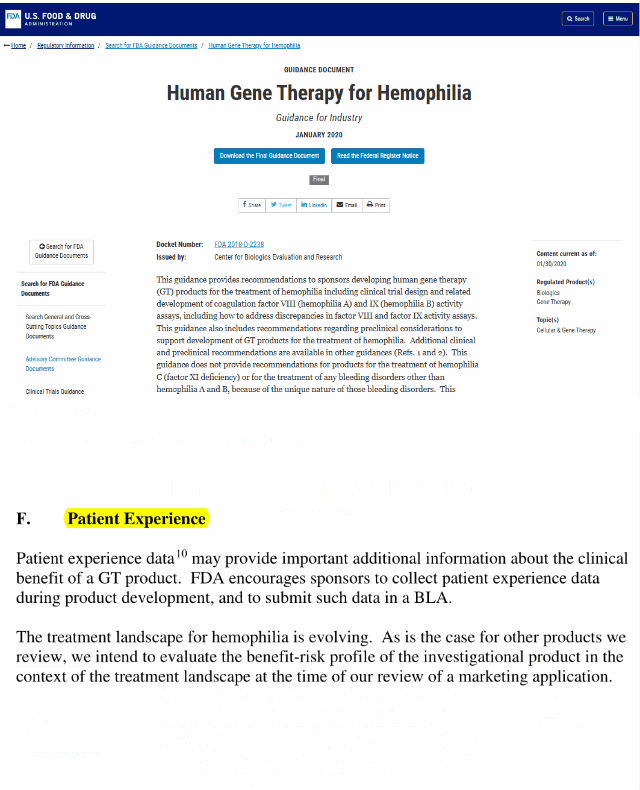
In January 2020, the U.S. Food and Drug Administration (FDA) issued guidance on gene therapy for hemophilia, encouraging sponsors to collect patients' experiences during drug development.
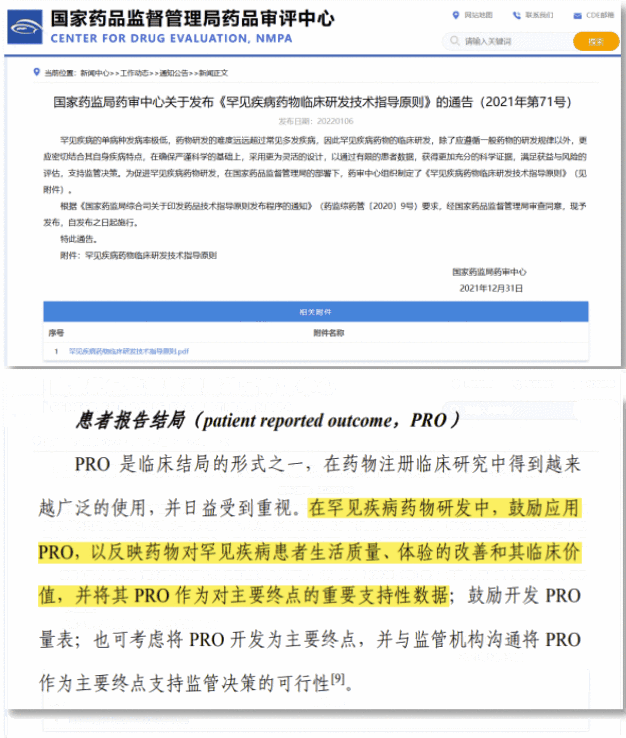
In December 2021, the Center for Drug Evaluation (CDE) issued a document encouraging the use of PROs in rare disease drug development, placing greater emphasis on collecting information on patients' own experiences.
The third edition of the management guidelines published by the World Federation of Hemophilia (WFH) in 2020 encourages the use of scales in the assessment of clinical reported outcomes for drugs, and compiles a very comprehensive set of assessment types and scales for reference.
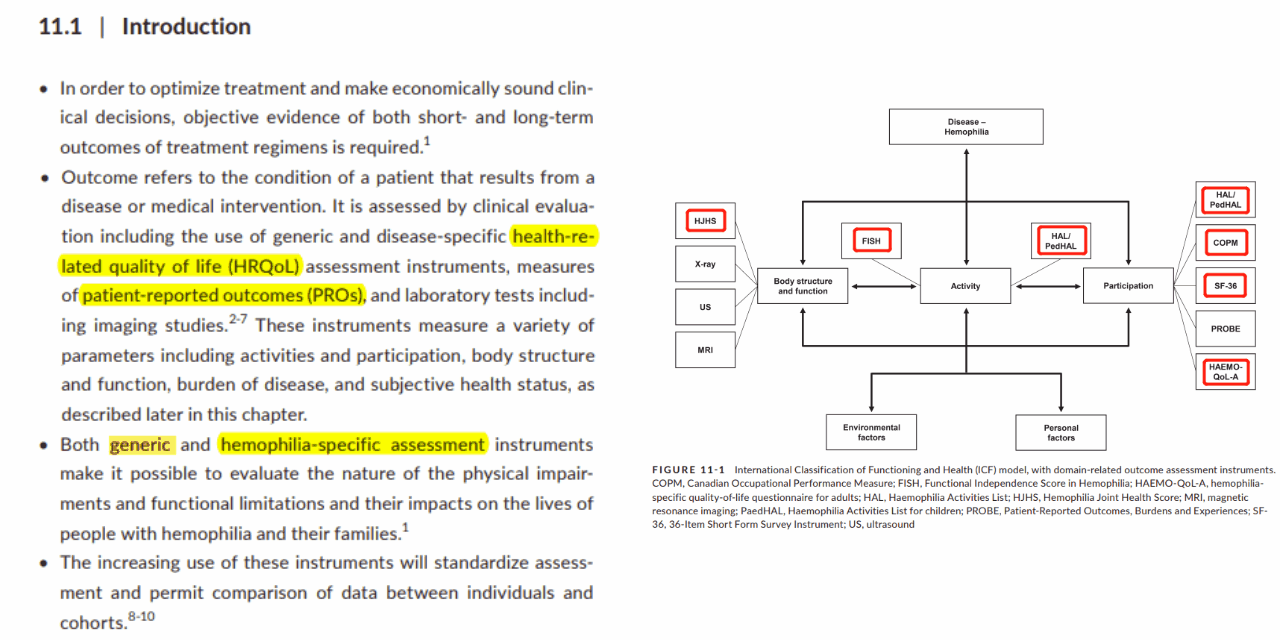

So what exactly are all these scales used to assess in hemophilia clinical trials, and how should they be selected? Let's look at it from a professional perspective.
• Purpose
To assess joint health.
• Main Components
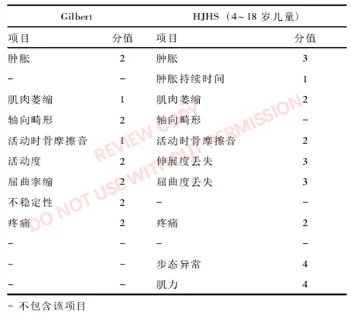
Includes 8 items: swelling, muscle atrophy, axial deformity, crepitus on motion, range of motion, flexion contracture, instability, and pain.
• Advantages
The earliest hemophilia joint function assessment scale recommended by the World Federation of Hemophilia (WFH), suggested for use in adult patients with hemophilia.
• Limitations
The Gilbert Score is not sufficiently sensitive to early joint pathology.
Hemophilia Joint Health Score, version 2.1 (abbreviated as HJHS)
• Purpose
To assess joint health.
• Main contents
Assesses damage across 6 joints (elbows, knees, and ankles) in patients with hemophilia, including swelling, duration of swelling, muscle atrophy, crepitus on motion, flexion and extension, joint pain on motion, and muscle strength.
• Advantages
Currently the only hemophilia-specific joint and muscle function assessment scale in China that has undergone reliability validation.
• Notes
The HJHS was developed as a revision of the Gilbert score. It is recommended for pediatric patients aged 4–18 years, though it is currently also used to assess joint function in adult patients with hemophilia.
• Purpose
To measure self-perceived functional impact in adult patients with hemophilia.
• Main contents
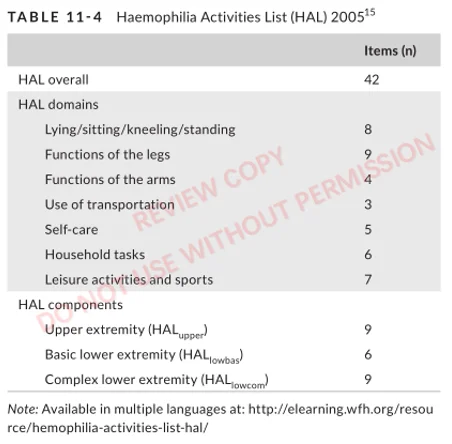
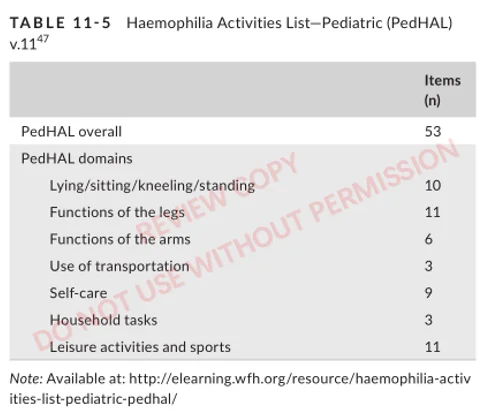
Covers 7 main tasks—lying/sitting/kneeling/standing, functions of the legs, functions of the arms, use of transportation, self-care, household tasks, and leisure activities and sports—with a total of 42 items.
• Advantages
A Chinese version has been established and validated for reliability and validity in the Chinese adult hemophilia population. It serves as the best research measure for self-reported activity in adults.
• Notes
The scale also has a pediatric version for ages 8–18 years (Pediatric Hemophilia Activities List, pedHAL), including a proxy version completed by parents/caregivers of children aged 4–12 years.
Swipe left to view the pediatric version
Functional Independence Scale in Hemophilia (abbreviated as FISH)
• Purpose
To measure an individual's functional ability.
• Main contents
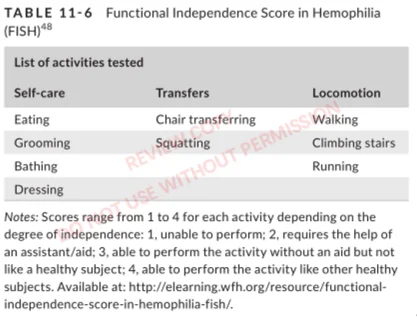
Primarily assesses three dimensions: self-care (e.g., eating, grooming, bathing, dressing), transfers (e.g., sitting, squatting), and locomotion (e.g., walking, climbing stairs, running).
• Advantages
Can be used in both adults and children.
• Notes
It has not yet been validated for reliability and validity in the Chinese hemophilia population.
Multidimensional Haemophilia Pain Questionnaire (abbreviated as MHPQ)
• Purpose
Designed to accurately distinguish between acute and chronic pain, focusing on a thorough assessment of pain characteristics.
• Main contents
It mainly asks about pain location, duration, frequency, triggers, intensity, interference, strategies, pain management specialists, and treatment satisfaction, comprising four initial items and nine dimensions in total.
• Advantages
A pain score specifically designed for patients with hemophilia, offering a more comprehensive scope of assessment.
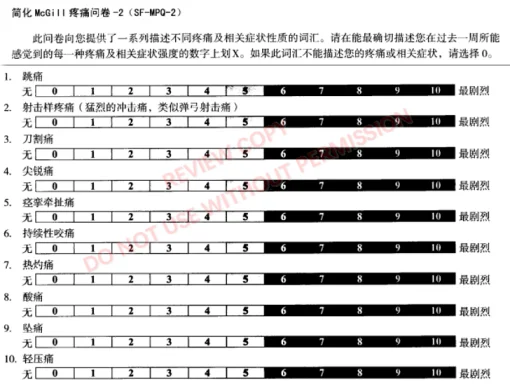
Short-Form McGill Pain Questionnaire (abbreviated as SF-MPQ-2)
• Purpose
Assesses symptoms of neuropathic and non-neuropathic pain over the past week.
• Main contents
Includes 4 dimensions (continuous pain, intermittent pain, neuropathic pain, and impact on emotions), with 22 items in total. Each item is scored from 0 to 10, with higher scores indicating more severe pain or negative emotions.
• Advantages
The Chinese version of the Short-Form McGill Pain Questionnaire-2 has good reliability and validity, addressing assessment limitations of the original version. The scale is concise and broadly applicable.
• Note
It is recommended that researchers supervise the entire process when using this scale and explain terminology when necessary.
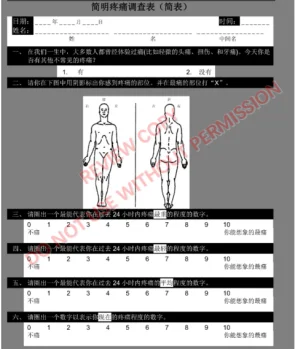
Brief Pain Inventory (BPI)
• Purpose
Assesses pain over the past 24 hours or the past week.
• Main contents
Assesses pain severity and its impact on quality of life, including mood, sleep, activity level, appetite, daily life, walking ability, and relationships with others.
• Advantages
The content is relatively comprehensive, and item completion formats include multiple modes such as selection, drawing, and NRS scoring. It is frequently recommended for scientific research, comprehensive non-acute-phase assessment, and clinical evaluation.
• Note
This scale has two versions: a short form (BPI-9) and a long form (BPI-17), with the short form widely used in clinical practice. Because the BPI includes an assessment of pain characteristics, it can also reflect neuropathic pain issues, though it cannot be used as a diagnosis.
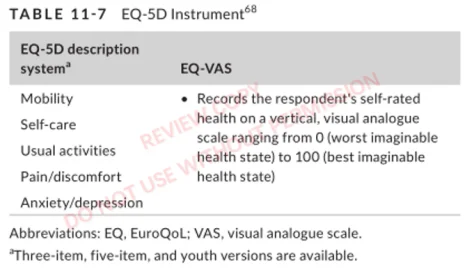
EuroQoL 5-Dimension (EQ-5D)
• Purpose
Assesses health outcomes across a variety of interventions using the same scale.
• Main contents
Includes mobility, self-care, usual activities, pain/discomfort, and anxiety/depression.
• Advantages
As a multidimensional measure of health-related quality of life, it can be used both in healthy populations and in patients to evaluate the decline in health status caused by a given disease.
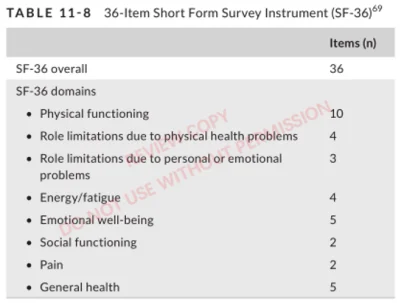
Short Form-36 Health Status Survey Questionnaire (SF-36)
• Purpose
Assesses general health concepts related to age, disease, and treatment.
· Main content
It includes Physical Functioning (PF), Role-Physical (RP), Bodily Pain (BP), General Health (GH), Vitality (VT), Social Functioning (SF), Role-Emotional (RE), and Mental Health (MH). Based on the 8 domain scores, the Physical Component Summary (PCS) and Mental Component Summary (MCS) scores can be calculated separately.
· Advantages
The scale also covers pain-related assessment. Studies show that the correlation coefficient between the SF-36 and patient pain assessment is 0.6–0.7, so it can serve not only as an overall health assessment tool but also as a pain assessment tool.
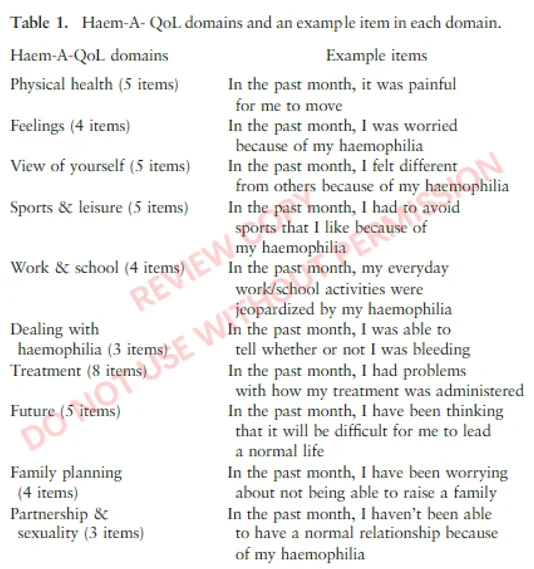
Haemophilia Quality of Life Questionnaire for Adults (abbreviated Haem-A-QoL)
· Purpose
Assesses health-related quality of life in adult patients with hemophilia.
· Main content
Covers 6 domains—physical functioning, psychological issues, role functioning, fear/worry, positive impact, and treatment concerns—comprising 41 items in total.
· Advantages
Available in multiple language versions, and its psychometric properties demonstrate good reliability and satisfactory validity (concurrent and discriminant).
· Notes
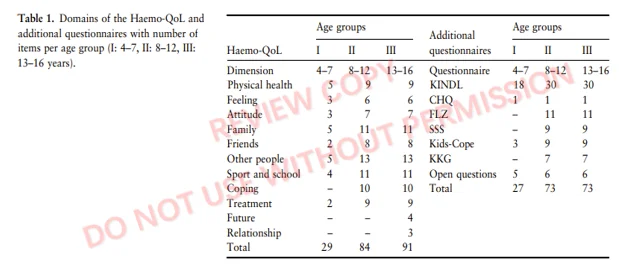
The scale also has a pediatric version for children aged 4–16 years (Quality of life of children with haemophilia, Haemo-QoL), which is divided into 3 versions based on specific age groups.
· Purpose
Assesses the quality of life of children with hemophilia and their parents.
· Main content
A child-centered HRQoL measure containing 35 questions for hemophilia patients aged 4–18 years, with a parent-proxy version completed for ages 4–7.
· Advantages
The copyright holder continuously monitors and promptly updates the scale, giving it high validity in practice.
· Notes
CHO-KLAT 2.0 has been cross-culturally adapted and widely used across multiple countries and regions, whereas the updated CHO-KLAT 3.0 is currently used only in Canada and has not yet undergone reliability and validity testing in China.


Scales applicable in hemophilia trials include, but are not limited to, those listed above; only the more widely used scales are outlined here.
As clinical research places growing emphasis on patient-centered trial design and encourages measures that capture how patients feel, the use of scales will also become increasingly broad and diverse.
EClinCloud has extensive project experience in clinical research: in addition to an extensive scale library, it provides integrated scale services and eCOA design for sponsors and CROs, backed by an experienced team of experts delivering comprehensive, high-quality services to help clients resolve scale-related issues in clinical trials faster and more effectively.
Previous post recap:
References
References
[1] National Health Commission of the People's Republic of China. Guidelines for the Diagnosis and Treatment of Rare Diseases (2019 Edition).
[2] Thrombosis and Hemostasis Group, Chinese Society of Hematology, Chinese Medical Association; Hemophilia Treatment Center Collaborative Network of China. Chinese Guidelines on the Treatment of Hemophilia (2020) (血友病治疗中国指南(2020年版)). Chinese Journal of Hematology (中华血液学杂志), 2020,41(4):265-271.
[3] National Health Commission of the People's Republic of China. Guidelines for the Diagnosis and Treatment of Hemophilia A (2022 Edition) (血友病A诊疗指南(2022年版)).
[4] World Federation of Hemophilia. WFH Guidelines for the Management of Hemophilia, 3rd edition.
[5] Guidance for Industry: Human Gene Therapy for Hemophilia
https://www.fda.gov/regulatory-information/search-fda-guidance-documents/human-gene-therapy-hemophilia
[6] Technical Guidelines for Clinical Development of Drugs for Rare Diseases https://www.cde.org.cn/main/news/viewInfoCommon/c4e1ef312a0a0c039a7a4ca55b91d4e8
[7] Hemophilia Treatment Center Collaborative Network of China; Hemophilia Group, China Alliance for Rare Diseases. Chinese Expert Consensus on Rehabilitation Assessment and Treatment of Musculoskeletal Complications in Hemophilia (中国血友病骨骼肌肉并发症康复评估与治疗专家共识). Rare Disease Research (罕见病研究), 2022,1(4):420-427.
[8] Yao Wanru, Zhang Jishui, Wu Runhui. Development and application of comprehensive evaluation systems in the treatment of pediatric hemophilia in China [J]. Rare Disease Research, 2022,1(4):380-385.
[9] Dai Xinyue, Zhang Lei. Current status and prospects of gene therapy for hemophilia [J]. Rare Disease Research, 2022,1(4):386-390.
[10] Wan Li, Zhao Qing, Chen Jun. Chinese expert consensus on the application of pain assessment scales [J]. Chinese Journal of Painology, 2022,16(3):177-187.
[11] Gu Yan, Tang Jinli, Yang Weiwei. Reliability and validity of the Chinese version of the Short-Form McGill Pain Questionnaire-2 in assessing neuropathic pain [J]. Chinese Journal of Health Statistics, 2020,37(5):718-720.
About EClinCloud
EClinCloud is a technology company focused on clinical research and development. It provides an integrated, interoperable all-in-one clinical trial cloud platform (including technology products such as CTMS, eTMF, EDC, RTSM, and eCOA, as well as solutions such as scale management, linguistic validation, rater training, and data quality analysis) and clinical trial endpoint assessment technologies across therapeutic areas (including oncology, CNS, and ophthalmology). Combining cutting-edge technology with biomedical data to build a globally leading, "patient-centric" SaaS cloud platform supporting clinical evidence, EClinCloud helps pharmaceutical companies and research institutions in China and abroad improve R&D efficiency and accelerate the market launch of drugs and medical devices, benefiting countless patients.