Phase 3 Success, Yet Rejected by the FDA: Lessons for Clinical Endpoint Assessment

In new drug development, every subtle shift in regulatory direction reverberates across the industry.
EClinCloud
closely tracks global drug review trends and evolving regulatory perspectives to deliver more reliable clinical endpoint assessment solutions.
Recently, the U.S.
FDA rejected the marketing application for Sydnexis's low-dose atropine eye drops SYD-101. The drug, used to slow the progression of myopia in children aged 3 to 14, has already been approved for marketing in Europe. Surprisingly, although its Phase 3 clinical study STAR met its prespecified primary efficacy endpoint, the FDA still declined approval.
FDA: Acknowledges Primary Endpoint Was Met, but "Insufficient"
Sydnexis's Phase 3 STAR clinical trial is a Phase 3, multicenter, randomized, double-blind, vehicle-controlled trial that evaluated myopia progression (in diopters) over three years as the primary endpoint, alongside safety, tolerability, and secondary endpoints including axial elongation and related ocular comorbidities.
In its letter, the FDA acknowledged that the Phase 3 STAR clinical trial (NCT03918915) of SYD-101 met its primary endpoint. However, the agency concluded that the overall data were still insufficient to adequately substantiate the effect of low-dose atropine in slowing myopia in children. The CRL did not cite any safety or product quality deficiencies. This means the issue centers on differing interpretations of statistical significance versus clinical meaningfulness—namely, "whether the efficacy is meaningful enough," or whether its clinical significance or degree of benefit is sufficient for children's actual quality of life and long-term eye health.
Some industry experts note that the FDA has set higher requirements for the comprehensiveness and long-term nature of the data, requiring evidence with greater verifiability and clinical value, particularly in areas such as efficacy quantification, endpoint design, and long-term follow-up.
Data Evidence Chain: From Significance to Meaningful Efficacy
This event sends a signal: in chronic conditions such as pediatric myopia, the FDA looks not only at "statistical significance," but also at whether a drug's impact on patients' long-term quality of life can be actively explored and clearly articulated.
In this new R&D and regulatory review context, how to capture more authentic, continuous, and quantifiable patient experience data has become key to confirming efficacy.
Against this backdrop, the value of ePRO/eCOA is increasingly clear—it is not only a data collection tool, but also a key component in strengthening regulatory persuasiveness, enabling:
Electronic capture of authentic patient experience
Data audit trails and traceability, improving compliance
Improving the convenience, efficiency, and patient compliance of long-term data collection
For example, a study published in JAMA showed[1] that in patients with advanced metastatic cancer, using ePRO can improve survival benefit for trial participants.
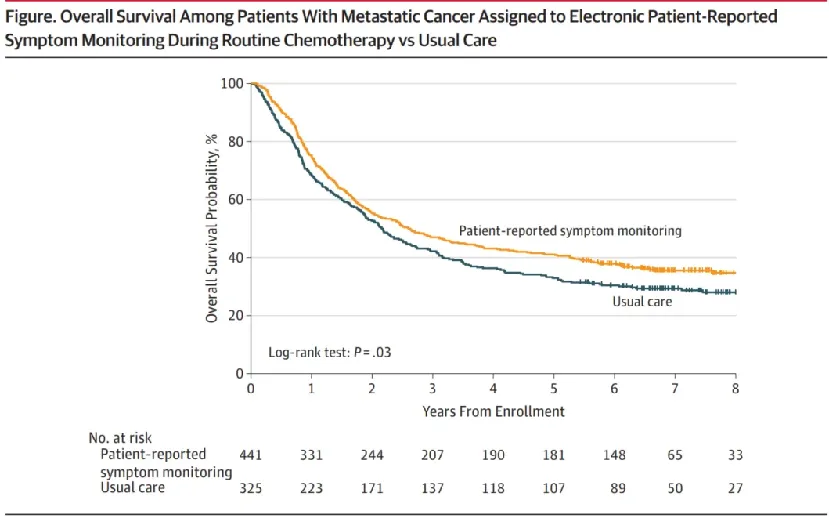
With median follow-up periods of 6.9 years and 7 years, respectively, overall survival for patients in the ePRO group and the usual care group was 31.2 months (95% CI, 24.5-39.6) and 26 months (95% CI, 22.1-30.9), respectively, a statistically significant difference (P = .03). The investigators believed that this result may be related to early response to symptoms and timely clinical intervention for patients in the PRO group, as well as patients in the PRO group being better able to tolerate continued chemotherapy than those in the usual care group.
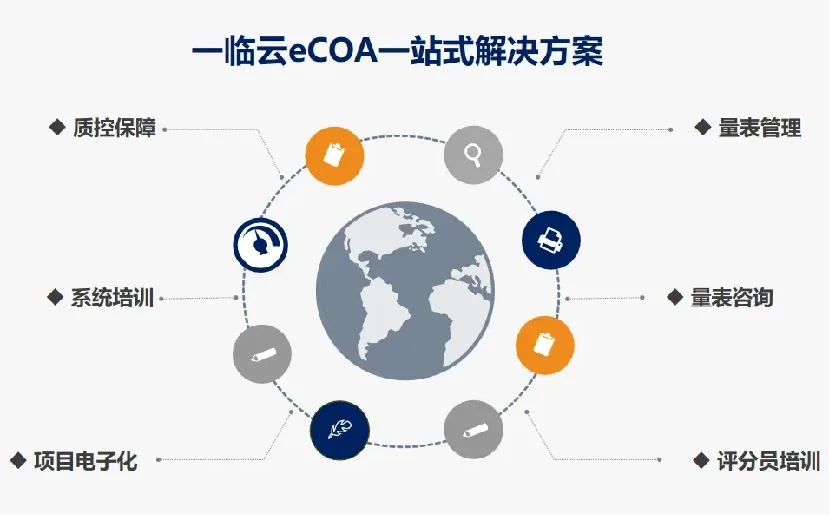
EClinCloud is committed to using an integrated eCOA solution to help sponsors transform "numbers that meet the threshold" into "meaningful evidence"—only when data is closer to patients can clinical outcomes better represent real-world efficacy.
References:
[1]
Basch E, Deal AM, Dueck AC, et al. Overall Survival Results of a Trial Assessing
Patient-Reported Outcomes for Symptom Monitoring During Routine Cancer Treatment. JAMA, 2017,
317(24): 2493-2494.