Visual Guide | What Regulatory Signal Is the FDA Sending with Real-Time Clinical Trials?
In April 2026, the FDA announced the launch of its Real-Time Clinical Trials (RTCT) pilot. On the surface, this looks like a regulatory process optimization; however, viewed alongside the FDA's recently introduced HALO unified data platform and Elsa AI system, a deeper shift is underway:
The FDA is seeking to shift what it regulates from documents to data, from milestone-based review to continuous oversight, and from humans reading reports to AI reading data. The way clinical development and regulation interact is undergoing a significant transformation.
1. What Is RTCT?
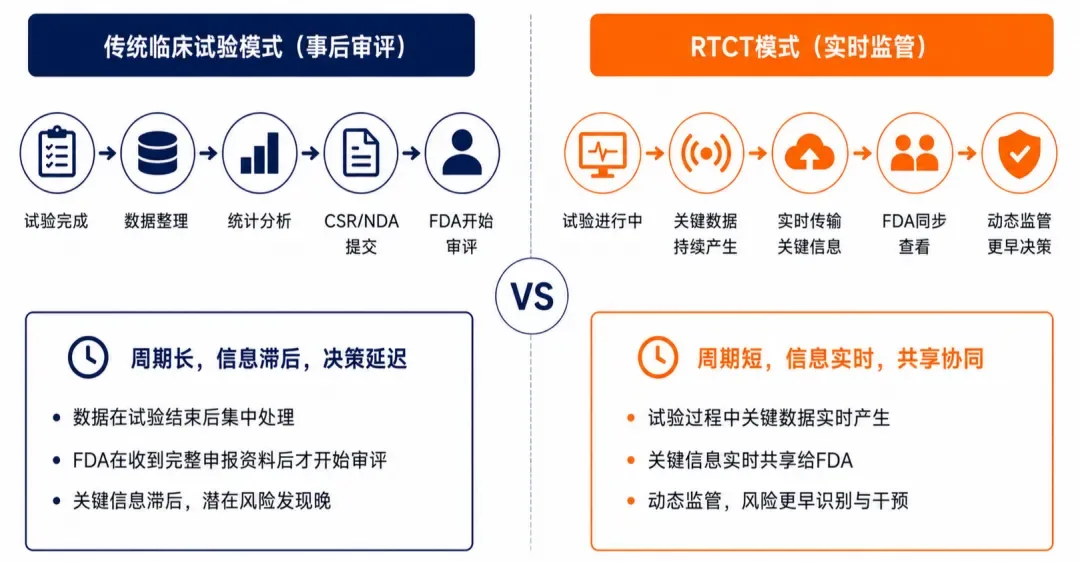
Figure 1. How RTCT Differs from Prior Regulatory Approaches
Analysis: On April 28, 2026, the FDA announced the launch of its Real-Time Clinical Trials (RTCT) pilot, with AstraZeneca and Amgen as the first participating pharmaceutical companies, and plans to launch a broader RTCT pilot program this summer.
Unlike the traditional model—in which a sponsor completes data cleaning, statistical analysis, and report writing after a trial ends and then submits the package to the FDA for review—RTCT emphasizes transmitting key safety and efficacy signals to the FDA in real time while the trial is underway, enabling dynamic oversight.
2. Is Review Efficiency Really All That RTCT Changes?
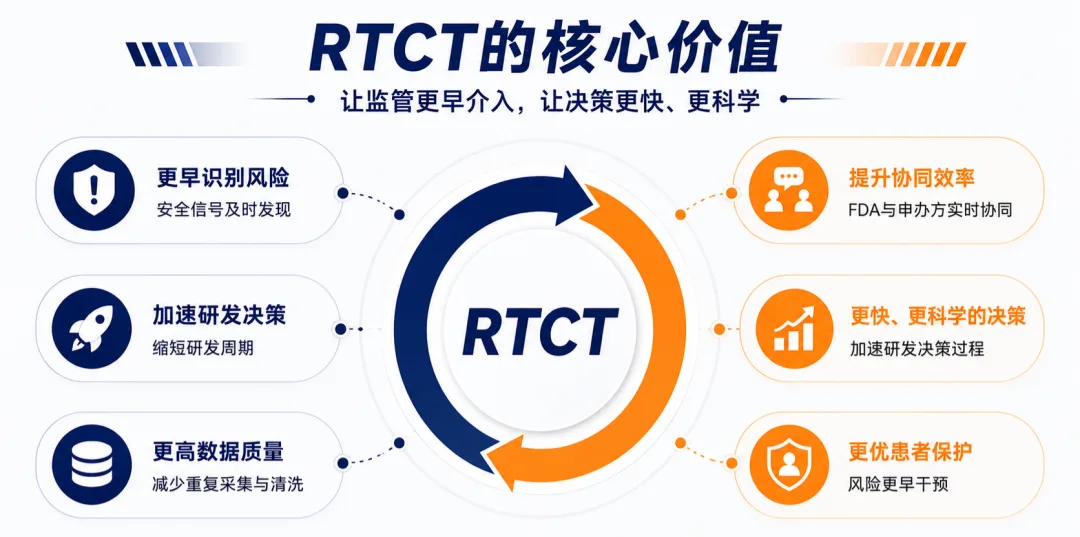
Figure 2. Core Value of RTCT
Analysis: Former FDA Commissioner Marty Makary disclosed a set of figures: from the start of a Phase I clinical trial to submitting an application for approval, nearly half of the time is spent on paperwork, of which roughly 45% is "dead time." Moreover, the FDA once received an application totaling 66 million pages—the efficiency of compiling and reviewing data at that scale is easy to imagine.
In fact, speed may not be the only thing the FDA is trying to change. A deeper question is: what should regulators actually be reviewing?
For the past several decades, the documents reviewed by the FDA have essentially been processed data outputs. The thinking behind RTCT, by contrast, is to give regulators earlier access to the underlying data itself, rather than only the finalized reports.
In addition, many people interpret RTCT as "the FDA starting to use AI heavily."
What warrants closer attention, however, is that the FDA is shifting from "submission-based regulation" to "data-stream-based regulation": key data are generated continuously, key data are shared continuously, and oversight proceeds continuously.
3. How Is Real-Time Data Transmission Achieved?
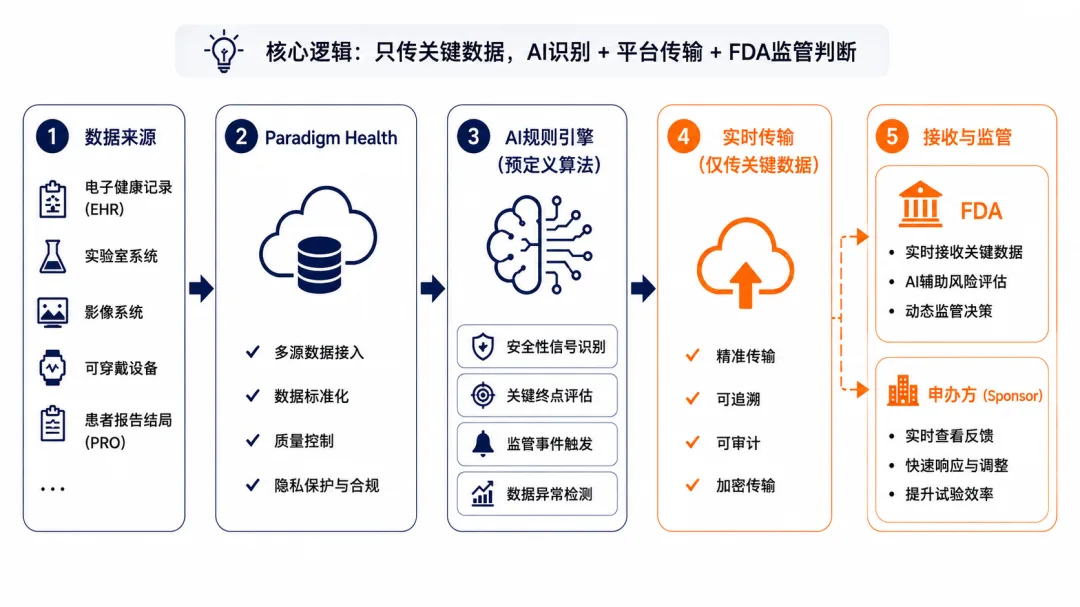
Figure 3. Schematic of the Data Transmission Process
Analysis: Implementing RTCT relies on AI, cloud computing, and data platform capabilities.
In recent years, the FDA has continued to invest in AI and data infrastructure. At the end of 2025, the FDA announced the agency-wide deployment of agentic AI capabilities. That same year, the Elsa system, built on large language models, officially went live.
In May 2026, the FDA went on to launch Elsa 4.0 and completed construction of the HALO (Harmonized AI & Lifecycle Operations for Data) platform, integrating more than 40 fragmented data sources, submission systems, and portals onto a unified data platform.
If RTCT addresses "how data enter the regulatory system," then HALO addresses "where the data reside," and Elsa addresses "how regulators use the data."
The rollout of HALO and Elsa further indicates that the FDA not only wants to obtain more data, but also wants AI to be built directly on top of those data, meaning compliance will have to "withstand multi-dimensional AI cross-validation."
The technology platform for this RTCT pilot can connect directly to electronic health records (EHRs) as well as other structured and unstructured data sources, continuously identify key safety and efficacy signals through predefined algorithmic rules, and transmit them in real time to the sponsor and the FDA.
Notably, real-time transmission does not mean uploading all data. Accordingly, before a trial begins, the FDA, the sponsor, and the technology platform jointly define the key endpoints, safety signals, and trigger rules: AI handles identification and assists with risk assessment, the platform handles transmission, and the FDA makes the regulatory judgment.
To date, the FDA has successfully received and verified real-time signals from AstraZeneca's trial through the platform, demonstrating the feasibility of this technical framework.
4. Key Takeaway: Data-Driven and AI Capabilities—The Earlier, the Better
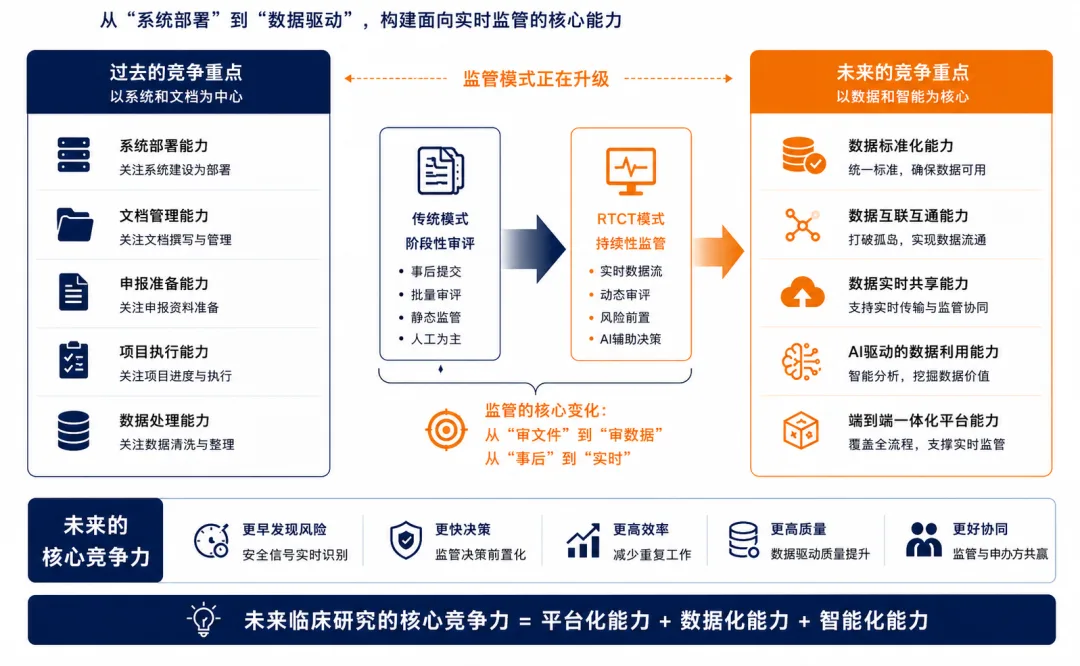
Figure 4: Clinical research digitalization from system deployment to a data-driven approach
Interpretation: As regulatory oversight moves from "electronic data" toward "real-time, structured, and AI-parseable data," industry requirements for clinical research continue to rise.
Data construction and governance capabilities: Data is the source of clinical evidence and the new foundation in the AI era. High-quality data must be structured, flow in real time, and be parseable to support real-time regulatory oversight.
Platform capabilities: Integrated platform development and data connectivity capabilities must be planned upfront, encompassing data connectivity from collection, management, and analysis through regulatory oversight, full-chain traceability, and systematic compliance.
Meanwhile, the RFI issued by the FDA also explicitly states an interest in exploring the use of AI in the following areas: improving trial participant recruitment, optimizing dose escalation, strengthening safety monitoring, supporting adaptive designs, accelerating Phase I to Phase II decision-making, and supporting endpoint validation, among others.
Under this trend, future core competitiveness in clinical research will lie not only in data governance capabilities, but also in using AI to continuously generate value from data—such as applying AI to key scenarios including project management, data management, compliance monitoring, and decision support to continuously unlock data value and improve R&D efficiency and study quality.

This trend aligns closely with the direction EClinCloud has pursued since its founding. EClinCloud is dedicated to driving the digital and intelligent transformation of clinical research with AI, building an integrated intelligent cloud platform from data collection to evidence generation.
The EClinCloud platform features a design that meets regulatory expectations for real-time, structured, and AI-enabled data.
We believe that the ultimate goal of clinical research digitalization is not to add another system portal, but to make study quality more controllable, study efficiency more visible, and study results more reliable.
In the new era of real-time clinical trials, EClinCloud looks forward to working alongside industry partners to meet this paradigm shift in clinical regulatory oversight together.