Bookmark | Overview of Cough-Related Assessment Scales
Source: EClinCloud. Author: EClinCloud.


EClinCloud Editor
5 minutes ago:
Cough, cough—for everyone who has gone through COVID-19 and become "Yang Guo" (tested positive) or "Yang Kang" (recovered), are you still dealing with a persistent cough just like me? Cough symptoms in autumn and winter are not necessarily all caused by post-COVID sequelae, so I have put together some information on cough and assessing cough severity—let's take a look.
Autumn and winter are peak seasons for cough symptoms. This is not only because cold temperatures make the air dry and cause airway sensitivity, and increased airborne allergens such as dust, dust mites, and pollen easily trigger coughing to clear debris, but also because frequent hot-and-cold temperature swings during seasonal transitions commonly lead to bacterial or viral respiratory infections that cause cough symptoms.
Classification of Cough
Cough is a protective neural reflex of the body that helps clear respiratory secretions and harmful agents. In adults, cough is typically classified by duration into three categories: acute cough (<3 weeks), subacute cough (3–8 weeks), and chronic cough (>8 weeks). By nature, cough can also be divided into dry cough and wet cough, with daily sputum volume >10 mL serving as the criterion for wet cough.
Cough is generally termed chronic cough when it is the sole or primary symptom, lasts >8 weeks, and shows no obvious abnormalities on chest X-ray. In respiratory specialty outpatient clinics in China, patients with chronic cough can account for more than one-third of visits, making it the most common symptom among respiratory diseases.
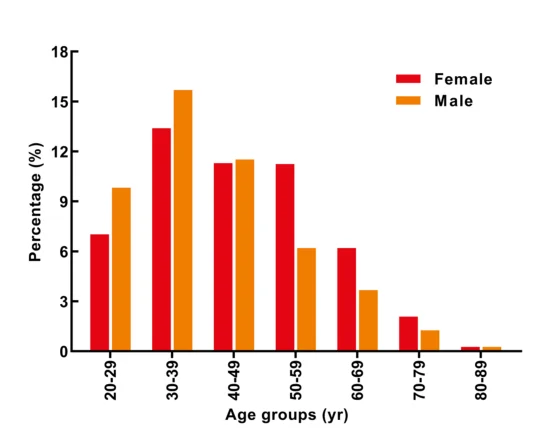
Most studies have found little difference in sex distribution among populations with a high incidence of chronic cough, with middle-aged patients comprising the majority. An analysis of consecutive cough patients visiting cough clinics in Guangzhou from 2003 to 2017 found a mean age of 43.0 ± 13.7 years, with patients aged <50 years accounting for more than 2/3 of the cough population.
Percentage (%): ratios of the number of females or males to the total number of cough patients (n=1822)[3]
Symptomatic Treatment
Mild cough does not require antitussive therapy, as the key to treatment lies in addressing the underlying cause; however, severe cough may be appropriately treated with antitussives. Existing antitussive medications mainly include centrally acting antitussives (such as codeine, pholcodine, and dextromethorphan) and peripherally acting antitussives (such as noscapine and benproperine), though their use is limited because they tend to cause serious central nervous system complications. Therefore, significant unmet clinical needs remain in chronic cough.
P2X3 receptor antagonists are currently the most promising therapeutic agents for refractory cough and asthma, and are expected to become the first class of targeted therapies for refractory chronic cough (RCC) or unexplained chronic cough (UCC). Currently, the clinical progress of major investigational P2X3 receptor antagonists worldwide is summarized below:
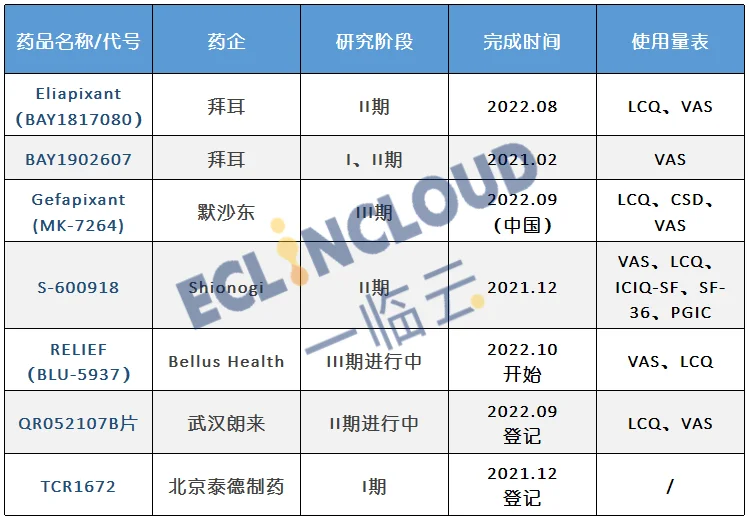
*The above data are sourced from publicly available information on ClinicalTrials and China Drug Trials
Assessment Scales
Cough assessment primarily includes visual analogue scale scoring, cough symptom scoring, quality-of-life assessment, cough frequency monitoring, and cough sensitivity testing, which help evaluate disease status and monitor treatment efficacy.
EClinCloud has extensive experience in eCOA projects for registrational clinical studies. Respiratory projects typically involve completing numerous scales for assessing cough. Drawing on extensive experience advising on scale selection for respiratory clinical trials, the EClinCloud medical team has compiled the core content, advantages, and limitations of commonly used standardized scales for assessing cough severity and quality of life, along with a brief summary as follows:
Cough Visual Analogue Scale
Visual Analogue Scale (VAS)
Purpose
To assess cough severity in patients with chronic cough.
Main Content
Patients mark a point corresponding to their perceived cough severity on a straight line marked from 0 to 10 cm or from 0 to 100 mm.
Limitations
Susceptible to factors such as subjective perception and tolerance, which easily leads to individual variability and prevents direct comparison across individuals.
Advantages
The VAS features finely graded scoring levels and high sensitivity to change, facilitating longitudinal comparisons before and after treatment; it is also relatively simple to apply and highly practical.
Note
A reduction in VAS of ≥30 mm has been evaluated as a clinically meaningful change threshold for discriminating chronic cough severity in clinical studies.
Cough Evaluation Test
Cough Evaluation Test (CET)
Purpose
For the brief assessment of cough severity and its impact on health.
Main Contents
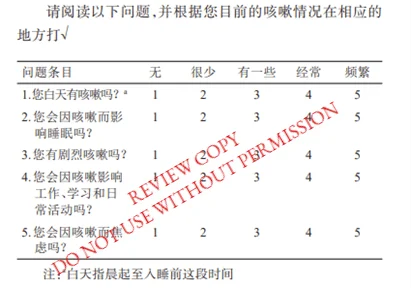
It consists of 5 items covering daytime cough severity, the impact of nocturnal cough on sleep, cough intensity, and the impact of cough on daily life and psychological well-being.
Note
The CET was initially drafted by Lai Kefang's cough research team at the Guangzhou Institute of Respiratory Health and finalized after inviting pulmonology, otolaryngology, and statistics experts to evaluate and screen items using the Delphi method. It has been validated to have good test-retest reliability and responsiveness, and correlates well with VAS scores and cough quality-of-life questionnaires.
Cough Symptom Score
Cough Symptom Score (CSS)
Purpose
For clinical assessment of cough severity and treatment efficacy.
Main Contents
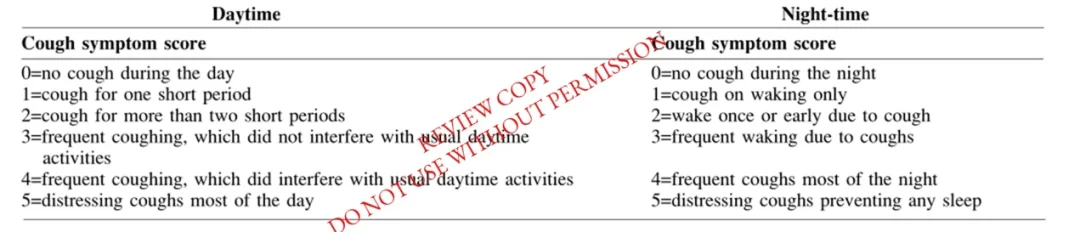
Based on the time of cough occurrence, it is divided into daytime and nighttime sections, which are then graded into scoring levels according to cough frequency, intensity, and impact on sleep and daily activities.
Limitations
Studies have demonstrated a clear positive correlation between daytime Cough Symptom Scores and objective cough frequency, whereas the correlation for nighttime scores is weak; therefore, the Cough Symptom Score does not adequately reflect nighttime cough frequency.
Note
Different severity levels are not easy to distinguish, and due to a lack of evidence from evidence-based medicine, it is not recommended by the *Guidelines for the Diagnosis and Treatment of Cough (2021)*.
Cough Quality of Life Questionnaire
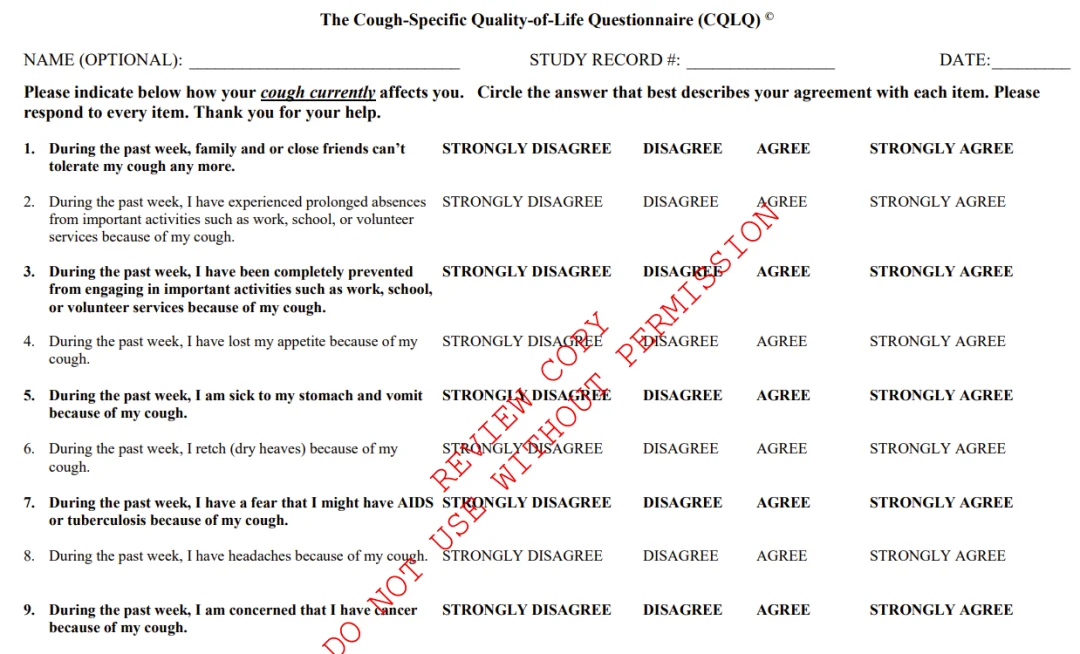
Cough Quality of Life Questionnaire (CQLQ)
Purpose
To assess the quality-of-life-related impact of cough over the past week in patients with acute or chronic cough.
Main Contents
It covers 6 domains—physical complaints, psychosocial issues, functional abilities, emotional well-being, extreme physical complaints, and personal safety fears—with a total of 28 items, each scored from 0 to 4 points. Higher scores indicate more severe subjective symptoms.
Note
In addition to evaluating the severity of chronic cough, it also has certain value for acute cough.
Leicester Cough Questionnaire
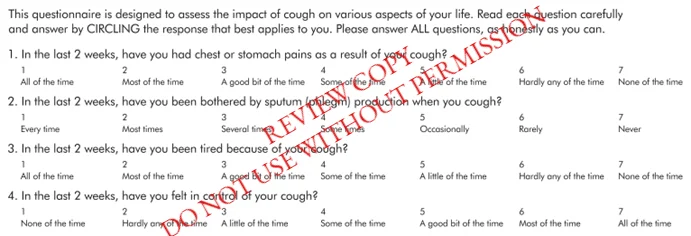
Leicester Cough Questionnaire (LCQ)
Purpose
To assess the impact of cough on quality of life; to reflect the efficacy of experimental cough treatments; and to reflect changes in the health impact of cough over time.
Main Contents
It covers three domains—physical, psychological, and social—comprising a total of 19 items, each scored from 1 to 7 points. Lower scores indicate a greater impact of cough on the patient's quality of life.
Advantages
It provides comprehensive quantitative indicators while remaining brief and easy to administer, has high specificity for cough symptoms, and is currently a relatively widely used cough-specific scale.
Note
The *Guidelines for the Diagnosis and Treatment of Cough (2021)* recommend using the Chinese version of the LCQ to assess cough-related quality of life.
Chronic Cough Impact Questionnaire
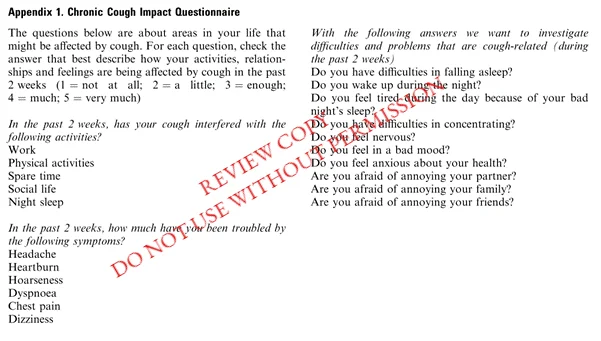
Chronic Cough Impact Questionnaire (CCIQ)
Purpose
To reflect the patient's cough severity over the past two weeks.
Main Contents
It covers 4 domains—daily activities, social activities, mood, and sleep/concentration—comprising a total of 21 items, each scored from 1 to 5 points. Higher scores indicate a greater impact of cough on quality of life.
Limitations
Its correlation with the Short Form Health Survey (SF-36) is weak, and its reliability and responsiveness remain to be further validated. Studies have shown that the sensitivity of the LCQ and CQLQ is higher than that of the CCIQ.
Advantages
It effectively reflects the physical burden cough places on patients and can systematically evaluate the impact of chronic cough on patients' quality of life as well as post-treatment outcomes.
Note
This questionnaire was developed based on local disease characteristics in Italy, and whether it can serve as an international survey scale remains to be proven.
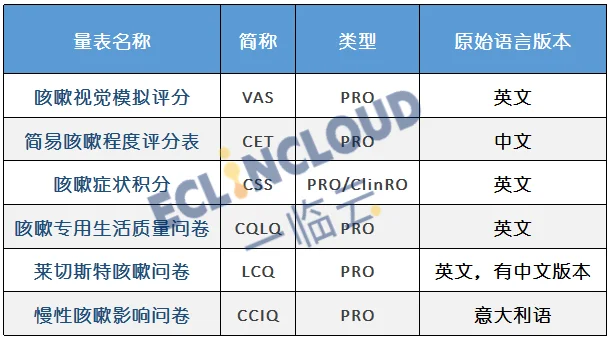
A summary of the scales is provided below:
EClinCloud has extensive project experience in clinical research eCOA programs. In addition to an extensive scale library, it has an experienced expert team that provides one-stop scale services for sponsors and CROs, helping clients resolve scale-related issues in clinical trials faster and more effectively while delivering comprehensive, high-quality services. Feel free to contact us if you have any needs.


Reference
[1] Asthma Group of the Chinese Thoracic Society. Guidelines for the Diagnosis and Treatment of Cough (2021) [in Chinese]. *Chinese Journal of Tuberculosis and Respiratory Diseases*, 2022,45(1):13-46.
[2] Lai K, Long L. Current status and future directions of chronic cough in China. Lung 2020;198(1):23-29.
[3] Lai K, Long L, Yi F, et al. (2019) Age and sex distribution of Chinese chronic cough patients and their relationship with capsaicin cough sensitivity. Allergy Asthma Immunol Res 11:871–884.
[4] Allison Martin Nguyen, Elizabeth D. Bacci, Margaret Vernon, et al. Validation of a visual analog scale for assessing cough severity in patients with chronic cough. Therapeutic Advances in Respiratory Disease 2021,15:1-13.
[5] Hsu JY, Stone RA, Logan-Sinclair RB, et a1. Coughing frequency in patients with persistent cough: assessment using a 24-hour ambulatory recorder. Eur Respir J, 1994,7:1246-1253.
[6] Zhao Ting, Lu Hanjing, Qiu Zhongmin. Evaluation of cough symptom severity (咳嗽症状严重程度评价). International Journal of Respiration (国际呼吸杂志), 2011, 31(3): 26-29.
[7] S S Birring, B Prudon, A J Carr, et al. Development of a symptom specific health status measure for patients with chronic cough: Leicester Cough Questionnaire (LCQ). Thorax 2003;58:339-343.
[8] Brignall K, Jayaraman B, Birring SS. Quality of life and psychosocial aspects of cough. Lung, 2008,186(Suppl 1):S55-58.
[9] Baiardini I, Braido F, Fassio O, et al. A new tool to assess and monitor the burden of chronic cough on quality of life: Chronic Cough Impact Questionnaire. Allergy, 2005, 60(4): 482-488.
[10] Huang Juan. Clinical study on evaluating subacute and chronic cough using the LCQ questionnaire (应用LCQ问卷评价亚急性、慢性咳嗽的临床研究) [dissertation]. Beijing: Beijing University of Chinese Medicine, 2013:1-60.
EClinCloud is a technology company focused on clinical research and development. It provides an integrated, interconnected all-in-one clinical trial cloud platform (including technology products such as CTMS, eTMF, EDC, RTSM, eCOA, and eConsent, as well as solutions such as scale management, linguistic validation, rater training, and data quality analysis) and clinical trial endpoint assessment technologies across therapeutic areas (including oncology, central nervous system, and ophthalmology). Combining cutting-edge technology with life data, it builds a globally leading "patient-centric" clinical evidence support SaaS cloud platform to help domestic and international pharmaceutical companies and research institutions improve R&D efficiency, accelerate the launch of drugs/devices, and benefit countless patients.