CDE Policy Interpretation | Analysis of the "General Considerations for Organizing Patient Participation in Drug Development (Draft for Comment)"
Source: EClinCloud. Author: EClinCloud.
"Patient participation throughout the entire lifecycle of drug development aligns with the guiding principle of clinically value-oriented drug development."1
— Center for Drug Evaluation (CDE), National Medical Products Administration (NMPA), "General Considerations for Organizing Patient Participation in Drug Development (Draft for Comment)," issued July 6, 2022
Patients' input holds important significance and value across all stages of drug development. By effectively organizing patient participation in drug development, sponsors can improve the overall quality and success rate of drug development, benefit patients, improve the current state of clinical medication use, and expand clinical treatment options.
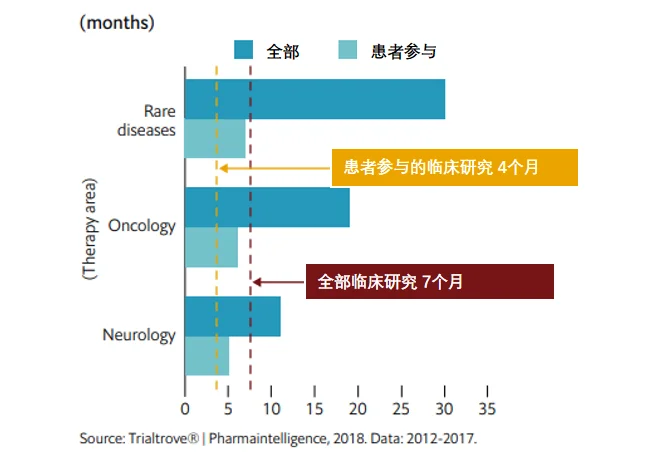
Studies show that involving patients in clinical research can shorten patient recruitment time by 3 months (4 months vs. 7 months) (Figure 1), increase the likelihood of a drug reaching the market by 19% (87% vs. 68%) (Figure 2), and generate an increase in expected net present value equivalent to accelerating the market launch of a pre-Phase II product by 2.5 years.2,3
Note: A pre-Phase II product refers to a product in the Phase II clinical study protocol development stage.
Figure 1: Average time to recruit 100 patients
Clinical studies with patient participation vs. all clinical studies
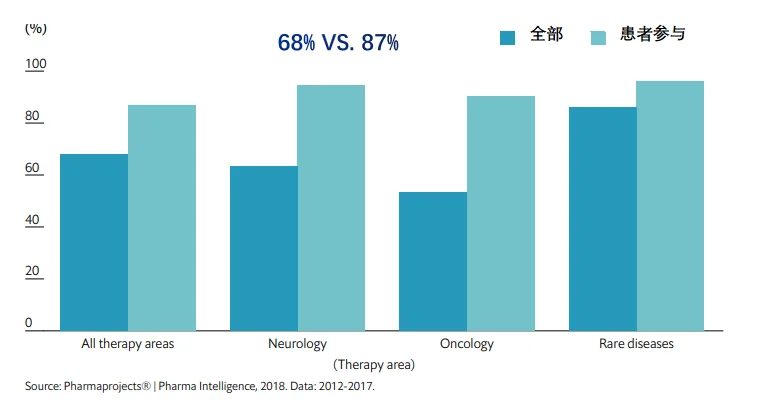
Figure 2: Likelihood of drugs in clinical trials reaching the market
Clinical studies with patient participation vs. all clinical studies
Therefore, to help sponsors better organize patient participation in clinical research, the Center for Drug Evaluation (CDE) drafted the "General Considerations for Organizing Patient Participation in Drug Development" (hereinafter referred to as the "Guideline") and released it as a draft for comment. (The chapters of the Guideline and the contents of each chapter are shown in the table at the end of this article.)
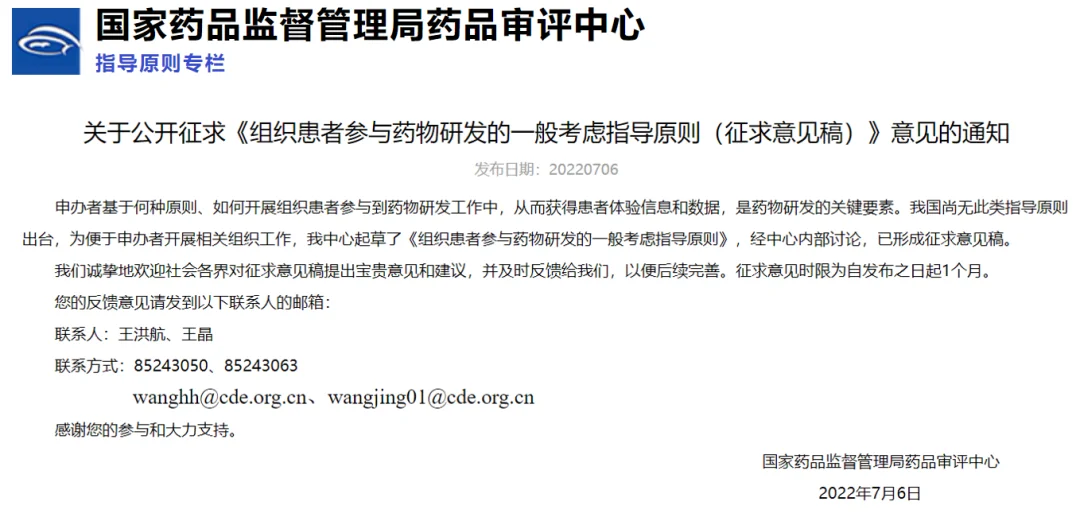
This article interprets the Guideline from the perspective of how to better collect patient information.
Basic Principles
First, it should be clarified that the "patients" discussed in the Guideline are not limited to individual patients, but also include patients' family members, guardians, caregivers, as well as patient organizations, alliances, or patient groups. At the same time, an "individual patient" does not have to be a subject participating in a drug clinical trial, and "organizing patient participation in drug development" is not the same as recruiting subjects for drug clinical trials.
This means that the working methods discussed in the Guideline are not methods for recruiting patients into drug clinical trials, but rather methods for obtaining information from patients regarding their needs, perceptions, and related perspectives on drug clinical trials in order to help conduct those trials better.
When organizing patient participation in clinical research, sponsors should fully protect patients' interests and adhere to the following basic principles: 1. fully respect patients' own wishes; 2. give patients sufficient time to understand the details of participating in clinical research; 3. strictly protect patient privacy; 4. ensure transparency in the patient participation process; and 5. assume relevant responsibilities and obligations in drug development in accordance with laws and regulations. At the same time, subjects should also protect the sponsor's interests and maintain the confidentiality of the sponsor's trade secrets.
What Information Can Patient Participation in Clinical Research Help Sponsors Obtain, and What Is Its Significance?
Involving patients throughout the full lifecycle of drug development can deepen their understanding of the study, dispel doubts, and build trust, thereby facilitating subject recruitment and improving subject compliance. The table below shows the patient information that can be obtained at different stages of research and its benefits.
Research Stage | Patient Information | Significance |
R&D Project Initiation Stage | Patients' actual needs; patients' current treatment experience (if applicable); information on benefit-risk trade-offs | Helps sponsors clarify the feasibility of the R&D plan, particularly for the development of drugs for rare diseases and innovative drugs |
Start of Clinical Trials | Patients' own understanding of their disease or condition; expected degree of benefit after drug treatment; acceptable level of risk, etc. | Identifying study endpoints that are meaningful to patients; selecting an appropriate study population and study duration, as well as using an appropriate control; determining whether to use a patient-reported outcome (PRO) as an evaluation metric |
During Clinical Trials | Collect input from non-trial patients when necessary | Refine and optimize the clinical trial protocol, including analyzing recruitment difficulties or issues unforeseen before the trial began |
After the clinical trial ends | Share clinical trial results with patients through appropriate methods and at an appropriate time, and obtain patient feedback | Provide support for further R&D |
When the drug is proposed for marketing and post-marketing | Consider the actual clinical use of the drug and solicit patient input | Develop the prescribing information and assess the benefit-risk profile |
Table 1: Patient information obtainable at different research stages and its benefits
Develop appropriate questions based on patients' conditions
Questions posed to patients should be clear and unambiguous, using standard, complete, and simple Chinese. If questions contain technical terms and concepts, the patients' level of understanding of the disease should be assessed so that, without deviating from the professional content, the language is plain and easy to understand while remaining comprehensive and accurate.
For special populations, such as older adults, children, and persons with disabilities, their specific needs should be considered when designing questions; more precise and flexible methods such as pictures, cue cards, videos, and animations should be used to communicate, gather responses to questions they can understand and answer, and interpret them appropriately and accurately.
In addition, patients' demographic backgrounds (sex, age, ethnicity), cultural and educational backgrounds, living environments, regional differences, clinical characteristics, and other factors should be taken into account to formulate corresponding implementation strategies, ensuring both in-depth responses from each participating patient and diverse perspectives across representative populations with or experiencing different severities of the target disease or condition.
Ensure unbiased information
When asking patients questions and collecting information, investigators should take care to avoid leading patients and ensure that the information is unbiased. Do not make preconceived assumptions about what patients think or feel, or make stereotyped judgments about their beliefs, choices, or views.
In addition, investigators should provide patients and other participants with background information and corresponding training tailored to the specific purposes of the organized engagement.
Collect information online
Information can be collected in various formats, each with its own advantages and disadvantages. Meaningful information should be obtained without increasing the burden on participating patients wherever possible. Collecting information online can substantially improve the convenience and flexibility of data collection, which is especially beneficial for patients with mobility limitations caused by their disease. At the same time, it can reduce the influence of others being present on the patient. For example, when initiating drug development for sensitive diseases or conditions (such as those that may involve personal physical privacy) or infectious diseases, an online research approach may be more suitable.
Ensure data security
After the organized patient engagement in drug development concludes, appropriate methods must be used to manage the information and data from the documents and records generated during the study to support the overall drug development plan. Relevant work should be properly completed in accordance with established confidentiality procedures to ensure the security of patient information, and a data archiving mechanism should be established for source documents containing patient feedback.
Summary
In summary, patient involvement in clinical research is of great significance for improving clinical research efficiency and setting clinical research objectives. During information collection, we need to establish scientific, systematic research methods and standardized procedures to ensure consistency in the information obtained. Collecting and processing information in a convenient and efficient manner supports clinical research while safeguarding patient information security.
►►►
About EClinCloud Electronic Clinical Outcome Assessment (eCOA)
EClinCloud eCOA is a "patient-centered" electronic tool for clinical research that can collect information from patients efficiently, conveniently, thoroughly, and accurately through voice recordings, image capture, online interviews, electronic questionnaires, scales, electronic diaries, wearable devices, and other methods.
By collecting and managing long-term follow-up data, it can help sponsors accumulate and consolidate big data, providing data preparation and data extraction for corresponding needs analyses. In addition, more interim analysis or interim decision time points can be configured, increasing the flexibility and operability of study analysis.
At the same time, EClinCloud also has an extensive scale library and an experienced team of experts, providing one-stop scale services—from scale due diligence, copyright acquisition, and translation and validation to usage training—connecting every stage of scale use to support efficient, high-quality clinical research.
Through innovative "patient-centered" remote intelligent solutions, we combine cutting-edge technology with life data to empower new drug R&D with digitalization and intelligence.
Appendix Table 1: Chapter Contents of the "Guideline on General Considerations for Patient Engagement in Drug Development"
Section | Topic | Content |
Section 1 | Overview | Necessity of developing the guideline; importance of patient engagement in drug development; clarification of the document's scope |
Section 2 | Basic Principles | Protection of patients; protection of sponsors; sponsors' responsibilities, obligations, and codes of conduct in organizing engagement activities, etc. |
Section 3 | Organizing Patient Engagement | Purposes of engaging patients at different stages of drug development; basic elements of organizing patient engagement: patient-related elements, the sponsor's organizational structure, documentation, and staff training; incorporation and summary of data after completing patient engagement; follow-up communication with patients |
Section 4 | Considerations | Matters that sponsors need to attend to when engaging patients in R&D (non-exhaustive list; sponsors may progressively refine these as they accumulate experience) |
Section 5 | Examples | Approach to organizing patient engagement in drug development based on objectives |
References
1. Center for Drug Evaluation (CDE), National Medical Products Administration (NMPA). General Considerations for Engaging Patients in Drug Development (Draft for Comment).
2. The Economist Intelligence Unit. THE INNOVATION IMPERATIVE- THE FUTURE OF DRUG DEVELOPMENT. The Innovation Imperative: Drug Development (eiu.com)
3. Levitan, Bennett et al. “Assessing the Financial Value of Patient Engagement: A Quantitative Approach from CTTI's Patient Groups and Clinical Trials Project.” Therapeutic innovation & regulatory science vol. 52,2 (2018): 220-229. doi:10.1177/2168479017716715