Scale Basics | Scales Have Rightful Owners: Do Not Copy or Alter
Source: EClinCloud. Author: EClinCloud.
01
Unofficial Online Copies Are Unacceptable;
Official Channels Matter
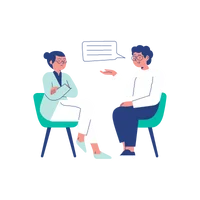
While clearing out her inbox, a clinical researcher noticed a message that looked like spam, but as she was about to delete it, the name Donald Morisky in the subject line made her pause.
Donald Morisky, a research professor at the University of California, Los Angeles (UCLA) School of Public Health, developed the 8-item Morisky Medication Adherence Scale (MMAS-8), which has been translated into more than 80 languages, can be used in the diagnosis of over 110 health conditions, and is protected by copyright. Morisky's partner, Steve Trubow, serves as chief investigator overseeing global licensing and use of the scale; one of his responsibilities is protecting the integrity of the MMAS from copyright infringers.
The email referred to a journal article that the clinical researcher had published a few days earlier, in which content from the MMAE-8 scale had been used without authorization from the scale's author—simply because the scale was available online, it had been used and published without permission. Under these circumstances, Trubow informed the researcher by email that a retroactive license was required and that, if they could not demonstrate that their project had used the scale properly, all articles from the project would have to be retracted and no related research could continue.
02
Not Only to Protect the Author's Copyright,
But Also to Ensure Proper Use of the Scale
The MMAS-8 license includes 13 questions about the authors, the study, and how the scale is used. When Trubow questioned additional researchers suspected of copyright infringement, he found that roughly half of them had scored the scale incorrectly, classifying "adherent patients" as "non-adherent patients" and "non-adherent patients" as "adherent patients." This occurred because when researchers did not obtain copyright permission, the versions of the scale downloaded from online sources did not include Morisky's proprietary scoring algorithm.
Non-compliant scoring methods not only severely distort the validated MMAS-8 scale, but also cause published papers to convey inaccurate information to the public. Some researchers have even rewritten the scale by changing the wording of individual questions; although the underlying subject matter remained close to the original, publishing study results based on an unauthorized modified scale still constitutes copyright infringement.
Copyright infringement leads to three consequences: first, substantial retroactive licensing fees; second, if researchers cannot pay these hefty licensing fees, they must retract or remove the related research outputs; and third, even if a sponsor is willing to pay the copyright fee afterward, some copyright holders will firmly refuse to grant a license, meaning that both the prior effort and subsequent results will be lost.
03
Obtain Copyright Permission and Use Scales Properly
to Better Safeguard Study Results
First
The law encourages academic scientists and their universities to protect and benefit from their inventions, so Morisky has the right to receive compensation through copyright protection mechanisms.
Second
Although researchers can resolve copyright licensing issues by withdrawing, retracting, or removing related research outputs, the real danger is that if we casually take unofficial copies of scales from the internet and refuse to obtain copyright permission through legitimate channels, conducting medical research with such a lack of rigor will cause serious harm to patient care and clinical research.

Finally
Scales are important tools for treating patients. Copyright protection mechanisms can ensure that researchers use them properly, providing stronger assurance for study results.

Let EClinCloud tell you
(Click the blank space to view the answer)
How can scale copyrights be obtained and prepared in advance?
If you are unsure whether the scales used in your study protocol involve copyright issues, you can scan the ↓QR code below↓ for a free consultation on scale copyright questions. Contact us today.