Officially in Effect! Key Pharmaceutical R&D Regulations to Watch Starting in September
Source: EClinCloud. Author: EClinCloud.
In September, a number of pharmaceutical regulations and policies will take effect. To help industry partners stay informed of regulatory trends, EClinCloud has compiled key updates closely related to new drug R&D and clinical research for industry reference.
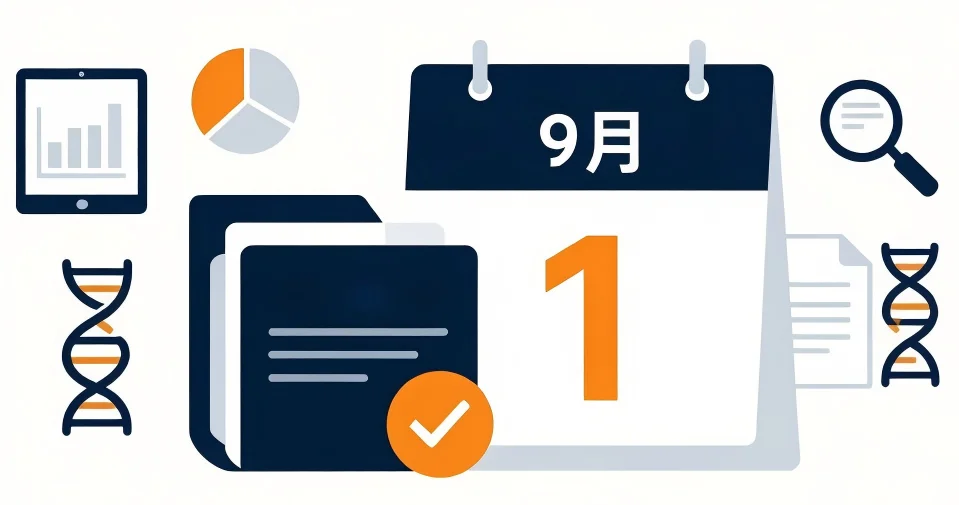
The National Medical Products Administration (NMPA), National Health Commission (NHC), National Administration of Traditional Chinese Medicine (NATCM), and National Disease Control and Prevention Administration (NDCPA) jointly issued the "Announcement on Issuing the Good Clinical Practice for Drugs (2026 Revision)" (No. 50 of 2026)[1], announcing that it will take effect on September 1, 2026, while the previous 2020 edition will be repealed simultaneously.
Comprehensively revise quality system documents. Revise SOPs and management policies; clarify the division of responsibilities among sponsors, CROs, and trial institutions to reduce compliance risks.
Strengthen training and capability building. Organize training and study sessions covering all staff, and properly retain training records to support subsequent regulatory inspections.
Reinforce accountability awareness and mindset shift. Strengthen awareness of primary accountability among sponsors, PIs, and other responsible parties.
Ensure data governance and system compliance. Verify whether data modifications have complete audit trails, whether electronic signatures are compliant, whether data transfers between systems are traceable, and whether issues such as data silos or unclear data provenance exist.
On August 10, 2026, the Center for Food and Drug Inspection of NMPA (CFDI) issued the "Notice on Soliciting Public Comments on the Chinese Translation and Implementation Recommendations for Annex 2 of ICH 'E6(R3): Guideline for Good Clinical Practice (GCP)'"[2], opening a one-month public consultation.
Since March 31 of this year, newly initiated drug clinical trials in China have fully applied E6(R3). On June 3, ICH formally adopted E6(R3) Annex 2. Just 2 months later, CFDI released the Chinese translation and implementation recommendations. Annex 2 is more than a translated document; it signals that DCT, pragmatic trials, and real-world data (RWD) in China are moving from an exploratory phase into a "rule-governed" phase.
Review closely in light of your operational priorities. For DCT, focus on Sections 2.2–2.4 (informed consent, investigational product management, and investigator oversight); for RWD, focus on Sections 3.4–3.5 (data access and use, and data considerations).
Conduct an internal assessment. Map your existing SOPs, data management workflows, and vendor management systems against the requirements of Annex 2.
Assess whether your products meet the eligibility criteria. Review your R&D pipeline against thresholds such as "seriously life-threatening diseases / major clinical value / major manufacturing process changes."
Prepare submission and communication materials in advance. Following the "one-strategy-per-company" approach, map out Type I meeting needs and supporting data at key milestones (pre-IND / pre-confirmatory trial / pre-marketing application).
The Essential Medicines List has undergone its first adjustment in 8 years. Drawing the greatest attention is that innovative drugs have been included in the Essential Medicines List in batches for the first time, including 4 domestically developed Category 1 innovative drugs added at scale for the first time across key therapeutic areas such as oncology, immunology, and neurology, signaling policy support for innovative drug development. At the same time, this revision establishes real-world market sales volume and evidence-based medical evidence as prerequisite entry thresholds, underscoring the need to focus more closely on clinical value and evidence-based support, using clinical benefit and real-world performance to further validate product value.
Original document:
[1]https://www.nmpa.gov.cn/xxgk/fgwj/xzhgfxwj/20260608103856150.html
[2]https://cfdi.org.cn/cfdi/resource/news/16828.html
[3]https://www.cde.org.cn/main/news/viewInfoCommon/4a8ef5a0f7ae2e6dfca8cf3851841b1a
[4]https://www.nhc.gov.cn/yaozs/c100098/202607/0f4f2bdcfead449f8412453373522470.shtml
EClinCloud is a leading AI company in the clinical research industry. Driven by AI, it builds an integrated intelligent clinical cloud platform and endpoint assessment technologies, providing global pharmaceutical companies and research institutions with technology products including eCOA, CTMS, eTMF, EDC, RTSM, IRC, and RM, as well as services for scale management, linguistic validation, rater training, and data quality analysis to deliver efficient and precise digital solutions. Leveraging AI predictive models and an intelligent data platform, it dynamically evaluates and helps improve the success rate of drug clinical trials, helping shorten drug and device R&D cycles for the benefit of patients.