How to Assess Pain Caused by Different Diseases? Click to View →
Source: EClinCloud. Author: EClinCloud.

Ta-da!
The long-awaited Part 2 on pain scale assessment is here.
In Part 1, we introduced different scales covering pain intensity and pain quality (see Part 1: How to Assess Pain? Quick Tips on Choosing a Scale). In this article, we will elaborate on comprehensive pain assessment scales that cover both aspects, as well as disease-specific pain assessment scales.
Comprehensive Pain Assessment Scales
Used for comprehensive pain evaluation, these scales integrate the patient's pain intensity, aggravating factors, the impact of pain on function, and other pain-related issues, making them more suitable for clinical research or health surveys in non-acute phases.
01
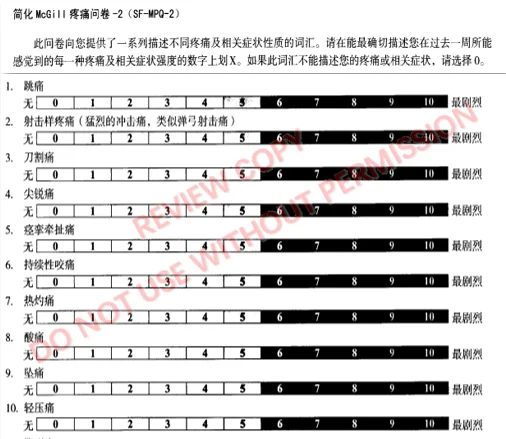
Short-Form McGill Pain Questionnaire-2 (SF-MPQ-2)
Main content:
It includes 4 dimensions (continuous pain, intermittent pain, neuropathic pain, and impact on emotions), with a total of 22 items. Each item is scored from 0 to 10, with higher scores indicating more intense pain or negative emotions.
Advantages:
The Chinese version of the SF-MPQ-2 demonstrates good reliability and validity, addressing the assessment limitations of the original version. Multicenter validation has confirmed its good construct validity, making it suitable for comprehensive pain conditions, including neuropathic pain.
Note:
When using this scale, it is recommended that researchers supervise the entire process and explain terminology when necessary.
02
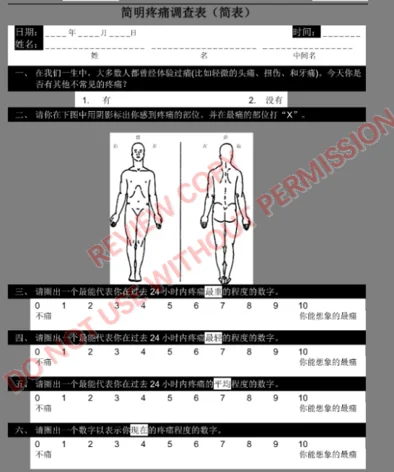
Brief Pain Inventory (BPI)
Main content:
It includes 4 pain severity items (from 0, no pain, to 10, very severe pain), 7 items on the impact of pain on daily functioning (including general activity, walking, work, mood, enjoyment of life, relations with others, and sleep), as well as a question on the percentage of pain relief provided by analgesics, and also requires patients to describe the location of their pain.
Advantages:
It is one of the most commonly used multidimensional pain assessment tools, has undergone reliability and validity validation in China, and has a Chinese version provided by the copyright holder.
Note:
There are currently two versions—the long form (17 items) and the short form (9 items)—and the short form is widely used in clinical practice.
03
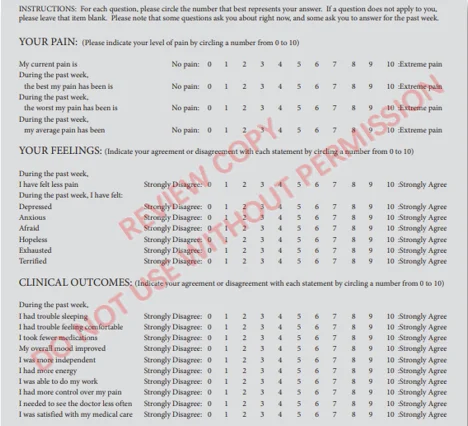
Global Pain Scale (GPS)
Main content:
It contains 20 pain-related assessment items divided into four sections: pain, emotional feelings, clinical manifestations, and daily behaviors (i.e., impact of pain).
Advantages:
It demonstrates good reliability for measuring pain, with good stability and high reliability, and allows parametric testing (0–10 scoring).
It can also effectively reflect the recent psychological status of patients with chronic pain, as well as the impact of pain on their daily lives.
Limitations:
It lacks assessment of pain location and pain type.
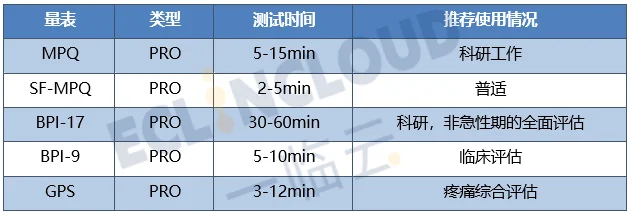
Summarized as follows:
Disease-Specific Pain Assessment Scales
As a disease progresses, some conditions may involve pain in parts of the body, and because clinical manifestations vary by disease, the location of pain, the type of pain, and its impact on quality of life also differ.
Therefore, in addition to the generic pain assessment scales mentioned in the previous article, disease-specific pain assessment scales have also been developed for these conditions to provide more precise and specialized assessments.
Common conditions that cause pain symptoms include, but are not limited to, osteoarthritis, cancer, dementia, and rare diseases. Selected scale details are listed below:
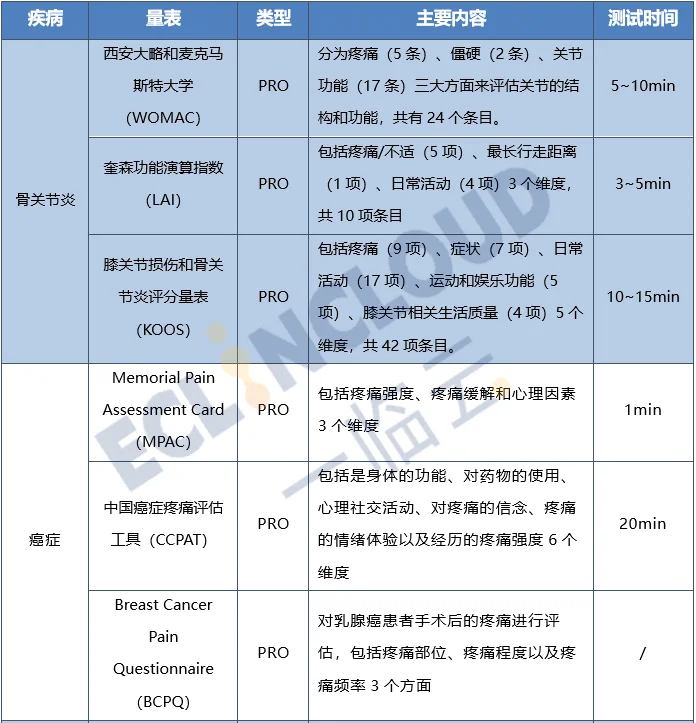
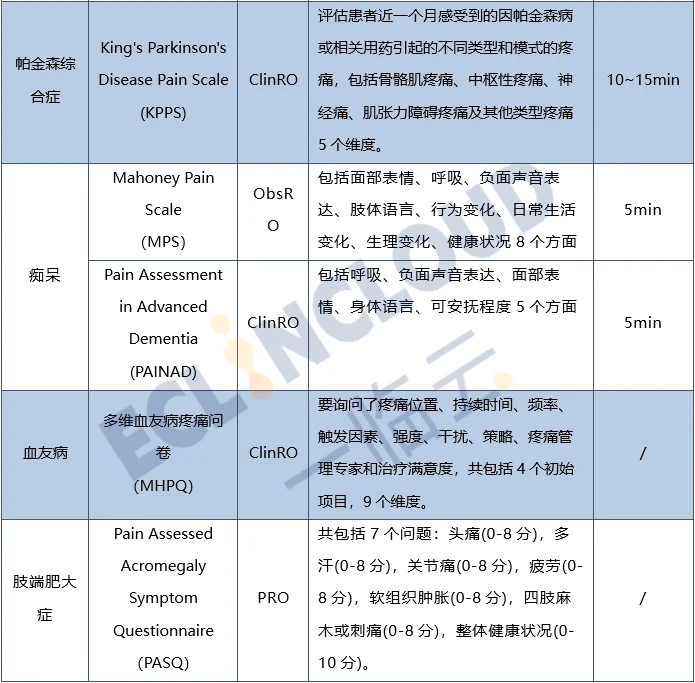
Because many diseases and scales involve pain perception, we will not elaborate further here. If you are interested in learning more, you can scan the QR code below to request detailed information—we look forward to hearing from you.
Guide to viewing Pain Assessment (Part 1):
EClinCloud, WeChat Official Account: EClinCloud How to Assess Pain? Quick Tips on Scale Selection
EClinCloud is a technology company focused on clinical R&D, offering an integrated, interconnected, all-in-one clinical trial cloud platform (including technology products such as eCOA, CTMS, eTMF, EDC, and RTSM and solutions such as scale management, linguistic validation, rater training, and data quality analysis) as well as clinical trial endpoint assessment technologies across therapeutic areas (including oncology, central nervous system, and ophthalmology, among others). Combining cutting-edge technology with life-science data, it is building a globally leading, patient-centric SaaS cloud platform supporting clinical evidence to help domestic and international pharmaceutical companies and research institutions improve R&D efficiency, accelerate the market launch of drugs and devices, and benefit countless patients.