Understanding Protocol Deviation Documentation Requirements in Revised GCP and ICH-GCP

Source: EClinCloud. Author: EClinCloud.

What is a protocol deviation?
What are the regulatory requirements for documenting protocol deviations?


Definition of Protocol Deviation in Revised GCP/ICH-GCP
Revised GCP
During a clinical trial, any intentional or unintentional departure from or noncompliance with the trial protocol approved by the ethics committee and GCP principles is referred to as a protocol deviation or protocol violation.
ICH-GCP
ICH-GCP stipulates regarding protocol deviations that the investigator/institution should comply with the trial protocol agreed to by the sponsor, approved by the regulatory authorities (if required), and approved by the ethics committee.
Regulatory Requirements for Documenting Protocol Deviations

Requirements in GCP for investigators and sponsors/monitors on handling protocol deviations:


Investigator, Article 20
The investigator or their designated trial staff should document and explain any deviation from the trial protocol. When the investigator modifies or deviates from the trial protocol without prior approval from the ethics committee in order to eliminate an immediate hazard to subjects, the investigator should promptly report the modification or deviation with the reasons to the ethics committee and the sponsor, and to the drug regulatory authorities when necessary.
Sponsor, Article 51
After each monitoring visit, the monitor should promptly submit a written report to the sponsor. The report should include the monitoring date, site, name of the monitor, and names of the investigator and other personnel contacted by the monitor; a summary of the monitoring work, issues identified in the clinical trial and statements of facts, deviations from and deficiencies against the trial protocol, and monitoring conclusions; and a description of corrective actions taken or proposed for issues identified during monitoring, and recommendations to ensure trial compliance with the protocol. The report should provide sufficient detail to allow verification of compliance with the monitoring plan. Centralized monitoring reports may be submitted separately from on-site monitoring reports. The sponsor should review and follow up on issues in the monitoring report and document and retain them.
ICH-GCP requirements for documenting and reporting protocol deviations are:

ICH E3 "Structure and Content of Clinical Study Reports" stipulates:
ICH E9 "Statistical Principles for Clinical Trials" stipulates:

Summary
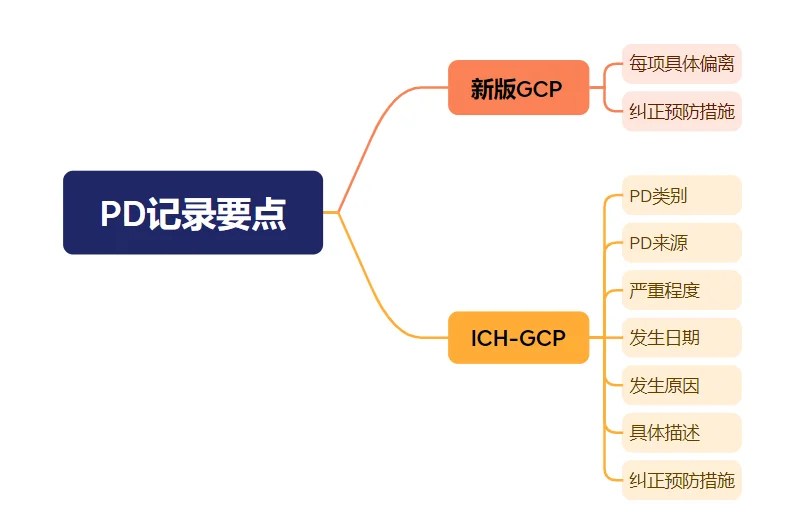
GCP holds that every deviation and its corresponding corrective and preventive actions must be documented.
ICH-GCP specifies that PD reports must record the PD category, source, severity, date of occurrence, cause, detailed description, and corrective and preventive actions.
“
In the next issue, we will continue with how client SOPs are presented in CTMS. To be continued—stay tuned for the next issue.
EClinCloud is a technology company focused on clinical research and development. It provides an integrated, interconnected all-in-one clinical trial cloud platform (including technology products and offerings such as eCOA, CTMS, eTMF, EDC, RTSM, and RM, as well as solutions such as scale design, scale copyright management, linguistic validation, rater training, and data quality analysis) alongside clinical trial endpoint assessment technologies across therapeutic areas (including central nervous system, ophthalmology, and others). By combining frontier technology with life sciences data, it builds a globally leading "patient-centric" SaaS cloud platform for clinical evidence support, helping domestic and international pharmaceutical companies and research institutions improve R&D efficiency, accelerate the market launch of drugs and medical devices, and benefit countless patients.