Get the “Latest” Key Takeaways on “Patient-Centered” Guidelines
Source: EClinCloud. Author: EClinCloud.

.
Hello everybody!

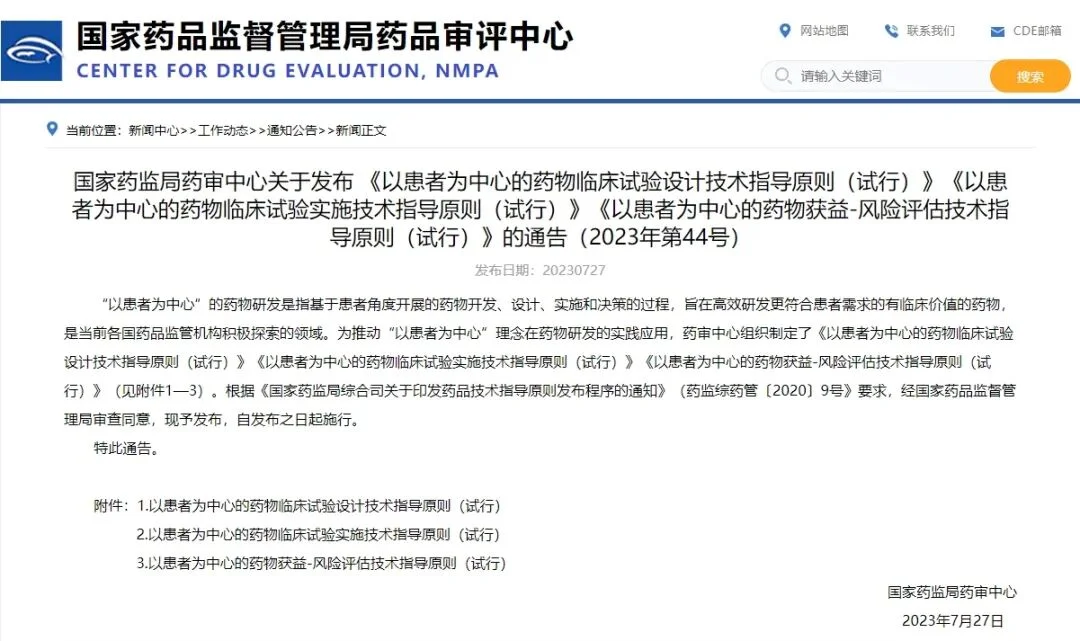
In July of this year, the CDE officially issued three “patient-centered” guidelines covering clinical trial design, implementation, and benefit-risk assessment. They propose conducting drug development, trial design, implementation, and decision-making from the patient’s perspective, and advocate providing clinical outcome assessment (COA) in trials for efficacy or safety evaluation, aiming to efficiently develop clinically valuable drugs that better meet patient needs.
So our editor studied them in depth, thoroughly learning and understanding the guiding principles and key contents, and finally connected the dots!
Specifically, three keywords dominate the screen:

Patient-Centered
Patient Experience Data
Clinical Outcome Assessment (COA)
Our editor counted on their fingers how many times these terms appear in the guidelines—that alone shows how important they are. Based on those frequencies, they are practically trending topics!
Patient-Centered
Guideline 1 | 18 times |
Guideline 2 | 18 times |
Guideline 3 | 8 times |

Total
44 times
Patient Experience Data
Guideline 1 | 31 times |
Guideline 2 | 8 times |
Guideline 3 | 57 times |
Total
96 times
Clinical Outcome Assessment (COA)
Guideline 1 | 68 times |
Guideline 2 | 11 times |
Guideline 3 | 20 times |
Total
99 times
Based on the above, our editor has summarized the core contents of the three guidelines and analyzed them from a personal perspective:
Guideline 1
Technical Guidelines for Patient-Centered Drug Clinical Trial Design
The main text has a total of 8873 characters, in which “clinical outcome assessment (COA)” appears a total of 68 times and “patient experience data” appears a total of 31 times—a remarkably high frequency. A substantial portion of the text focuses on the section “Efficacy Evaluation Based on Clinical Outcome Assessment (COA),” explaining the definition of clinical outcome assessment (COA), how to select scales under different circumstances, and approaches to establishing assessment endpoints, among other topics, emphasizing the need to prioritize the collection of patient data in clinical trials and carefully select appropriate, validated, and clinically meaningful scale instruments for evaluation.
Guideline 2
Technical Guidelines for Patient-Centered Drug Clinical Trial Implementation
The main text totals 9095 characters, in which "patient-centered" appears a total of 18 times and "clinical outcome assessment (COA)" appears a total of 11 times. In addition, we found that the text mentions "electronic" 22 times, describing that clinical trials should proceed from the patient's perspective and can use electronic methods to reduce patient burden while protecting patients' private data.
Guideline 3
Technical Guidelines for Patient-Centered Drug Benefit-Risk Assessment
The main text totals 7112 characters, in which "patient experience data" appears a total of 57 times and "clinical outcome assessment (COA)" appears a total of 20 times. The text divides patient experience data into two categories—clinical outcome assessment (COA) and patient preference information (PPI)—and recommends that when using a single scale as a single endpoint or combining multiple scales as a composite endpoint for assessment in clinical trials, information such as patient preferences and adherence should also be considered.
From this, we gained a clear takeaway 

"Patient-centered" clinical trials emphasize the capture and collection of patient experience data, encourage the use of clinical outcome assessment (COA) for efficacy and safety evaluations, and recommend that sponsors adopt validated electronic methods for data collection to reduce the burden on patients participating in clinical trials, improve clinical research quality and efficiency, and support new drug R&D and market approval.
Here Is the Key Point
EClinCloud provides one-stop scale management services and an electronic clinical outcome assessment (eCOA) system, has passed NMPA (CFDI) inspection, and has experience supporting drug approvals.
EClinCloud provides one-stop scale management services and an electronic clinical outcome assessment (eCOA) system, has passed NMPA (CFDI) inspection, and has experience supporting drug approvals.
EClinCloud provides one-stop scale management services and an electronic clinical outcome assessment (eCOA) system, has passed NMPA (CFDI) inspection, and has experience supporting drug approvals.
If you have any needs, please feel free to contact us anytime.

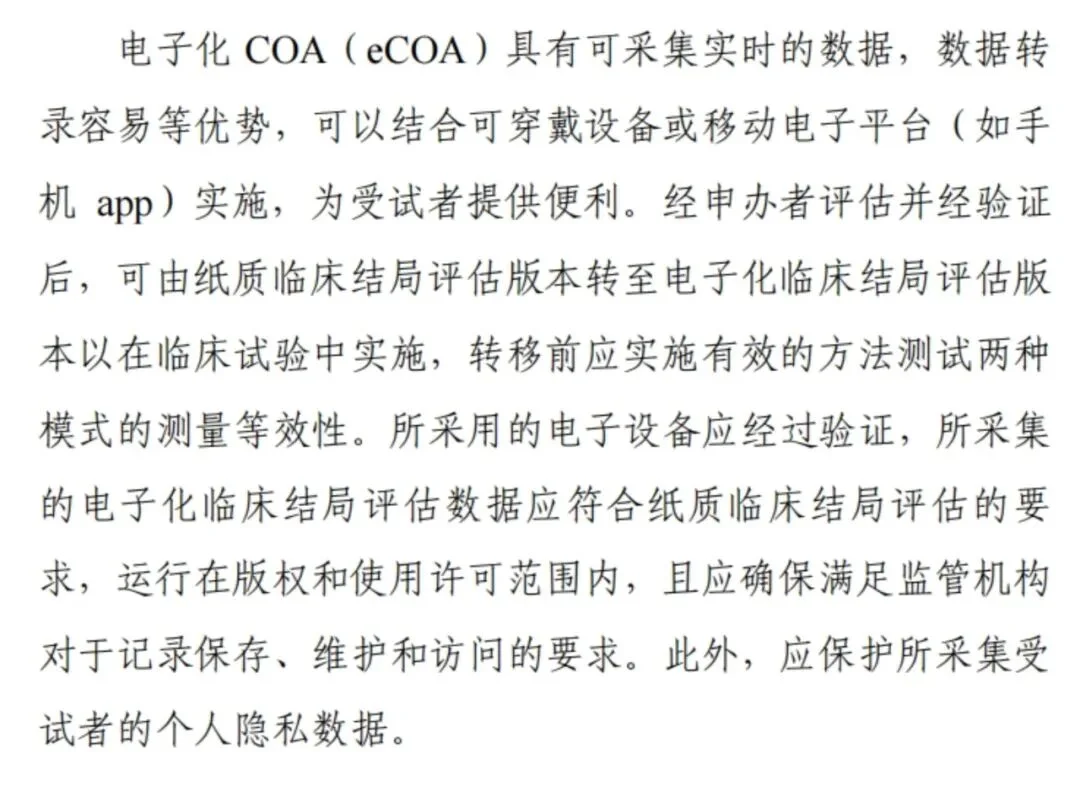
We have also excerpted the usage recommendations and advantages regarding eCOA from the guidelines for your reference.



EClinCloud is a technology company focused on clinical R&D that provides an integrated, interconnected all-in-one cloud platform for clinical trials (including technology products and offerings such as eCOA, CTMS, eTMF, EDC, RTSM, and RM, with solutions such as scale design, scale copyright management, linguistic validation, rater training, and data quality analysis) as well as clinical trial endpoint assessment technologies across therapeutic areas (including central nervous system and ophthalmology). Combining cutting-edge technology with life data, it is building a globally leading "patient-centered" clinical evidence support SaaS cloud platform to help domestic and international pharmaceutical companies and research institutions improve R&D efficiency, accelerate the market approval of drugs and medical devices, and benefit countless patients.