How Much Do You Know About Routine Diagnostic Assessment of Chronic Obstructive Pulmonary Disease (COPD)? A Must-Save Guide!

Source: EClinCloud. Author: EClinCloud.
Patient profile: 62-year-old male with a 30-year smoking history, presenting with persistent cough, dyspnea, chest tightness, and shortness of breath...

Watch Out for COPD!


What Is COPD?
COPD is short for chronic obstructive pulmonary disease, a preventable and treatable disease characterized by persistent airflow limitation that is closely associated with chronic bronchitis and emphysema[1]. Patients often overlook the long-term adverse effects of these recurrent pulmonary inflammations on the body, only realizing they are living in the shadow of COPD when they seek treatment for dyspnea.


Therefore, when patients with long-term pulmonary inflammation develop symptoms such as shortness of breath, breathlessness, or dyspnea after exertion, there should be high vigilance for the presence of COPD.
How Is the Severity of COPD Symptoms Assessed?
Below, we introduce some of the most commonly used scales for assessing COPD symptoms and disease impact.
Most Commonly Used Scales for Routine Diagnostic Assessment of COPD!
The mMRC was the first scale developed to assess dyspnea (Table 1); it correlates well with other multidimensional health assessment methods and has some predictive value for future mortality risk[2].
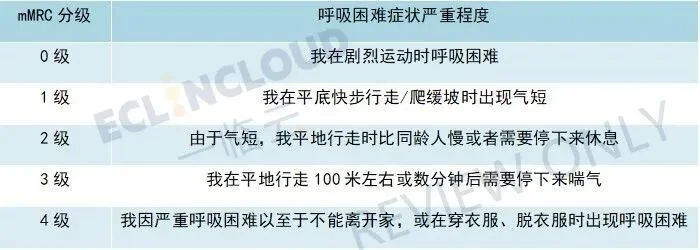
Table 1: Modified MRC Dyspnea Scale (for reference only)
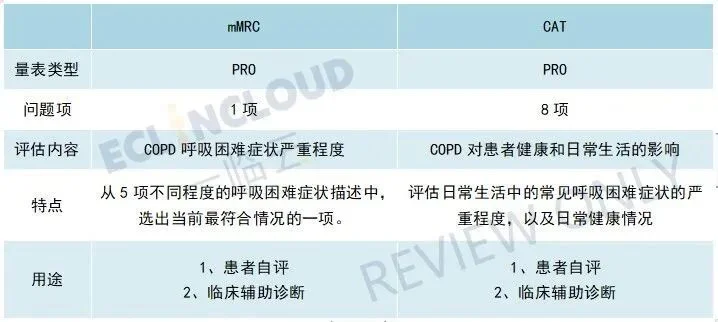
The CAT can be used to assess the impact of COPD on a patient's health and daily life. Compared with other COPD health assessment methods, the CAT evaluates 8 aspects—ranging from cough, phlegm, and chest tightness to daily activities, activities at home or outdoors, and sleep and energy—using 8 simple questions scored from 0 to 5. The higher the total score, the greater the impact on the patient's health[2].

The respective characteristics of the mMRC and CAT scales are summarized below:
In addition to scales used for routine diagnostic assessment, COPD scales in clinical trials can serve as efficacy endpoints in clinical research to measure treatment impact.
We will reveal more in the next issue—to be continued, see you next time!

References

1. Chronic Obstructive Pulmonary Disease Group, Chinese Thoracic Society, Chinese Medical Association. Guidelines for the Diagnosis and Management of Chronic Obstructive Pulmonary Disease (2013 Revised Edition) (慢性阻塞性肺疾病诊治指南(2013 年修订版)), Chinese Journal of the Frontiers of Medical Science (中国医学前沿杂志), 2014, Vol. 6, No. 2.
2. GLOBAL STRATEGY FOR THE DIAGNOSIS, MANAGEMENT, AND PREVENTION OF CHRONIC OBSTRUCTIVE PULMONARY DISEASE (2023 REPORT)
EClinCloud is a technology company focused on clinical R&D. It provides an integrated, interoperable, all-in-one cloud platform for clinical trials (including, across technology products and offerings such as eCOA, CTMS, eTMF, EDC, RTSM, and RM, solutions such as scale design, scale copyright management, linguistic validation, rater training, and data quality analysis) as well as clinical trial endpoint assessment technologies across therapeutic areas (including the central nervous system, ophthalmology, and others). Combining cutting-edge technology with life sciences data, EClinCloud builds a globally leading, "patient-centric" SaaS cloud platform supporting clinical evidence to help domestic and international pharmaceutical companies and research institutions improve R&D efficiency, accelerate the market launch of drugs and devices, and benefit countless patients.