What Momentum Follows Successive EMA and FDA Approvals of New Hemophilia Drugs? Take a Look!

Source: EClinCloud. Author: EClinCloud.
Hemophilia is an X-linked recessive hereditary bleeding disorder in which genetic mutations reduce clotting factor levels in the body, resulting in impaired coagulation.
The main types are as follows:
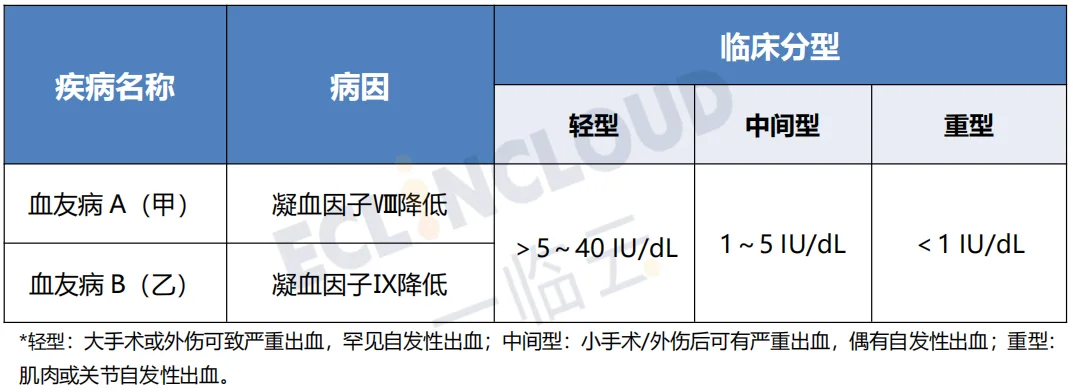
Hemophilia A and B have similar clinical manifestations, characterized by hard-to-stop bleeding—either spontaneous or following minor trauma—in joints, muscles, internal organs, and deep tissues. Musculoskeletal bleeding is the most common, accounting for 80%–90% of all bleeding events.
Patients with severe hemophilia experience recurrent spontaneous bleeding into the same joint, leading to irreversible bone and cartilage damage and potentially resulting in joint disability.
There are no racial or regional differences in the incidence of hemophilia. Among males, the incidence of hemophilia A is approximately 1/5000, and the incidence of hemophilia B is approximately 1/25000. Female patients with hemophilia are extremely rare. Among all patients with hemophilia, hemophilia A accounts for 80%–85%, and hemophilia B accounts for 15%–20%.
Due to economic and other factors, the prevalence of hemophilia varies considerably across different countries and even across different periods within the same country. A survey conducted in China from 1986 to 1989 across 37 regions in 24 provinces showed a hemophilia prevalence of 2.73 per 100,000 population in China.
Current treatment relies primarily on replacement therapy, including on-demand therapy and prophylactic therapy. Once bleeding occurs, it should be managed promptly and effectively in patients with hemophilia to prevent the onset and progression of complications.
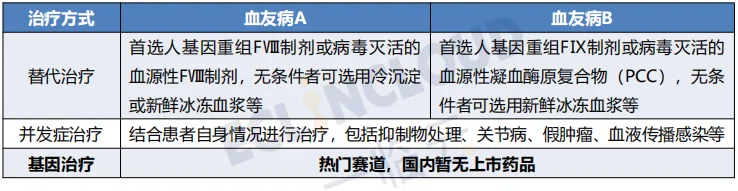
Currently, treatment for hemophilia in China still relies on clotting factor supplementation. Although this approach reduces bleeding risk and improves patient survival, long-term, high-frequency injections negatively affect patients' quality of life, and patients must also contend with risks associated with insufficient supplies of clotting factors.
Given the genetic defect underlying hemophilia, gene therapy has long been a focus for scientists. With its profile as a one-time treatment offering lifelong cure, it can fully address the drawback of requiring long-term, high-frequency injections in patients with hemophilia, making it one of the research directions for treating the disease.
Gene therapy for hemophilia has existed for more than two decades, yet it was not until the European Medicines Agency (EMA) approved Roctavian in August 2022 and the U.S. Food and Drug Administration (FDA) approved Hemgenix in November of the same year that gene therapy truly became a treatment option capable of benefiting patients, also representing important progress in developing innovative therapies for patients with similar high-burden diseases.

The most common approach in hemophilia gene therapy uses an adeno-associated virus (AAV) vector to package the FVIII or FIX gene and deliver it into target cells, achieving sustained expression of FVIII or FIX. Other viral-vector approaches, such as retrovirus-mediated hemophilia gene therapy and gene editing, are still in preclinical research stages.
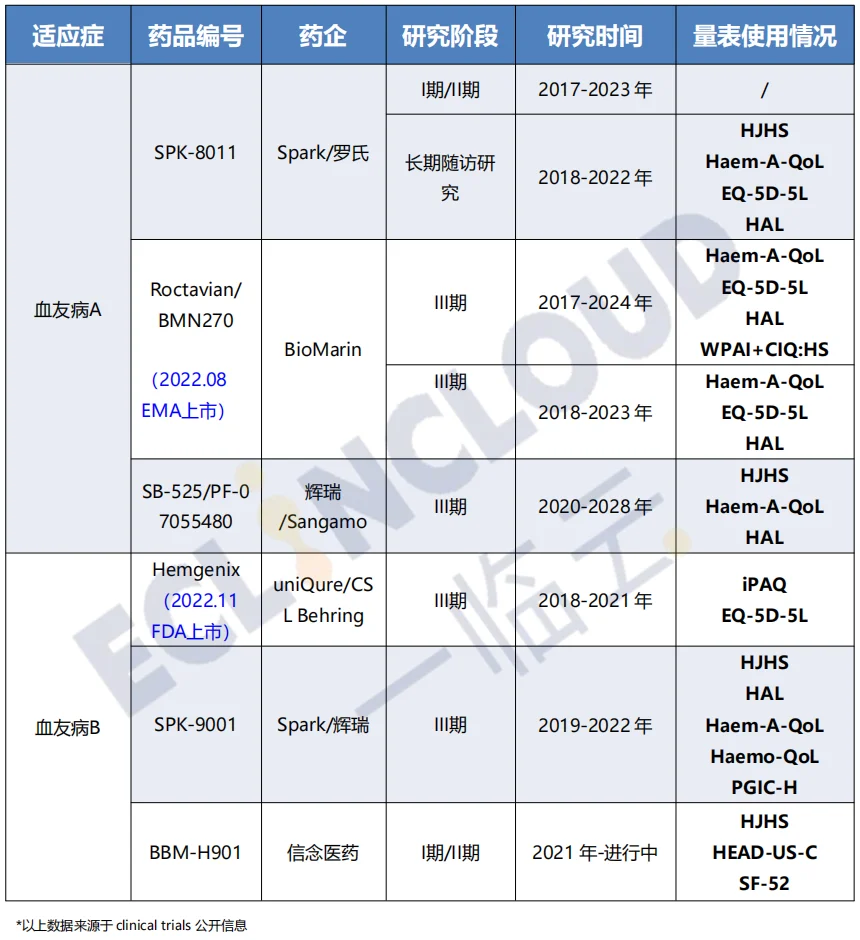
Currently, two gene therapy products for hemophilia have been approved overseas, while in China, multiple gene therapy candidates—such as those from Vigenebio (VGB-R04 Injection), Belief BioMed (BBM-H901 Injection), Zhishan Weixin (ZS801 Injection), and Huayi Lejian—have entered clinical development, with future approval and market launch on the horizon.
About EClinCloud
EClinCloud is a technology company focused on clinical research and development. It provides an integrated, interoperable all-in-one cloud platform for clinical trials (including technology products such as CTMS, eTMF, EDC, RTSM, eCOA, and eConsent, as well as solutions such as scale management, linguistic validation, rater training, and data quality analysis) and clinical trial endpoint assessment technologies across therapeutic areas (including oncology, central nervous system, ophthalmology, and others). By combining cutting-edge technology with life-science data, it builds a globally leading "patient-centric" SaaS cloud platform for clinical evidence support, helping domestic and international pharmaceutical companies and research institutions improve R&D efficiency, accelerate the launch of drugs and medical devices, and benefit countless patients.