Live Webinar Preview | Applying eCOA to Achieve Patient-Centered Clinical Research
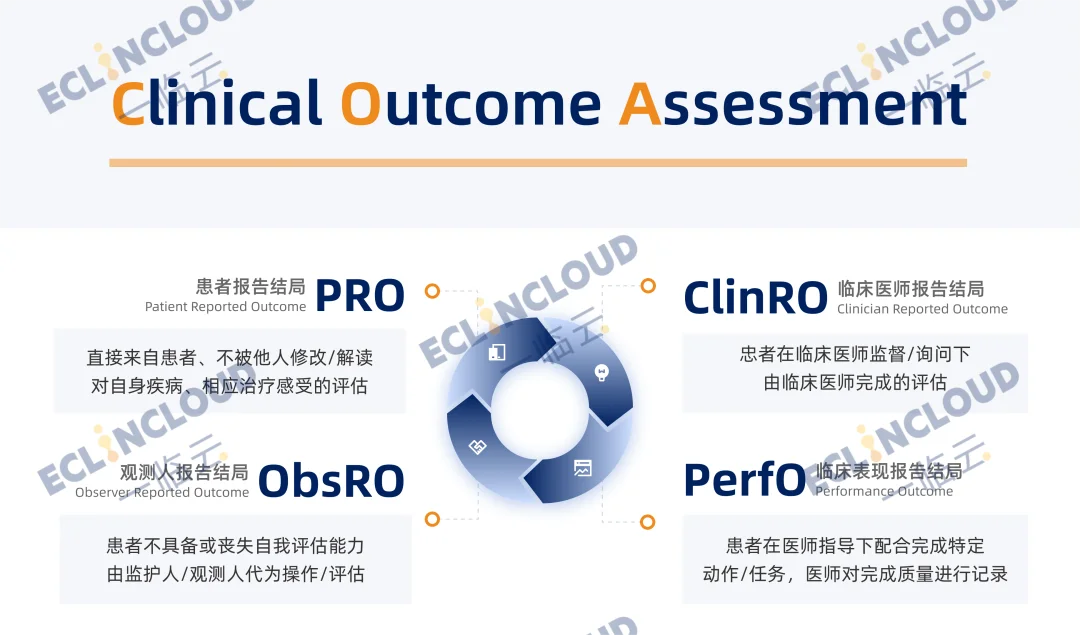
Source: EClinCloud.
To encourage a patient-centered approach to new drug development, evaluate drug benefit-risk across more dimensions, and appropriately use patient-reported outcomes as endpoints, the Center for Drug Evaluation (CDE) of the National Medical Products Administration (NMPA) has issued multiple guidance documents explicitly encouraging the use of electronic clinical outcome assessment (eCOA) / electronic patient-reported outcome (ePRO) tools in clinical drug research.
In November 2021, the CDE issued the "Guiding Principles for Clinical Value-Oriented Clinical Development of Antitumor Drugs," affirming that collecting PRO data in oncology patients can provide clinically important information that cannot be obtained from other measures or endpoints.
In December 2021, the CDE issued the "Guiding Principles for the Application of Patient-Reported Outcomes in Drug Clinical Development (for Trial Implementation)," which notes that compared with paper-based PROs, ePRO offers clear advantages in data collection efficiency, real-time capability and flexibility, compliance, security, and patient privacy protection.
This means eCOA is gradually transitioning from an "initial phase" to a "mature application phase," providing important guidance for the use of ePRO and eCOA tools. This is a positive signal for the use of eCOA in clinical trials.
Moving from paper to electronic formats, the advantages of eCOA are reflected in patient experience, scientific rigor of data, and trial operational costs. Applying eCOA helps improve clinical trial efficiency and data quality, and—under a patient-centered premise—enables more effective patient management and more scientific clinical efficacy evaluation.
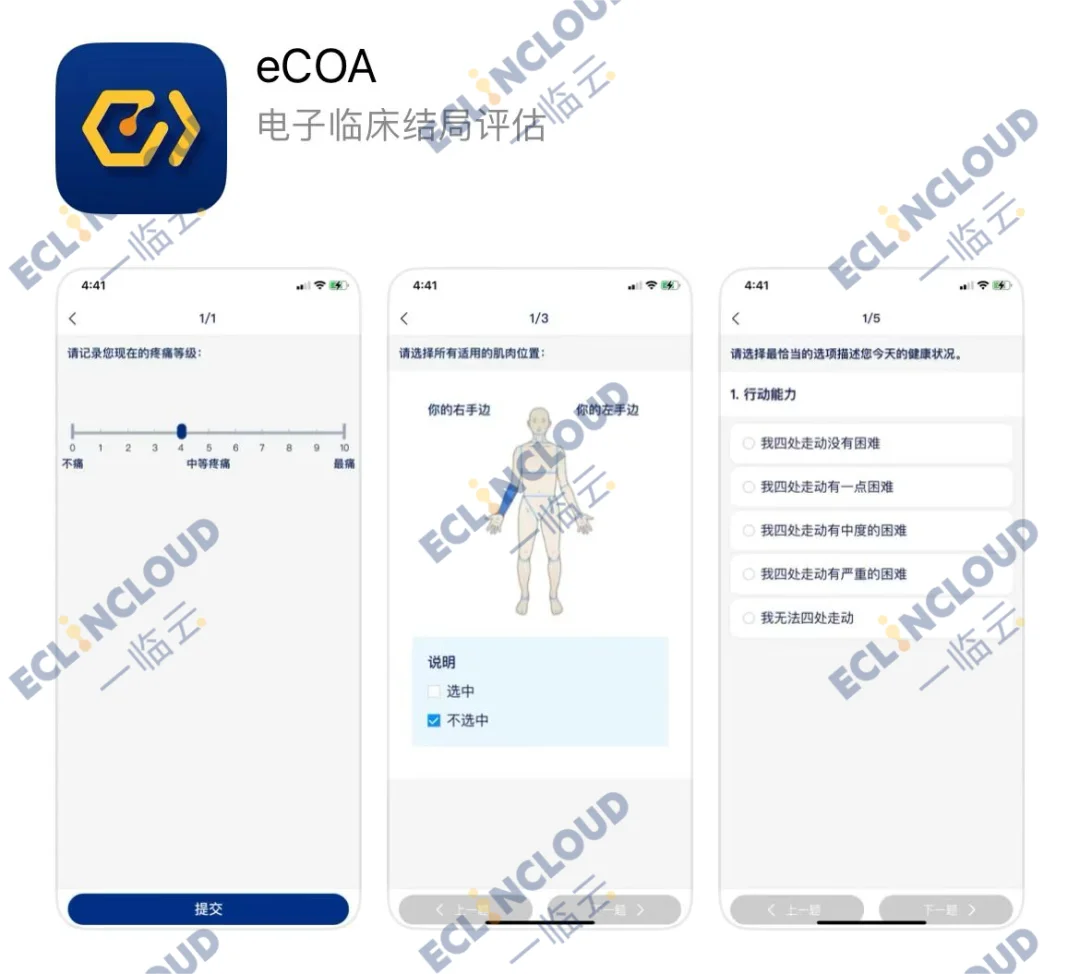
Nevertheless, for clinical trial leads at pharmaceutical companies or CROs, the following common questions remain when it comes to successfully delivering eCOA studies:
Which scales are needed for this study?
Are these scales already available in the eCOA scale library?
What is the value of eCOA compared with paper COA?
As source data, can eCOA data be modified?
What kind of eCOA system meets regulatory requirements?
To answer these questions, on March 3, 2023, from 16:00 to 17:00, EClinCloud will partner with the "Medicine Economic News" New Media Center to co-host the live online webinar "Applying eCOA to Achieve Patient-Centered Clinical Research." During the webinar, Ms. Xiong Ke, Senior Product Consultant at EClinCloud, will draw on her experience from a forward-looking perspective to provide pharmaceutical companies and CROs with a comprehensive introduction to eCOA.
In-depth analysis of what eCOA is
The significance and value of eCOA for "patient-centered" clinical trials
Global regulatory authorities' perspectives on the use of eCOA
Practitioners and professionals in domestic R&D, regulatory affairs, clinical operations, and related pharmaceutical fields
Common issues in the implementation and use of electronic clinical outcome assessment (eCOA)

EClinCloud is a technology company dedicated to clinical research and development, providing an integrated, interoperable all-in-one cloud platform for clinical trials (including technology products such as CTMS, eTMF, EDC, RTSM, eCOA, and eConsent, as well as solutions such as scale management, linguistic validation, rater training, and data quality analysis) alongside clinical trial endpoint assessment technologies across therapeutic areas (including oncology, central nervous system, and ophthalmology). Combining advanced technology with life sciences data, EClinCloud is building a globally leading, patient-centered SaaS cloud platform for clinical evidence support to help domestic and international pharmaceutical companies and research institutions improve R&D efficiency, accelerate the market launch of drugs and medical devices, and benefit countless patients.