Source: EClinCloud. Author: eClinCloud.
Click the blue text above to follow us
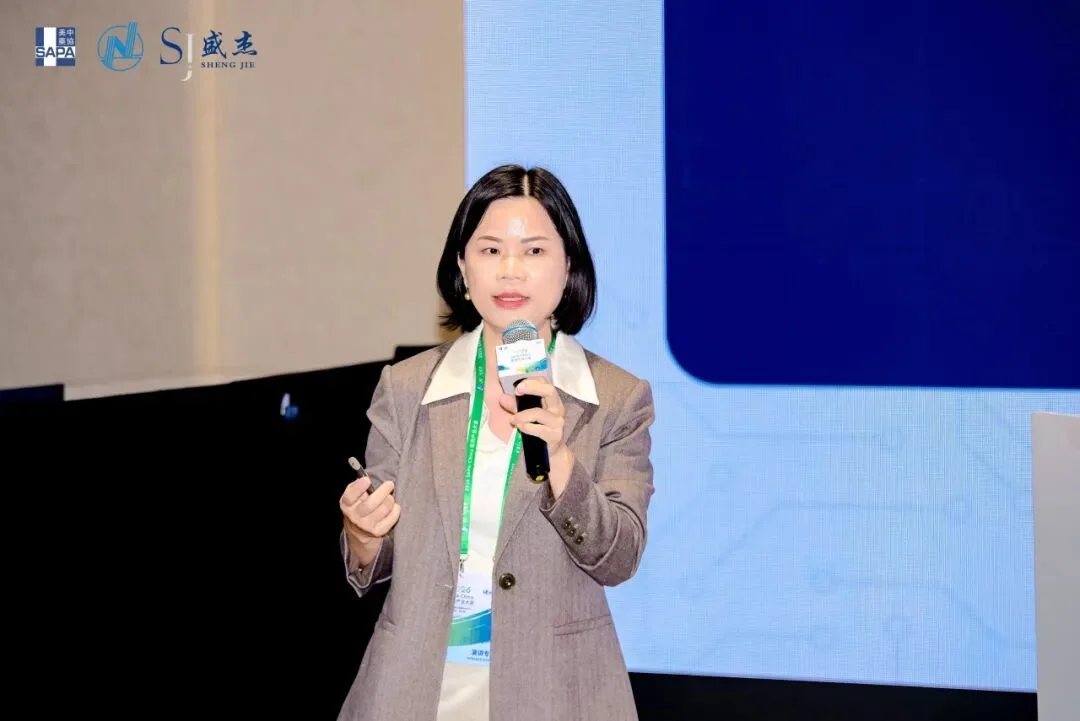
From August 24 to 27, 2021, the "Training Series on Clinical Research Technologies and Capabilities for Psychiatric and Psychological Disorders" was successfully held. Dr. Qin Long, CEO of EClinCloud, was invited to give a keynote presentation titled "New Scale Assessment Technologies in Psychiatric and Psychological Clinical Research." He gave a comprehensive overview of what are currently three new technologies in scale assessment: eCOA, rater training, and blinded data analysis, along with case studies demonstrating how these new technologies help clinical research.
We will introduce these three new technologies in a three-part series; this article covers Part 1: eCOA.
Electronic clinical outcome assessment (eCOA) is an electronic tool that describes or reflects how a patient feels, functions, or survives in a clinical trial. Globally, eCOA is increasingly being adopted on a large scale. In China, national policies also encourage the use of electronic assessment methods to reduce participant burden.
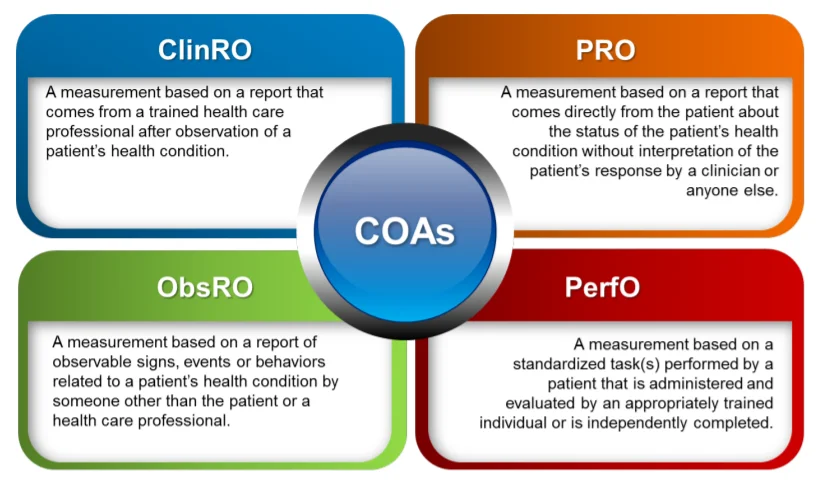
Within eCOA, ePRO consists of firsthand data coming directly from the patient rather than transcribed data. Direct data capture and transmission help ensure the timeliness and authenticity of records as well as study quality, while reducing the recording workload for research staff and minimizing data transcription errors. As a result, ePRO is currently the most widely used.
On the regulatory front, in 2017, the U.S. FDA released its plan for developing guidance on patient-focused drug development. In November 2020, ICH adopted the Patient Focused Drug Development (PFDD) topic paper to develop guidance on methodologies for collecting and analyzing patient input and on tool development. On July 2, 2021, the Center for Drug Evaluation (CDE) released the "Guiding Principles for Clinical Value-Oriented Clinical Development of Antitumor Drugs (Draft for Comment)", aiming to implement a development philosophy guided by clinical value and centered on patient needs.
The guiding principles devote substantial space to stating that antitumor drug development should be carried out in accordance with a patient-needs-centered philosophy—understanding what patients need and listening to the patient voice. Previously, patients' diseases were evaluated from the third-party perspectives of investigators, assessment bodies, or regulators, while the physical, psychological, and personal life impacts on patients, as well as the burden of treatment on patients, were often overlooked. The guidance also explicitly states that regarding "selection of clinical endpoints," applicants are encouraged to develop multiple assessment approaches, such as electronic PRO data collection systems (ePRO), to reduce the assessment burden on participants.

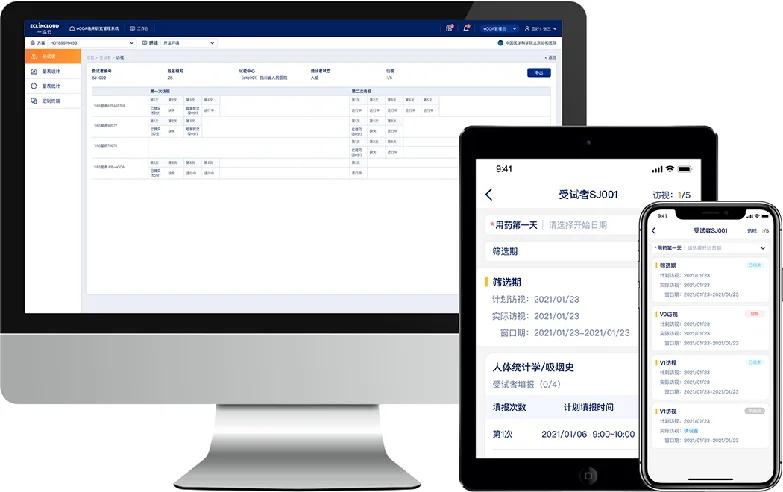
eCOA can be implemented across different devices, including smartphones, tablets, and computers. Mobile interfaces may also be divided into clinician-facing and patient-facing versions, as clinician entry is sometimes required, particularly for psychiatric scales. If it is only a diary, patients may simply download an app on their smartphone to enter data.
Protocol design is very convenient: simply drag and drop the required questions into place with a what-you-see-is-what-you-get interface.
For standardized scales, we provide an extensive library of standard scales as well as translated and validated versions in different languages, all ready to be referenced directly.
Complex edit checks are supported. Items within a scale often have interdependencies that experienced raters or people familiar with the scale will recognize. In these cases, using clinical outcome assessment (COA) electronically is very convenient: once these logic rules are built in, any potential error on an item can be seen immediately during data entry.
On both the sponsor and study site portals, various types of data can be viewed in real time. For problematic data, issues can be identified and corrected promptly. For data modifications, we follow a strict DCF process to ensure the compliance and validity of changes, support better risk management, and further improve data quality.
Once data are entered, they can also be viewed across different dimensions to obtain a more accurate result. Reports can also be customized by role, allowing personnel in different functions to view different reports in real time.

Adopting this electronic approach ultimately accelerates trial timelines, because data cleaning is performed continuously throughout the trial. Once the last patient's last visit is entered, database lock can be completed very quickly, far outpacing paper-based methods. Moreover, electronic records do not need physical archiving or mailing—the database can be downloaded, packaged, and sent to study sites in encrypted form.
The Value of EClinCloud eCOA
Support for offline scale completion;
Reminders for subjects to complete data entry—for example, when the protocol requires patients to enter certain data during a specific time window, reminders can be configured in the app;
Real-time access to data for sponsors, CROs, and study sites through multi-dimensional reporting tools;
Rapid deployment when the protocol changes during a trial—because our eCOA is cloud-deployed, updates only require publishing a new version online, which is much more convenient and faster than paper;
Significantly shortened database lock times, accelerating trial timelines;
Direct data entry via smartphone, reducing subjects' travel burden and time costs to some extent while improving subject adherence and satisfaction;
Traceable trial data, following the requirements of 21 CFR Part 11;
Enabling study sites to focus more on data such as subject safety and trial compliance, reducing site burden.
Whether from the evolution of clinical drug development
or from national policy,
we see a direction for future drug development:
the principle of being guided by clinical value and centered on patient needs
will run through nearly all drug development.
We believe eCOA technology will see increasing adoption in the future.
With the mission of "bringing effective treatments to patients through technological innovation," EClinCloud is a healthcare and life sciences technology company rooted in China and serving the world. Through EClinCloud's seamlessly integrated end-to-end platform (including CTMS, EDC, eTMF, eCOA, eConsent, RTSM, and other solutions, along with consulting services such as scale management, linguistic validation, and study design) and precision medical evaluation systems across therapeutic areas (oncology, neurology, cardiology, pulmonology, dermatology, etc.), we are building a globally leading, "patient-centric," integrated SaaS cloud platform for clinical evidence support, helping domestic and international pharmaceutical companies and research institutions improve R&D efficiency, accelerate the launch of drugs/devices, and benefit countless patients.
Read the original WeChat article