CDE Seeks Comments on Antitumor Drug Clinical R&D Guidelines, Encouraging Development of eCOA/ePRO and Other Assessment Methods

Source: EClinCloud. Author: eClinCloud.
Click the "blue text" above to follow us
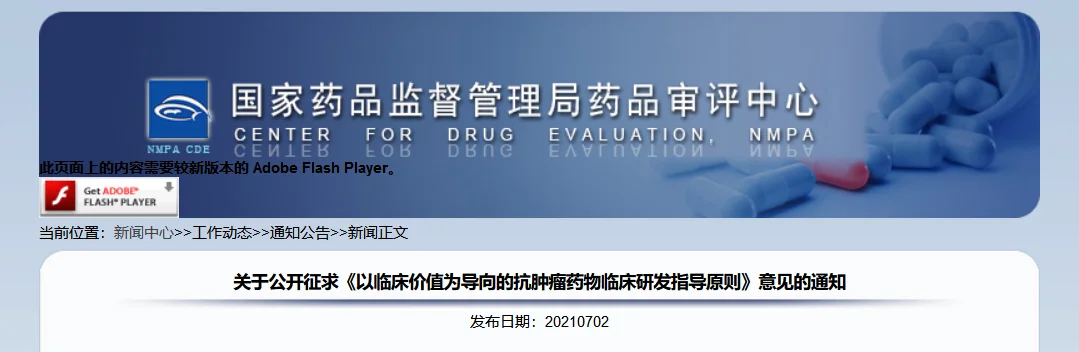
On July 2, 2021, the Center for Drug Evaluation (CDE) of the National Medical Products Administration (NMPA) issued the "Clinical Value-Oriented Guiding Principles for Clinical Research and Development of Antitumor Drugs (Draft for Comment)", providing relatively clear guidance across multiple stages of antitumor drug development, from project initiation to clinical development.
The "Guiding Principles" note that the fundamental purpose of bringing a drug to market is to address patients' needs. It has become a broad consensus that drug R&D should place patient needs at the core and be guided by clinical value. Antitumor drug R&D, from determining the R&D direction to conducting clinical trials, should consistently uphold the principle of putting clinical needs at the center and pursue clinical value-oriented antitumor drug R&D.
It is widely believed in the industry that the purpose of issuing these "Guiding Principles" is to further emphasize the clinical value of innovative drugs and set higher requirements for innovative capabilities in new drug R&D, aiming to reduce low-level, homogeneous "pseudo-innovation" or "imitative innovation" and actively promote genuine innovative development in the pharmaceutical industry.
Notably, regarding "selection of clinical endpoints," the "Guiding Principles" for the first time propose the application of patient-reported outcome (PRO) in cancer patients and encourage applicants to develop multiple assessment methods, such as electronic PRO data collection systems (ePRO), to reduce the burden on subjects during assessments.
A PRO is a report coming directly from the patient regarding their own health status, functional status, and treatment experience, including measurement of symptoms, health-related quality of life, and satisfaction with treatment. PROs are often used to evaluate chronic diseases, psychiatric disorders, and diseases lacking objective indicators, as well as to understand patients' overall satisfaction with treatment.
Currently, antitumor drug R&D in China is in a stage of rapid development; new therapeutic approaches have further extended the survival of cancer patients, and malignant tumors are showing a trend toward becoming chronic conditions. This has led to higher expectations among cancer patients regarding drug safety, treatment experience, and quality of life, as well as higher expectations regarding the experience of oncology subjects in clinical trials. Proceeding from the perspective of patient needs, the "Guiding Principles" put forward recommendations for the clinical R&D of antitumor drugs.
“
The "Guiding Principles" point out that applying PROs in cancer patients can provide clinically important information that cannot be obtained from adverse event reporting; it also reflects the impact of antitumor therapy on patients, capturing patient treatment experiences and clinical benefits—as well as the impact of antitumor therapy on cancer patients' quality of life—that traditional evaluation metrics (such as OS and PFS) cannot fully capture. Applicants are encouraged to use PRO tools, such as quality of life (QoL) assessments and symptom assessments, to collect data on the effects of drug therapy on symptom relief and patients' quality of life.

From this, it can be seen that the patient-centered era has arrived. As the most widely used category of clinical outcome assessment (COA), PRO / ePRO is an important way to collect clinical data, enabling assessors to obtain more authentic and reliable information from patients and allowing clinical trials to better listen to the patient's voice.
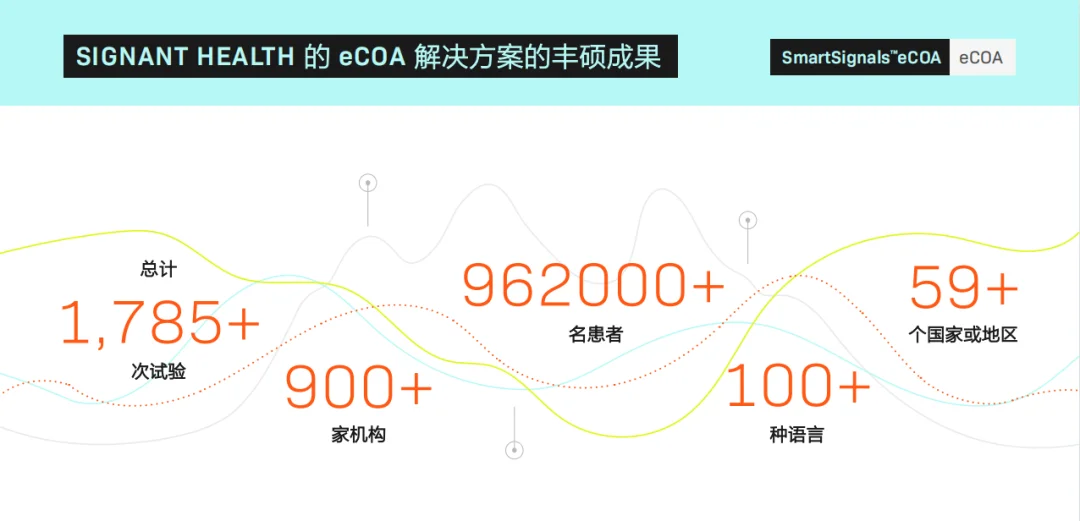
As the exclusive strategic partner in Greater China for Signant Health, a leading global evidence-generation company, EClinCloud is responsible for all marketing and operational activities for Signant eCOA in Greater China. As a global leader in eCOA and endpoint assessment, Signant maintains a strong focus on the patient experience, consistently remaining "patient-centered" and leveraging patient engagement approaches to bring convenience to patients, benefiting countless patients.
EClinCloud
Guided by its mission of "bringing effective treatments to patients through technological innovation," EClinCloud is a healthcare and life sciences technology company based in China and serving the global market. Through EClinCloud's end-to-end, seamlessly integrated unified platform (including scale management, linguistic validation, study design, eCOA, eConsent, EDC, CTMS, eTMF, and more) and precision medical evaluation systems across therapeutic areas (oncology, neurology, cardiology, pulmonology, dermatology, and others), EClinCloud is building a globally leading, "patient-centric" unified SaaS cloud platform for clinical evidence support, helping well-known domestic and international pharmaceutical companies and research institutions improve R&D efficiency, accelerate the market launch of drugs/devices, and benefit countless patients.