Five Considerations for the BYOD eCOA Model
Source: EClinCloud. Author: eClinCloud.
Click the blue text above to follow us
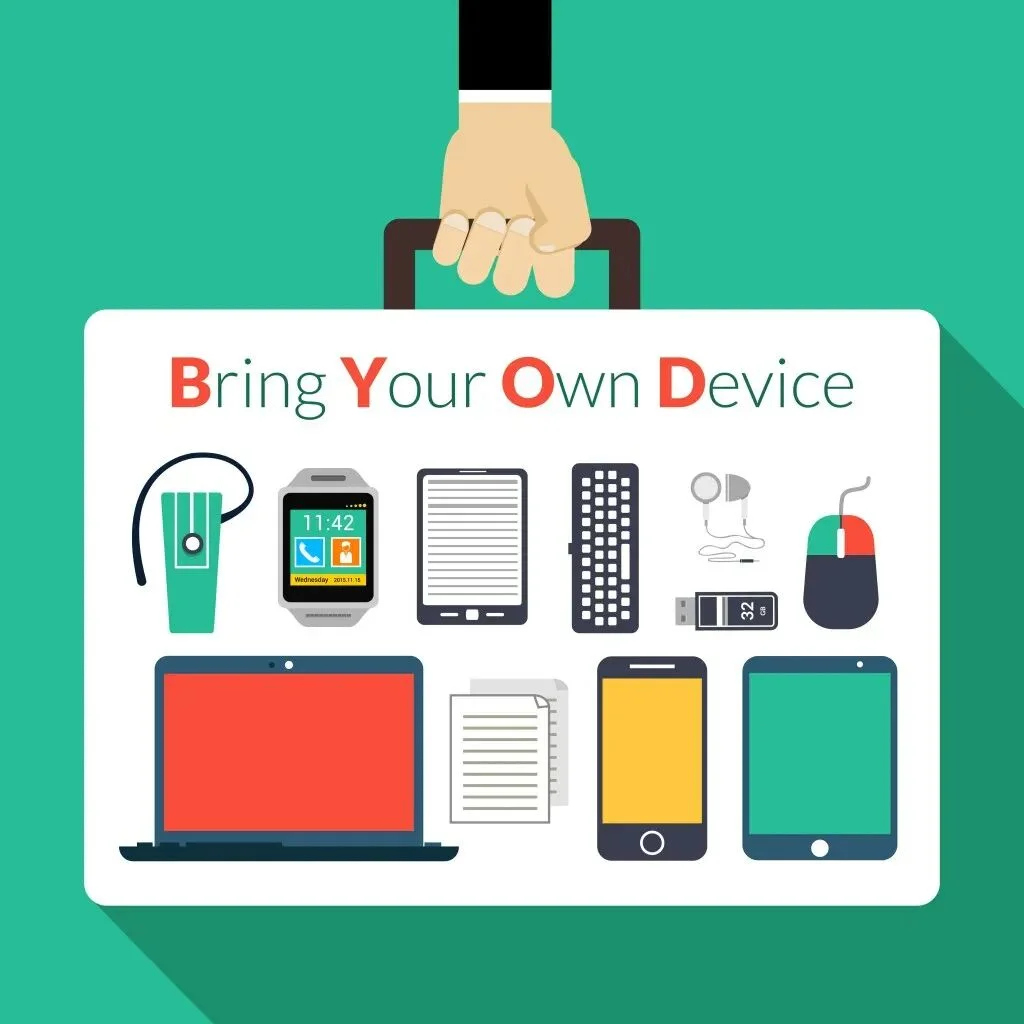
In clinical research, BYOD (Bring Your Own Device) refers to the practice of participants using their own devices (such as smartphones or tablets) to collect data. For example, clinical research participants can use their own smartphones to view and complete study-related questionnaires.
During the transition from paper to electronic media for capturing clinical outcome assessment (COA) data, study teams have traditionally provided devices to participants to collect electronic clinical outcome assessment (eCOA) data.
In recent years, to simplify trial participation, the BYOD model has been seen as an easier way for participants to complete patient-reported outcomes (PROs) in clinical trials. As sponsors and contract research organizations (CROs) also recognize the advantages of BYOD for clinical trial participation along with improved technology availability, a growing number of sponsors and CROs are interested in adopting a BYOD approach for conducting clinical trials.
Although there is no definitive answer to this question, two published BYOD studies offer some insights. Byrom et al. (2018) reported that in a study of 155 patients with chronic pain, 45% felt it would be more convenient to use their own device, whereas 15% preferred using a device provided by the trial organization (a provisioned device), and 40% had no preference. In addition, Newton et al. (2018) reported a study of 64 patients with COPD, which showed no clear device preference among patients, with 50.9% preferring BYOD and 45.6% preferring a provisioned device. In the second study, the most common reason for preferring a provisioned device was that it was "dedicated" to the study, whereas the main reason for preferring BYOD was the "convenience" of carrying a single device.
Is BYOD acceptable to patients, including those who prefer a provisioned device? In Byrom's study, 94% of patients (146 of 155 patients) indicated that they would "definitely" or "probably" download an app onto their own mobile device for an upcoming clinical trial. This level of acceptance is also reflected in the high BYOD adoption rates seen in studies supported by Signant Health—80% used BYOD, and 20% chose a device provided by the trial organization.
Completion rates between BYOD and provisioned-device users are generally very similar, though the trend appears to favor BYOD. For example, in a large BYOD study involving more than 10000 patients aged 50 to 85 years across more than 20 countries, daily diary completion rates were 85% for BYOD users and 84% for provisioned-device users.
Signant provides provisioned devices for patients in BYOD studies who do not have or are unwilling to use their own smartphones. Although this may not be a randomized comparison, it does provide useful information to help us understand completion between patients using BYOD and those using provisioned devices.
The training materials and patient setup guides Signant provides to clients can practically assist study sites implementing BYOD. After visiting a group of study sites using Signant's BYOD solution, we learned that with Signant's support, these study sites felt BYOD did not take more time than providing provisioned devices, and their teams did not perceive BYOD as adding burden. However, they noted that it is important to remind patients before their visit to confirm they can log in to their phone's app store to download the app smoothly.
This feedback has changed the conventional perception that BYOD is a more burdensome process for study sites requiring more patient support and technical troubleshooting.
Until recently, there had been no reported cases in the industry of successful drug applications using BYOD data. Understandably, this raised client concerns about whether regulatory agencies would accept BYOD data. However, this year the industry's largest BYOD study—for COVID-19 vaccine development involving more than 43000 participants—collected primary safety data through reactogenicity diaries completed by patients using the Signant platform. The vaccine received emergency use authorization from agencies worldwide, including the FDA, EMA, and MHRA.
For future studies, this is an encouraging indicator that reinforces our scientific conviction that data collected via BYOD can be just as credible and reliable as data collected using provisioned devices.
For new BYOD studies, as long as best-practice principles for ePRO design are followed, researchers are likely to rely on existing evidence without needing to conduct specific qualitative or quantitative studies. A reasonable approach, for example, is to compile a summary of supporting published evidence and provide proof that best practices were applied, such as an ePRO screening report.
The reason behind this is the growing body of evidence supporting the measurement equivalence of patient-reported outcome data collected using different modes of administration and various electronic devices. The first formal BYOD equivalence study strongly supported full measurement equivalence across more than 150 patients using different devices and instruments comprising common response scale types (verbal rating scales, numeric rating scales, and visual analog scales). This was shortly thereafter confirmed by a second study conducted by the Critical Path Institute.
Headquartered in Pennsylvania, United States, Signant has more than 2,000 employees across three continents globally.
Focused on the complex field of neurology, it has supported thousands of clinical trials worldwide for over 20 years.
It is a global leader in eCOA & endpoint assessment, with annual revenue exceeding $400 million.