
One connected platform
EDC, RTSM, eCOA, IRC, CTMS, eTMF, RM, eLearning, analytics, and supporting services in one operating model.
End-to-end AI powers clinical data management, study operations, and endpoint assessment—helping teams gain faster insights, execute more efficiently, and make better-informed decisions.

Local operating knowledge, region-ready workflows, and responsive support connect with the standards, visibility, and full-lifecycle delivery global research teams expect.
EDC, RTSM, eCOA, IRC, CTMS, eTMF, RM, eLearning, analytics, and supporting services in one operating model.
Local teams, Chinese-language workflows, site onboarding, and responsive support grounded in day-to-day study execution.
Quality and technology practices designed around ICH GCP, 21 CFR Part 11, EU Annex 11, auditability, and responsible AI governance.
Give global sponsors and CROs consistent oversight while regional teams work in tools and processes designed for local realities.
Patient-centered technology, clinical data and expert services — connected to help research teams create more reliable evidence.
Fewer silos, less duplicate entry, no manual re-keying between sponsors, sites and participants.
Unified workflows, real-time visibility and cross-team collaboration raise delivery quality and speed.
Traceable evidence, analytics and AI surface issues earlier — so judgments hold up.
Every role, every data point and every decision on the same connected foundation.

The embedded AI agent parses the protocol and drafts EDC forms and edit checks — cutting build time by 60%+, with your team reviewing before anything goes live.
Medical OCR and multimodal recognition cover 1,000+ form types at 95%+ accuracy, turning source documents into structured, checkable data.
TMF documents are classified and filed automatically; AI models scan study risk signals and suggest actions.
A 24/7 assistant answers questions, sends reminders and guides data entry across global sites in multiple languages.
Products grouped by the job they do — each one connected to the rest.
Supporting sponsor-run programs, CRO-led studies and investigator-initiated research across oncology, CNS, immunology, endocrinology, respiratory, cardiovascular and more.








Multi-language workflows, private / on-premises deployment options and cross-border training — deployed across study sites in the US, Canada, UK, Spain, Poland, Australia, New Zealand and more.
Security, privacy, validation and responsible AI governance are part of the platform — not an afterthought.
 Reconciling Local and Central Laboratory Data in Clinical Trials (2026)Trace reference ranges, units and assay changes from local and central laboratory feeds through SDTM and ADaM.
 This Thanksgiving, We Have Prepared Gifts for You to ClaimGenuine Feedback from Clients · Thanksgiving · Grateful for You · THANK YOU · Grateful to Walk Together — Gifts from EClinCloud. Click "Read More" at the end of this post to share your experience or suggestions on using EClinCloud, and we will randomly select 10 lucky users to receive a cozy blanket. Event period: From now until December 1. Scan the QR code or click "Read More" at the end of the post to participate. We will contact the winning users after the event ends; please keep an eye on your contact channels. Genuine Feedback from Clients · Thanksgiving · Grateful for You · Gifts at the End of the Post · THANK YOU 9 / 9 Inspection Support: Professional competence and a dedicated attitude provided solid support for successfully completing the inspection
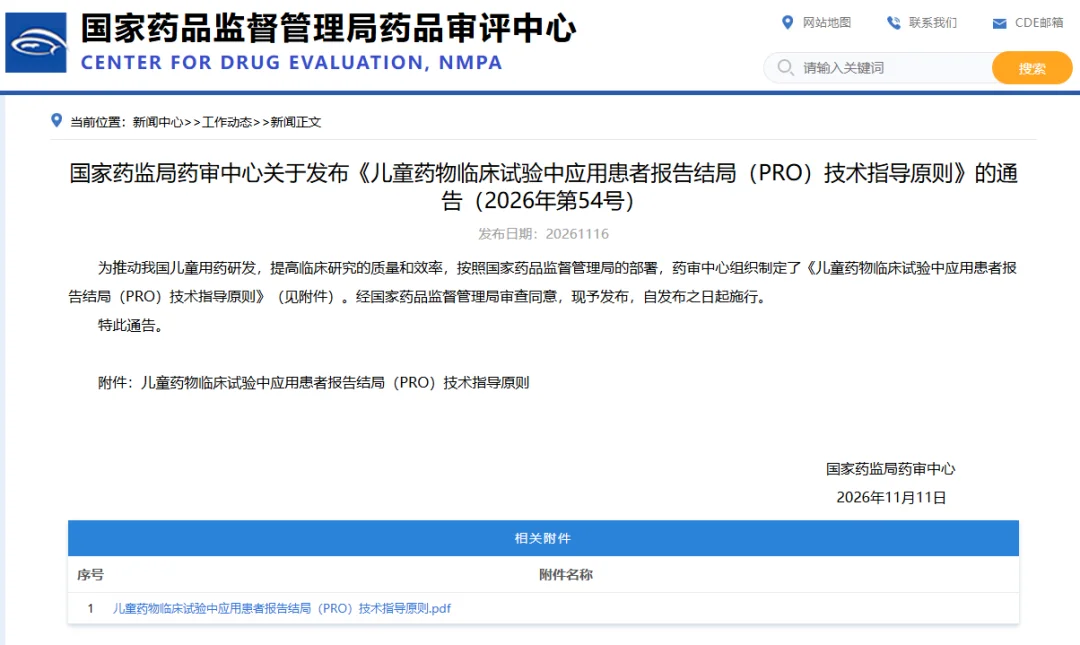 CDE Releases New PRO Guideline: What Are the Special Requirements?Pediatric new drug development spans dermatology, respiratory, immunology, neurology, rare diseases, and other areas. As more therapies enter pediatric clinical research, comprehensively evaluating treatment effects has become an area of focus in study design. In November 2026, CDE issued the "Technical Guidelines for the Application of Patient-Reported Outcomes (PRO) in Pediatric Drug Clinical Trials," providing guidance on the selection and use of PROs in pediatric drug clinical trials as a reference for study design and conduct. Click "Read Original" at the end of the article to download the document. 01 Special Considerations and Basic Principles for Pediatric PRO Use Pediatric