The Importance of Rater Training in Neurological Assessments

Source: EClinCloud. Author: EClinCloud.
In clinical applications in neurology, the measurement results of scale assessments are primarily based on the rater's subjective observation and judgment; under such circumstances, the reliability and other psychometric properties of scale assessments often fall below expected standards.
Rater training (RT) is a systematic process of instruction and evaluation on how raters assess patients, with the aim of enabling raters to assign more reliable, accurate, and consistent scores based on each patient's actual condition and improving the objectivity of scoring in clinical neurological practice[1].
In a landmark study on rater training methods, Woehr and Huffcutt classified raters[2], including:
Rater error training
Rater error training
Behavioral observation training
Performance dimension training
Frame-of-reference training
Frame-of-reference training
Familiarizing raters with the scale content prior to assessment is a form of performance dimension training. Frame-of-reference training aims to establish common standards among raters for observing and assessing patients, defines errors prone to occur in scoring under specific circumstances, and provides scoring strategies to avoid such errors.
In some cases, rater practice, discussion, and feedback are also incorporated into training to further refine the common frame of reference for the scale[2,3].
In 2007, the American Board of Psychiatry and Neurology (ABPN) announced that general psychiatry training programs must conduct Clinical Skills Verification (CSV), including observed clinical interviews and hands-on patient assessments.
To facilitate implementation of the training, the ABPN convened the Rater Training Clinical Skills Verification Working Group, composed of representative members from various specialty psychiatric organizations. The group was responsible for serving as training faculty and preparing training materials to guide raters in completing CSV certification[4].
Currently, no relevant official agencies or regulations have issued rater training requirements. However, in confirmatory drug clinical studies where a rating scale serves as the primary endpoint, during pre-trial communication with the Center for Drug Evaluation (CDE), the CDE puts forward corresponding requirements for scale scoring.
Regulatory authorities conduct stricter inspections of the scale-related components; therefore, to obtain more scientific and consistent data, it is generally recommended to organize rater training in such clinical studies.
Through standardized interview procedures and summaries of scoring rules, scale training can not only strengthen and improve consistency and accuracy across different regions, study sites, and raters, but also help ensure the validity and reliability of scoring results throughout the clinical trial.
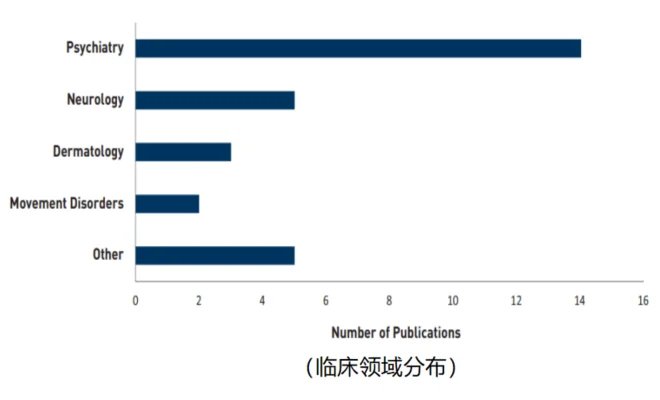
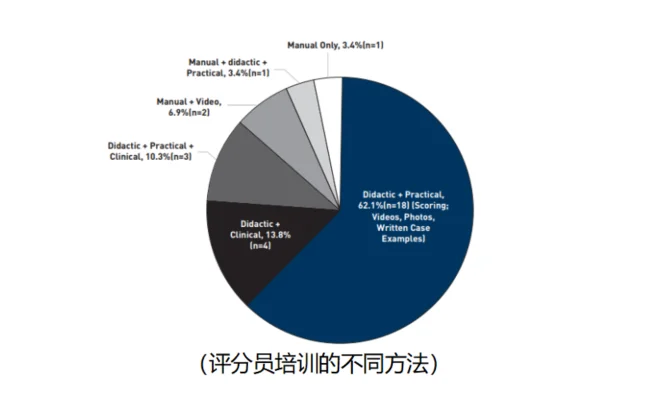
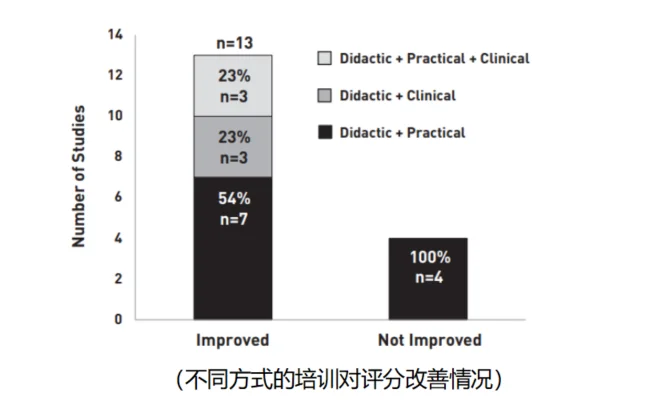
In a 2017 literature review compiled and published by Dr. Michael E. Sadler's team[5], the researchers searched selected databases for extensive keyword information related to "rater training," and after screening, conducted a statistical analysis of the fields, methods, and improvements associated with scale rater training.
Research findings indicate that rater training is a common method for minimizing inaccuracy and variability in clinical outcome assessment (COA).
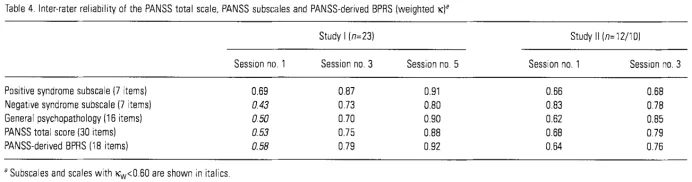
In 1998, Muller MJ and Wetzel H published a study[6] evaluating how standardized rater training improves inter-rater reliability on PANSS items and subscales, confirming the importance of rater training. The study enrolled 23 psychiatrists who had not previously used the PANSS (Study I) and 12 experienced psychiatrists (Study II). Study I received training using 5 videos over one week, whereas Study II received training using 3 videos in one day, and their assessments were analyzed and compared.
The findings indicated that rating consistency was positively correlated with participation in the training course, demonstrating satisfactory inter-rater reliability.
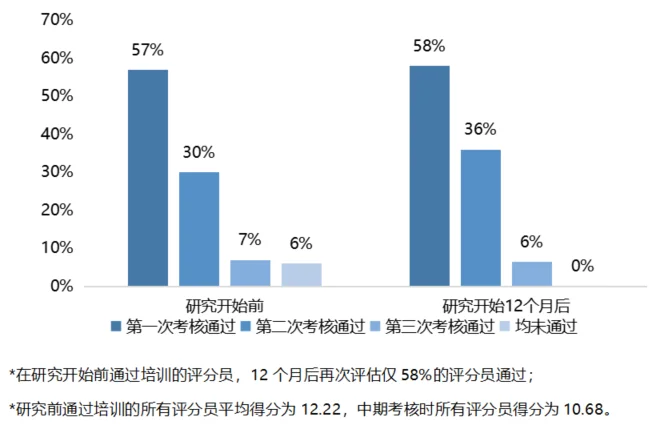
Dr. Kenneth A. Kobak and colleagues conducted a study[7] enrolling 31 physicians with diverse educational backgrounds from 15 regions. They received didactic and applied training and testing prior to the trial, and all raters were reassessed mid-trial (after 12 months); raters who did not pass could be re-evaluated after receiving feedback from a trainer.
The findings showed that rater training can successfully improve raters' applied clinical skills, but these skills gradually decline over the course of a trial; therefore, in addition to training conducted before study start, long-term training and testing are needed.
EClinCloud has extensive project experience in clinical research studies and not only maintains a large scale library, but also provides sponsors and CROs with integrated scale services, rater training, and eCOA design, backed by an experienced expert team delivering comprehensive, high-quality services for trial projects to help clients address clinical outcome assessment (COA)-related issues faster and more effectively.
References
References
[1] Wanzel KR, Ward M, Reznick RK. Teaching the surgical craft: From selection to certification. Curr Probl Surg. 2002 Jun;39(6):573-659. doi: 10.1067/mog.2002.123481. PMID: 12037512.
[2] Woehr D J, Huffcutt A I. Rater training for performance appraisal: A quantitative review[J]. Journal of Occupational and Organizational Psychology, 2011, 67(3):189-205.
[3] Feldman M, Lazzara EH, Vanderbilt AA, DiazGranados D. Rater training to support high-stakes simulation-based assessments. J Contin Educ Health Prof. 2012 Fall;32(4):279-86. doi: 10.1002/chp.21156. PMID: 23280532; PMCID: PMC3646087.
[4] Jibson MD, Broquet KE, Anzia JM, Beresin EV, Hunt JI, Kaye D, Rao NR, Rostain AL, Sexson SB, Summers RF; ABPN Task Force on Clinical Skills Verification Rater Training. Clinical skills verification in general psychiatry: recommendations of the ABPN Task Force on Rater Training. Acad Psychiatry. 2012 Sep 1;36(5):363-8. doi: 10.1176/appi.ap.10040061. PMID: 22983466.
[5] Sadler ME, Yamamoto RT, Khurana L, Dallabrida SM. The impact of rater training on clinical outcomes assessment data: a literature review. Int J Clin Trials. 2017;4(3):xxx-xx.
[6] Muller MJ, Wetzel H. Improvement of inter-rater reliability of PANSS items and subscales by a standardized rater training. Acta Psychiatr Scand. 1998;98: 135-139.
[7]Kenneth A. Kobak, Joshua Lipsitz, Janet B.W. Williams et. Are the Effects of Rater Training Sustainable? Results From a Multicenter Clinical Trial. Journal of Clinical Psychopharmacology. 2007;27(5):534-535.
EClinCloud is a technology company focused on clinical research and development, providing an integrated, interoperable all-in-one clinical trial cloud platform (including technology products such as eCOA, CTMS, eTMF, EDC, and RTSM and solutions such as scale management, linguistic validation, rater training, and data quality analysis) as well as clinical trial endpoint assessment technologies across therapeutic areas (including oncology, the central nervous system, and ophthalmology). By combining frontier technology with life-science data, it builds a globally leading "patient-centric" clinical evidence support SaaS cloud platform to help domestic and international pharmaceutical companies and research institutions improve R&D efficiency, accelerate the market launch of drugs and medical devices, and benefit countless patients.