Latest Updates on COVID-19 Drug Development and Approvals
Source: EClinCloud. Author: EClinCloud.
Since cases of pneumonia of unknown cause were first reported in Wuhan in December 2019, the COVID-19 pandemic has been with us for 3 full years. As SARS-CoV-2 has continued to mutate and the proportion of asymptomatic infections and mild cases has increased, national policy has gradually shifted from the earlier "zero-COVID" approach to easing restrictions and gradually opening up, alongside a series of supporting measures.
★
★
Following the initial wave of the virus, most people around us have gradually moved past testing positive and begun to recover. Recently, the national medical insurance drug negotiations—often dubbed "masterclass price cuts"—have once again captured public attention, and "whether COVID-19 drugs will be included in national medical insurance" has become a shared focus of concern. The negotiations conducted by the National Healthcare Security Administration, which concluded on January 8, resulted in successful agreements for Azvudine tablets and Qingfei Paidu granules out of the 3 drugs that entered negotiations, whereas Pfizer's nirmatrelvir tablets/ritonavir tablets (co-packaged) (Paxlovid) did not succeed due to its high price quote.
Since the onset of the pandemic, global COVID-19 drug R&D has been intense, and with recent domestic policy adjustments, competition in the domestic COVID-19 drug pipeline has also become increasingly fierce. Let us take a look at the latest developments.
Drug-Related Developments
The sudden emergence and high transmissibility of SARS-CoV-2 caused it to spread rapidly worldwide. Confronted with an unknown virus, countries swiftly launched emergency measures; the World Health Organization (hereinafter "WHO") coordinated countries to share viral information and encouraged institutions to urgently invest in drug R&D, while the National Medical Products Administration (NMPA) provided strong policy support across all stages of the approval process for COVID-19 drugs.
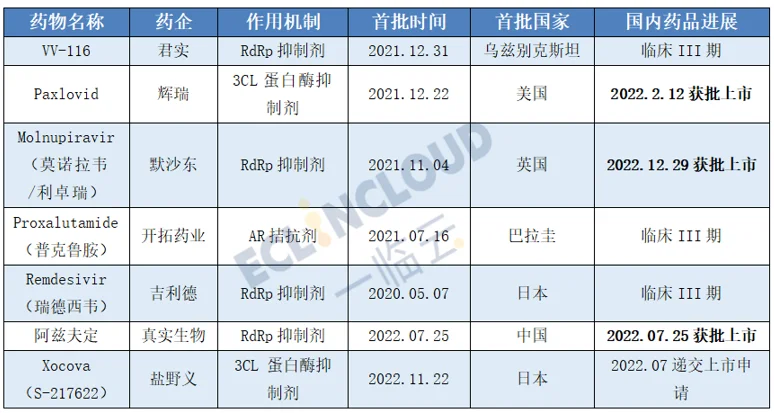
Below is information on COVID-19 therapeutic drugs approved globally (as of December 1, 2022):
Domestically Approved Drugs

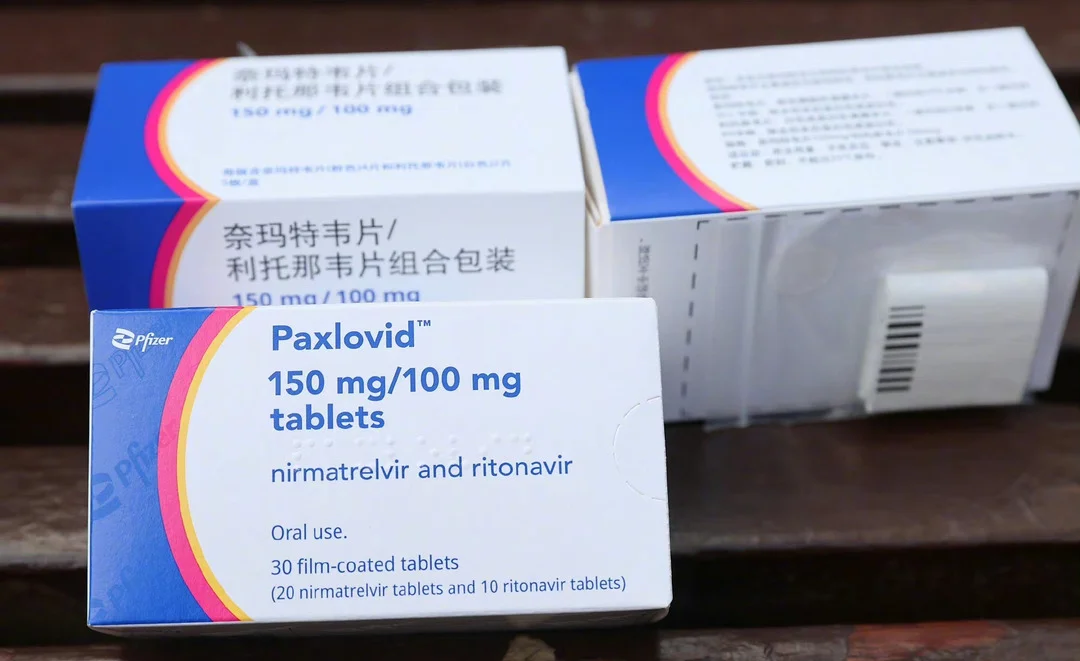
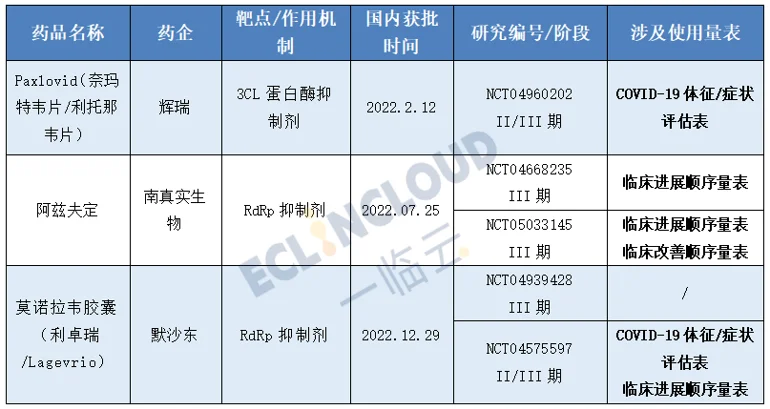
In February 2022, under the Special Drug Approval Procedure, the National Medical Products Administration (NMPA) granted conditional import registration approval to Pfizer's COVID-19 therapeutic drug nirmatrelvir tablets/ritonavir tablets (co-packaged) (Paxlovid), making it the first drug approved for a COVID-19 indication in China.
This approval came less than two months after Paxlovid received Emergency Use Authorization (EUA) from the U.S. Food and Drug Administration (FDA), enabling the COVID-19 drug to enter clinical use as early as possible at a pace unprecedented in the past.
To date, a total of 3 drugs listed below have been approved for marketing in China for a COVID-19 indication, and we have also compiled information on the scales used in their trials in the table below:
Domestic Drugs in Development
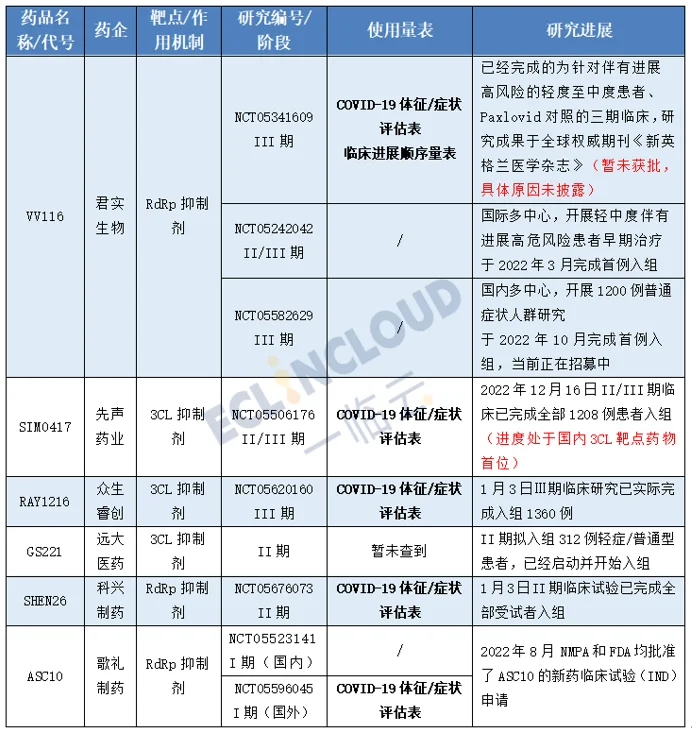
With the current surge in infections—particularly among older adults with underlying conditions or compromised immunity and children, who face higher infection risks and more severe symptoms—the demand for specific COVID-19 therapeutics has grown increasingly strong.
Accordingly, regulatory filings for COVID-19 programs by domestic pharmaceutical companies are also underway in full swing, and the COVID-19 drug market is set to see intense competition.
Below are publicly disclosed research updates from selected pharmaceutical companies:
Recommended Scale Selection in COVID-19 Trials
1
WHO Policy
To address the rapidly evolving COVID-19 pandemic, the "WHO R&D Blueprint novel Coronavirus COVID-19 Therapeutic Trial Synopsis" published by the WHO in February 2020 referenced the Ordinal Scale for Clinical Improvement.
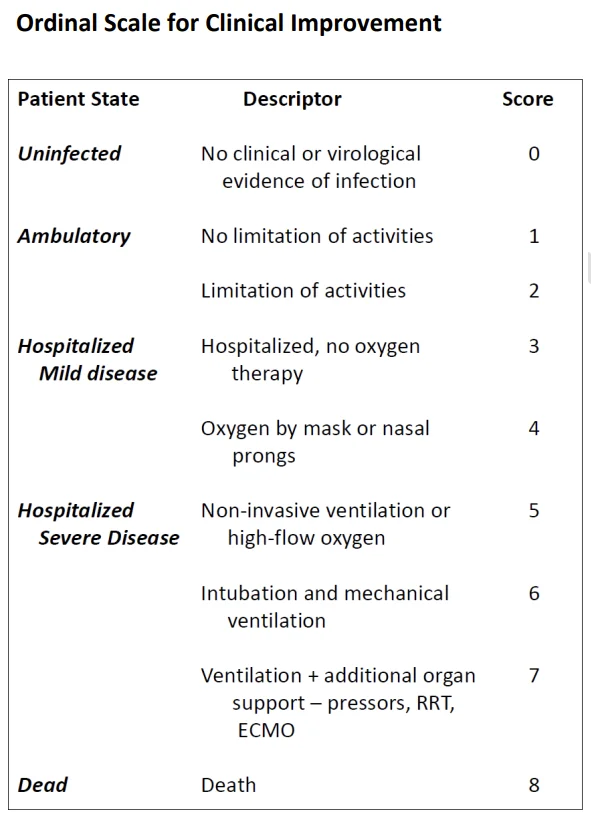
(Link to the full guideline is provided at the end of the article)
In June 2020, the WHO, in collaboration with multiple international organizations, published the outcome measures in "A minimal common outcome measure set for COVID-19 clinical research", which referenced the Clinical Progression Ordinal Scale.
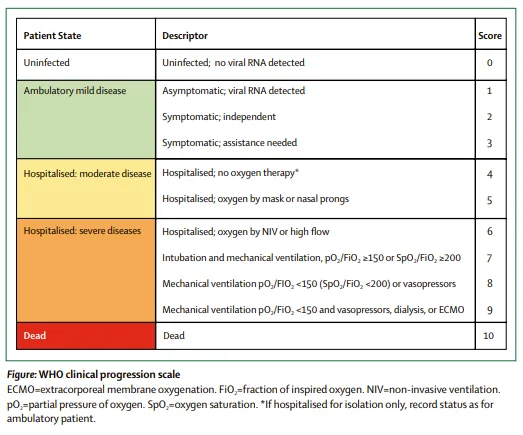
(Link to the full guideline is provided at the end of the article)
These two scales have been highly significant in establishing evaluation criteria for subsequent clinical trials.
2
FDA Policy
In September 2020, the FDA issued the COVID-19 drug clinical trial design guidance "Assessing COVID-19-Related Symptoms in Outpatient Adult and Adolescent Subjects in Clinical Trials of Drugs and Biological Products for COVID-19 Prevention or Treatment", which mentions recommending the use of the PRO tool COVID-19-Related Symptoms (COVID-19 signs/symptoms assessment form) for clinical trial reporting and specifies in detail the assessment requirements and scoring details for using the scale in trials.
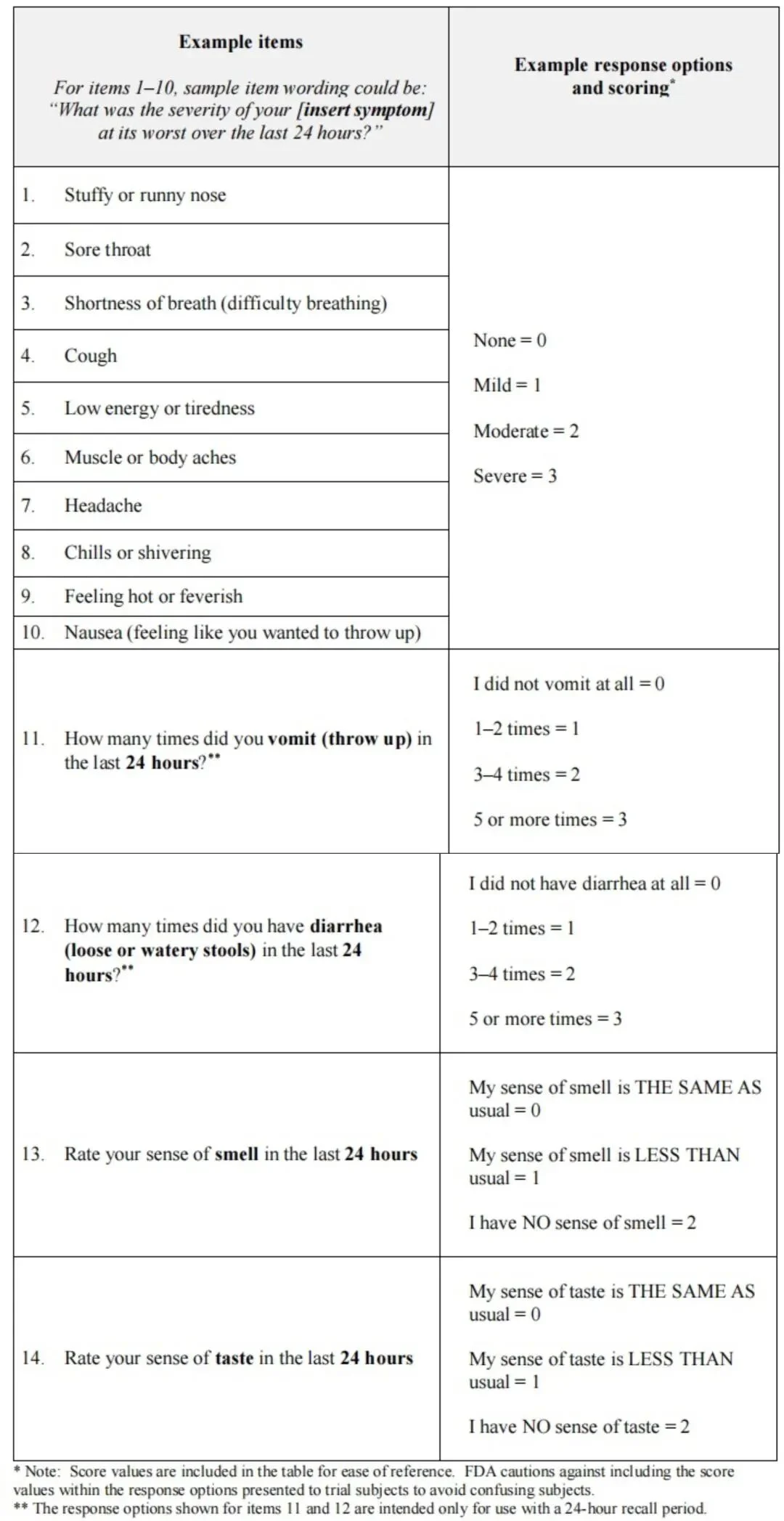
(A link to the full guidance is attached at the end of this article)
3
NMPA Policy
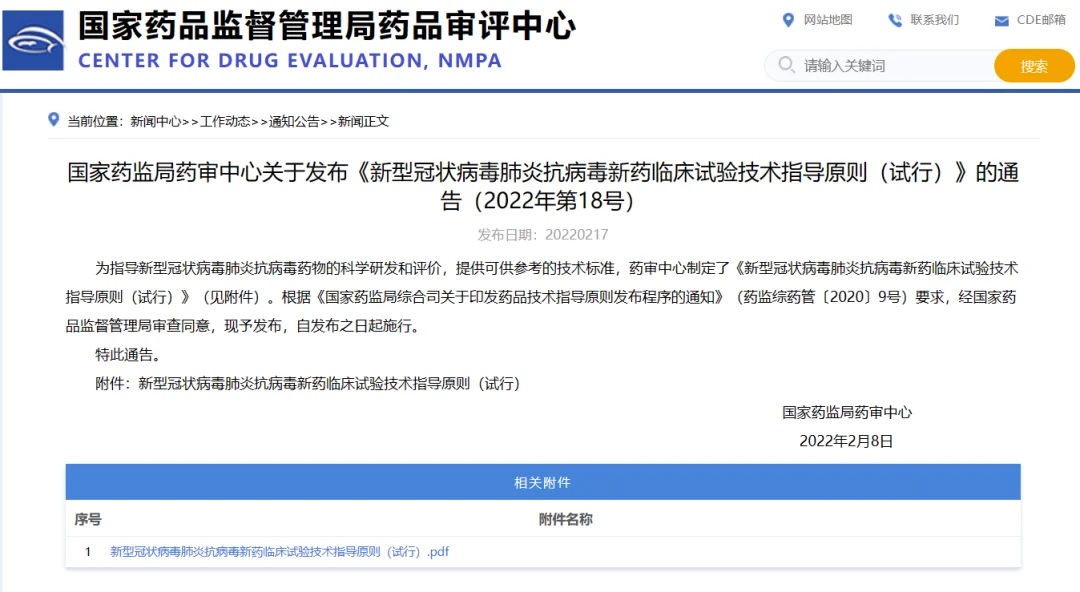
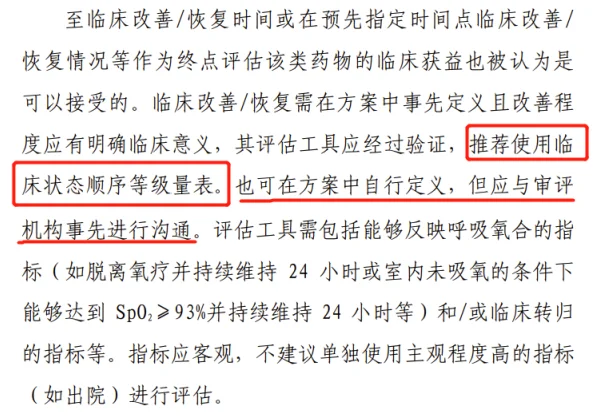
In January 2022, the Center for Drug Evaluation (CDE) of the National Medical Products Administration (NMPA) issued the "Technical Guidelines for Clinical Trials of New Antiviral Drugs for COVID-19 (Trial)", providing guidance and recommendations on clinical protocol endpoints, clinical significance, and assessment methods. It notes: "The assessment tool should be validated, and the Ordinal Scale for Clinical Status (i.e., the WHO Clinical Progression Scale or Ordinal Scale for Clinical Improvement) is recommended. It may also be defined in the protocol, provided that prior communication is conducted with the review agency."
While compiling this information, we found that nearly all of the trials mentioned in the article used scales as endpoints to evaluate the clinical benefit of these drugs. Based on EClinCloud's COVID-19 project experience, using eCOA offers the following major advantages:
Avoids excessive patient contact, effectively reducing the risk of infection for the investigator team and healthcare staff;
Paper-based materials also carry a risk of viral transmission; electronic data collection not only reduces transmission routes but also reduces disinfection needs, supporting cost reduction and efficiency gains;
Because study enrollment is rapid and timelines are demanding, eCOA enables timely data collection, facilitates data analysis, and improves trial efficiency.
EClinCloud has extensive project experience in clinical research eCOA studies, with both a vast scale library and an experienced team of experts providing sponsors and CROs with one-stop scale services. We can help clients resolve scale-related issues in clinical trials faster and better, deliver comprehensive, high-quality services, and hope to continue supporting sponsors in the R&D of COVID-19 drugs.

References
[1] "Notice on Further Optimizing and Implementing COVID-19 Prevention and Control Measures"
http://www.gov.cn/xinwen/2022-12/07/content_5730443.htm
[2] "Notice on Optimizing Medical Security Policies for Treatment Expenses of Patients with Novel Coronavirus Infection Following the Implementation of 'Class B Management'"
http://www.gov.cn/zhengce/zhengceku/2023-01/07/content_5735430.htm
[3] "WHO R&D Blueprint novel Coronavirus COVID-19 Therapeutic Trial Synopsis"
https://www.who.int/docs/default-source/blue-print/covid-19-therapeutic-trial-synopsis.pdf
[4] "A minimal common outcome measure set for COVID-19 clinical research"
https://www.who.int/docs/default-source/documents/emergencies/minimalcoreoutcomemeasure.pdf
[5] "Assessing COVID-19-Related Symptoms in Outpatient Adult and Adolescent Subjects in Clinical Trials of Drugs and Biological Products for COVID-19 Prevention or Treatment" https://www.fda.gov/media/142143/download
[6] "Technical Guidelines for Clinical Trials of New Antiviral Drugs for COVID-19 (Trial)" https://www.cde.org.cn/main/news/viewInfoCommon/2145939b5256cc7a210c2c7830598da2
EClinCloud is a technology company focused on clinical R&D. It provides an integrated, interoperable, all-in-one clinical trial cloud platform (comprising technology products such as CTMS, eTMF, EDC, RTSM, eCOA, and eConsent and solutions such as scale management, linguistic validation, rater training, and data quality analysis) as well as clinical trial endpoint assessment technologies across therapeutic areas (including oncology, central nervous system, ophthalmology, and others). Combining frontier technology with life data to build a globally leading "patient-centric" SaaS cloud platform for clinical evidence support, EClinCloud helps domestic and international pharmaceutical companies and research institutions improve R&D efficiency, accelerate bringing drugs and devices to market, and benefit countless patients.