Presentation Recap | Data-Driven Enablement: New Practices in Patient-Centered Risk Prevention and Control
Recently,
at the DIA RBQM Symposium, Dr. Qin Long, Founder & CEO of EClinCloud, was invited to deliver a keynote speech titled "Data-Driven RBQM: How eCOA + EDC Enhances Patient-Centered Risk Prevention and Control," sharing how cutting-edge technology reshapes clinical trial risk management models and offering profound insights to the industry.
Data-Driven
RBQM Trends
With the continued evolution of the global regulatory environment and the growing complexity of clinical research, risk-based quality management
(RBQM) has officially entered a new data-driven phase.
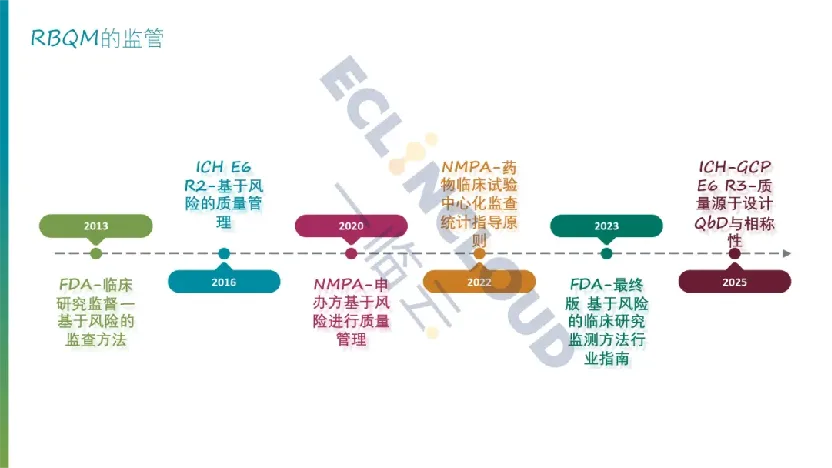
From the FDA issuing "A Risk-Based Approach to Monitoring of Clinical Investigations" in 2013, to ICH E6(R2) establishing a risk-based quality management framework in 2016;
in 2020, NMPA clarified that sponsors need to conduct risk-based quality management, and in 2022 it issued the "Statistical Guidelines for Centralized Monitoring of Drug Clinical Trials";
in 2023, the FDA released the final "Guidance for Industry: A Risk-Based Approach to Monitoring of Clinical Investigations," through to ICH GCP E6(R3) emphasizing quality by design (QbD) and proportionality in 2025,
regulatory requirements have continued to be refined and deepened.
The data-driven
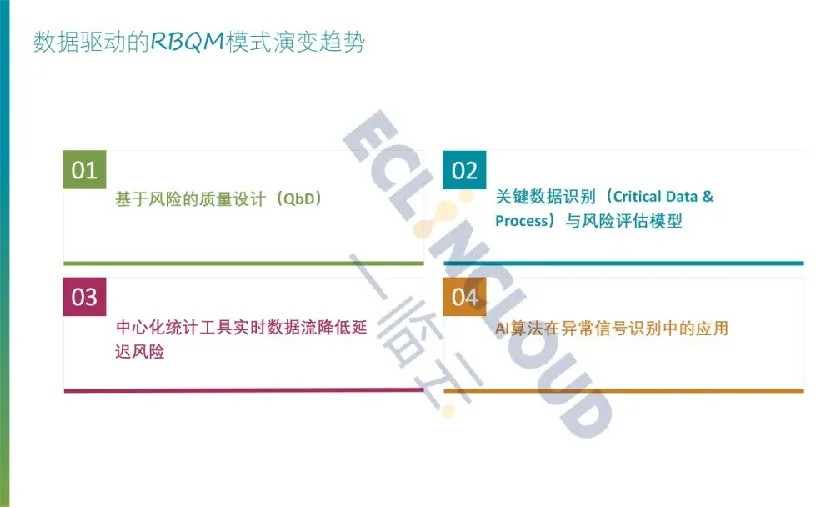
RBQM model continues to evolve:
The design integrates the risk-based Quality by Design (QbD) concept, incorporates critical data identification and risk assessment models, monitors data streams in real time using centralized statistical tools to reduce delay risks, and accurately identifies anomalous signals through AI algorithms. Combined with eCOA and EDC, it strengthens patient-centered risk prevention and control, improves the quality and efficiency of clinical research, and moves the industry toward greater intelligence and precision.
eCOA + EDC: Dual-System Synergy to Build a Strong Barrier for Project Risk Prevention and Control
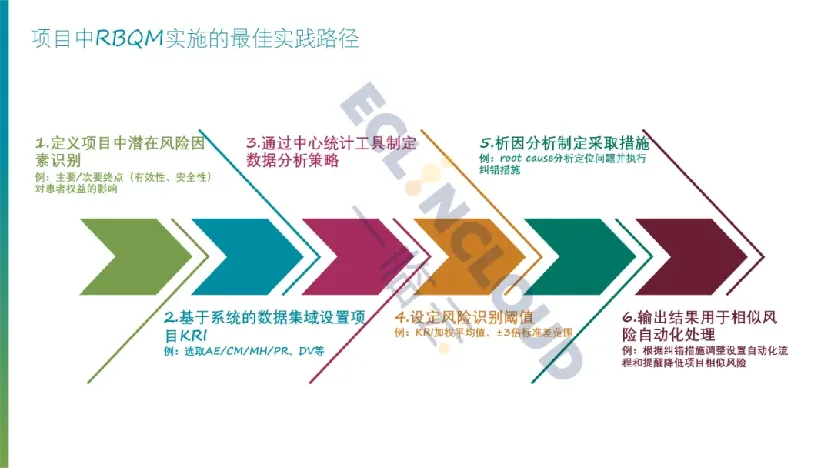
In practice, EClinCloud connects the eCOA and EDC systems to achieve standardized, real-time processing of trial participant data, and uses a centralized platform for visual data review, key indicator tracking, and trend alerts.
The synergistic value of eCOA and EDC technologies is reflected in:
Patient compliance management:
Through real-time synchronization of patient-reported data (such as medication logs) via eCOA, combined with structured EDC data, abnormal trends (such as low completion rates or compliance discrepancies) are automatically detected, triggering targeted training or data cleaning;
Protocol violation prevention and control:
Visual charts (such as heatmaps and Sankey diagrams) provide multidimensional analysis of study sites and trial participants with high-frequency PD (protocol deviations) to optimize trial processes;
Safety data insights:
AI-driven risk prediction models can rapidly identify adverse event (AE) grade anomalies, assisting medical teams in intervening early.
This presentation not only outlined
a clear path for implementing RBQM, but also demonstrated the significant potential of digital tools within a patient-centered research paradigm. Looking ahead, EClinCloud will continue to advance the deep integration of technology and compliance, bringing greater intelligent and systematic momentum to clinical research quality management.