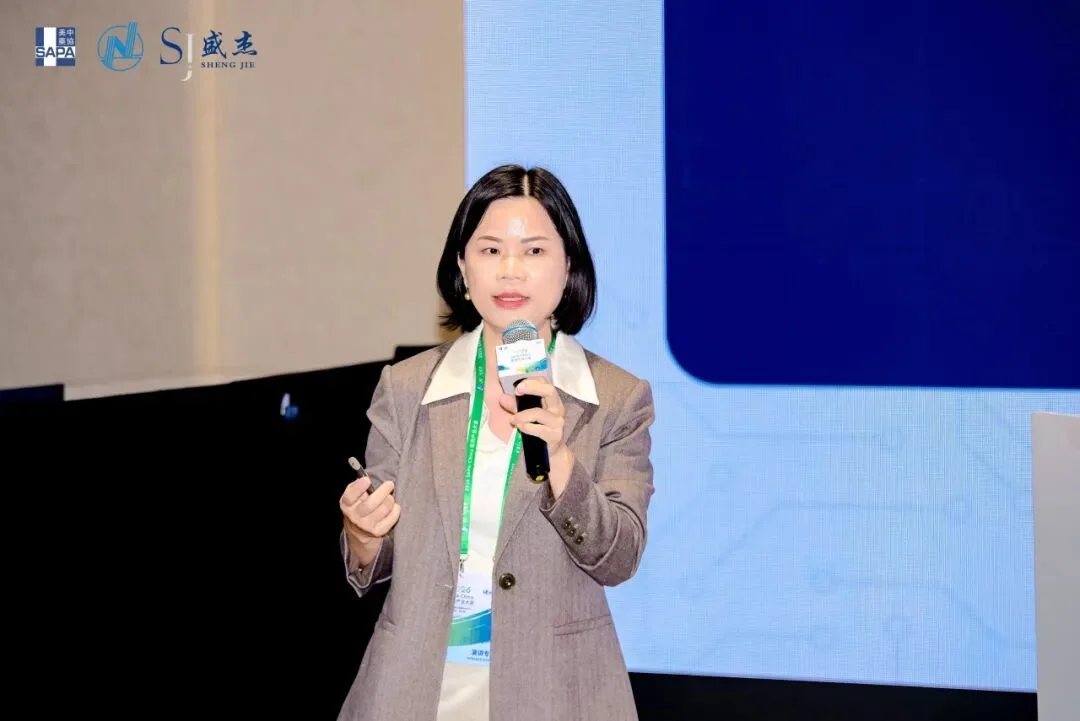
Keynote Speech by EClinCloud CEO Dr. Qin Long: What Is "Digital Breakthrough" and How to "Rise with the Cloud"?

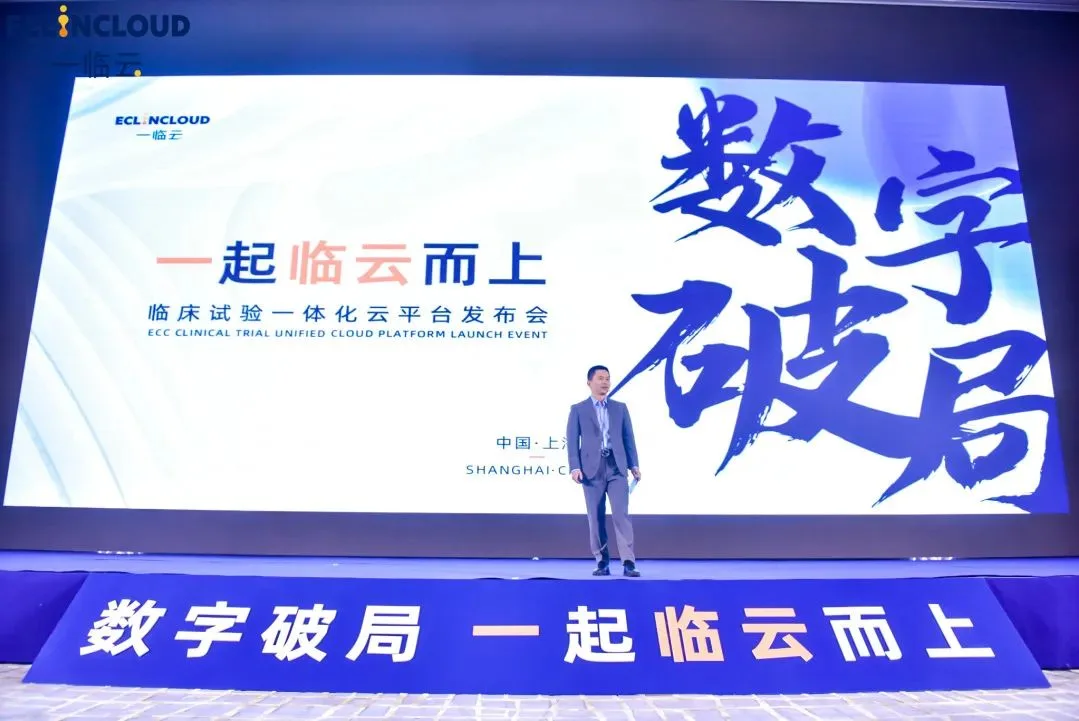
"Applying technological innovation to help more patients receive better treatment is our lifelong mission."
— EClinCloud CEO Dr. Qin Long
How Difficult Is It to Conduct Clinical Research?
The number of clinical studies worldwide is growing rapidly, with China's growth rate ranking among the highest in the world. The severe current pandemic situation has also created new demands for drug and medical device R&D, such as vaccines capable of countering the continually mutating novel coronavirus and drugs that can improve patient survival and quality of life.
However, during the clinical phase of pharmaceutical and medical device R&D, we still face many challenges, such as long development timelines, high costs, and low success rates. In addition, pandemic-related restrictions on travel and medical visits weigh like a heavy boulder on physicians, clinical research professionals, and patients.
Tracing these challenges in clinical research back to their root causes, what current industry conditions are driving them?
l Patient Enrollment
According to a research report, approximately 48% of study sites fail to meet their trial participant recruitment targets. On one hand, this is due to limited clinical research staffing resources; on the other hand, it stems from information asymmetry between physicians and patients caused by the tiered healthcare delivery model.
l Protocol Compliance
In today's clinical studies, protocols are more detailed and comprehensive and durations are longer, placing higher demands on follow-up for trial participants. Many current practical factors, such as the pandemic, can make participant follow-up extremely difficult and lead to participant dropout; at the same time, excessive workloads or insufficient training among research personnel can also lead to protocol deviations.
l Data Quality
Because clinical study protocols are complex and place high demands on data collection and statistical analysis, while digital and IT tools are currently lacking, low data quality is a widespread problem in clinical research at this stage. Following the 2015 "722 Incident," as of the end of 6/2017, applicants had voluntarily withdrawn as many as 1316 registration applications, accounting for 64.7% of all registration applications.
l R&D Efficiency
Drug R&D is costly and inefficient. Over the 10-year period from 2010 to 2020, figures for Investigational New Drug (IND) clinical trial approvals and New Drug Applications (NDA) both saw rapid growth. However, the "duration of the clinical trial phase" increased rather than decreased, lengthening from an average of 2572 days to 2688 days.
l Information Silos
Clinical research is a complex, systematic undertaking that requires a considerable number of systems over the course of a project. Over the years, many steps have gradually been digitized through software systems. However, most of these systems are fragmented, forming isolated information silos. In practice, teams frequently have to transcribe and verify data across systems. This work is time-consuming and labor-intensive, and makes it difficult to ensure data quality.
l Global Expansion of Innovative Drugs
As China's innovation capabilities improve, a growing number of sponsors are developing truly first-in-class new drugs, and good medicines need to be able to meet the needs of patients worldwide. In addition, the demand for overseas expansion of medical devices and in vitro diagnostics (IVD) is also growing day by day. Today, however, domestic pharmaceutical companies expanding overseas face issues such as a lack of cross-border experience, limited choices of digital and IT tools, and substantial regulatory differences across countries, all of which place higher demands on clinical research processes and data quality.
In summary, the industry has put forward new requirements for clinical research: we should adopt a patient-centric approach and build a system that connects sponsors, CROs, research institutions, and trial participants, thereby reducing patient burden, improving trial participant compliance, ensuring the conduct of clinical trials, and enabling sponsors to manage trial progress in a timely manner, control risks, and improve efficiency.
Keeping "Patient-Centricity" in Mind
On 11/19/2021, the CDE issued the "Guidelines for Clinical Value-Oriented Clinical Development of Antitumor Drugs," which advocates that new drug research and development should be "patient-centric," reducing patient burden in various ways, focusing on patients' physical and psychological benefits while demonstrating efficacy, and encouraging the use of electronic methods to collect patient-reported outcomes. On 12/27/2021, the CDE issued the "Guidelines for the Application of Patient-Reported Outcomes in Drug Clinical Research," which also encourages the use of ePRO (electronic patient-reported outcome) data to support drug review decisions. Evidently, whether from a regulatory perspective or in terms of industry needs, "patient-centricity" is receiving increasing attention.
In clinical studies conducted in China today, more than 95% still collect trial participant data on paper, including scales assessing primary efficacy and quality of life, records of adverse events and concomitant medications, and so on. Issues such as omitted entries, entries not completed per protocol requirements, and logic errors can occur, which is where digital enablement is needed. Digital solutions can remind patients to complete scales, train and supervise scale users, and automatically check for logic errors, reducing patient burden during data collection, improving compliance, and thereby achieving better data quality.
How is digital enablement achieved?
To address current challenges in clinical research, EClinCloud has launched an integrated clinical trial cloud platform that, built on a unified underlying architecture and a SaaS cloud foundation, enables data interoperability across systems. In addition, EClinCloud embeds the concept of precise medical evaluation throughout its entire product line design, targeting current R&D pain points in China with targeted measures to help sponsors obtain accurate clinical results more compliantly and more efficiently.
What systems does the integrated cloud platform include?
The EClinCloud CTMS clinical trial project management system helps sponsors and CROs execute efficient project management.
l Flexible adaptation to company workflows
The system is open and extensible, and workflows can be customized according to company SOPs.
l One-click application of industry best-practice templates
Includes built-in industry best-practice templates that can be applied with one click.
l End-to-end project management and risk control
Built-in functional modules covering the entire project management process, including milestone tracking, pre-startup preparation follow-up, and post-startup trial participant enrollment management.
l Rapid deployment
Rapidly deployed based on the sponsor's or CRO's SOPs, saving 30% of the time compared with the industry average.
EClinCloud eTMF Electronic Trial Master File Management System: Timely, compliant, secure, and effective collection and management of trial documents.
l TMF system setup consulting
EClinCloud has a complete set of TMF document templates, can build a high-quality TMF system, and provides global TMF compliance consulting.
l Meets regulatory requirements across countries worldwide
EClinCloud has an international team and can meet the regulatory standards of different countries and regions.
l Automated file naming and intelligent filing
Ensures the uniqueness and consistency of uploaded files. Tracks file completeness in real time and watches for missing documents.
l Interoperability between documents and the CTMS data system
Displays green-light documents for each milestone, making it easy for project management personnel to quickly grasp overall trial information and quality.
EClinCloud eCOA Electronic Clinical Outcome Assessment System: Collects data simply, accurately, and immediately from patients, physicians, guardians, and devices.
l COA: comprehensive services
EClinCloud provides services including identification and due diligence, copyright acquisition, and linguistic validation. The system includes built-in standard electronic scales across multiple therapeutic areas that have been verified by copyright holders, accelerating study startup. In addition, it supports rater training and certification and monitors patients' physical condition through smart devices to ensure that the collected data are more objective.
l Centered on precision medical evaluation by therapeutic area
EClinCloud eCOA can flexibly build an eCOA system tailored to each disease area based on the characteristics of different disease areas and how their scales are used.
l Patient-centric, connecting sponsors and research institutions
COA, especially PRO (patient-reported outcomes), can reflect how patients feel and is an important component of a patient-centric drug development model. The EClinCloud eCOA system can automatically remind patients to take their medication and complete diary cards, improving patient compliance. Patients no longer need to keep paper diary cards and can complete and retain reports using a mobile phone.
l International-standard products and delivery capabilities
EClinCloud refines its products and services to international standards and has established an exclusive strategic partnership in Greater China with the well-known global clinical informatics company Signant Health.
EClinCloud EDC electronic data capture system: a stable, reliable, simple, and easy-to-use data capture system.
l Rapid study build with zero programming
Users can use the EDC system without any computer or programming background.
l Interoperability with other platform applications
EDC interconnects with RTSM and CTMS. The RTSM and EDC systems implement standard data integration, allowing RTSM randomization information and EDC trial participant information to be transferred between them. Trial participant information in EDC is automatically synchronized to the RTSM system, while randomization information in the RTSM system is also synchronized to the EDC system. EDC can also share trial participant information, visit status information, and other data with CTMS in real time.
EClinCloud RTSM Randomization and Trial Supply Management System: a stable, reliable, and simple management system.
l Optimization algorithms reduce drug waste
Clarify drug usage at each study site and patient medication usage.
l End-to-end tracking of drugs or devices
Track the shipment and distribution of drugs and devices to achieve full traceability of drugs and devices.
l Interconnectivity with EDC
EClinCloud Resource Management (RM) System: A management system that helps CROs effectively improve efficiency.
l Resource optimization
Based on organizational structure and business processes, workforce input and output are systematically quantified to establish well-structured human resource plans and management standards. Multidimensional data analysis helps managers gain a comprehensive view of target execution and workforce input-to-output ratios.
l Contract management
Contracts are managed across their full lifecycle, and contract schedules are generated based on different business models.
l Timesheet management
Records actual hours spent by project members on project and non-project work and calculates project labor costs, giving clear visibility into each person's input and output.
These 6 systems are interconnected. EClinCloud can integrate data across systems to provide interconnected, unified platform services that maximize data value, reduce the substantial workload associated with data collection and tracking in project management, and reduce wide disparities in project management caused by differences in personnel capabilities.
Why Choose EClinCloud?
Global Perspective
The EClinCloud team has a global perspective and serves domestic enterprises to international standards. At the same time, all EClinCloud documentation can meet the regulatory requirements of the U.S. FDA and European regulatory systems, and to better support domestic pharmaceutical companies expanding overseas, EClinCloud has established product and service teams in the United States.
Grounded in Medicine and Science
EClinCloud focuses on providing more reliable clinical endpoint assessment solutions. Compared with traditional technology companies, EClinCloud has built a strong, experienced medical and scientific team that deeply understands industry pain points and uses technological innovation to deliver more reliable clinical endpoint assessment solutions, comprehensively ensuring the accuracy and authenticity of trial data. Our professional medical team supports system development, aligns with client needs from a medical perspective, and carries out project management. We also have extensive expert resources to provide scale due diligence, purchasing, and training services, support client consultations, and deliver outcome assessment solutions.
Unified Platform
From its underlying product architecture, the EClinCloud unified platform was designed for interoperability across internal systems and even with external systems, resolving the information silo challenges currently facing many enterprises, improving R&D efficiency, reducing R&D costs, and delivering significant value to clients.
Transforming Clinical Research Through Digitalization
EClinCloud remains steadfast in transforming research through digitalization, establishing partnerships with strategic industry CRO partners to lay the foundation for intelligent remote clinical research.
About EClinCloud
EClinCloud provides an integrated, all-in-one cloud platform (including solutions such as CTMS, eTMF, EDC, RTSM, and eCOA, as well as consulting services such as scale management, linguistic validation, rater training, study build and configuration, and data quality analysis) and clinical trial endpoint assessment technologies across therapeutic areas (including oncology, neurology, cardiology, pulmonology, dermatology, and others), combining cutting-edge technology with life data to build a globally leading, "patient-centric" SaaS cloud platform for clinical evidence support—helping domestic and international pharmaceutical companies and research institutions improve R&D efficiency, accelerate the market launch of drugs/devices, and benefit countless patients.