Hand Tremors After Coffee: Could You Be at Risk for Parkinson's Disease Like Zhang Zetian?
Recently, Zhang Zetian attended
the 2024 Breakthrough Prize Ceremony and trended online after revealing her family history: "My family also has a Parkinson's gene. When I consume too much caffeine or don't get enough sleep, my thumb already starts to tremble a bit."
Crucially, Zhang Zetian is only
31 years old this year. Once the news broke, many people felt quite alarmed—after all, working people practically rely on coffee to keep going!
So, does having this kind of symptom really count as Parkinson's disease?
What Exactly Is Parkinson's Disease
Parkinson's disease
(PD) is a common neurodegenerative disease[1] that affects multiple regions of the brain. Based on age at onset, it is classified into late-onset (onset after age 50, accounting for 90%–95%) and early-onset (onset before age 50, accounting for 5%–10%). Currently, there is no cure for the disease; patients can be treated and managed through measures such as medication, surgery, rehabilitation, and psychological interventions.
"Characterized prominently by clinical manifestations of motor symptoms—tremor, rigidity, bradykinesia, and postural instability—and non-motor symptoms such as sleep disorders, olfactory dysfunction, autonomic dysfunction, and cognitive and psychiatric disorders."
The typical initial symptom in patients with Parkinson's disease is limb tremor, which most often begins in the distal portion of one upper limb and gradually spreads to the ipsilateral upper and lower limbs, with rhythmic finger tremors producing the so-called
"pill-rolling movement."
Hand tremor symptoms in Parkinson's disease often have the following
4 characteristics: appearing at rest,
worsening during emotional excitement or tension
,
lessening during activity
, and
disappearing during sleep
.
However: hand tremor
≠ Parkinson's disease.
Various physical symptoms of discomfort can occur in daily life, one of which is hand tremor. Mental stress, excessive caffeine intake, overexertion, orthostatic hypotension, and similar factors can, under specific circumstances, cause physiological tremor in one or both hands; if the symptoms disappear once the trigger is removed, the cause is physiological and there is no need for undue concern. However, if pathological tremor in both hands is caused by a disease—such as Parkinson's disease, essential tremor, hyperthyroidism, or hepatolenticular degeneration—that affects the normal function of the nervous system, prompt medical attention and treatment are needed.
Commonly Used Scales for Assessing Parkinson's Disease
Parkinson's disease has two typical clinical features—motor status and non-motor symptoms—and,
even after receiving effective treatment, patients with PD may develop phenomena such as dyskinesia. Therefore, when assessing the condition in clinical practice, it is necessary to incorporate objective scale assessments to assist physicians in making better judgments, diagnoses, and treatment decisions.
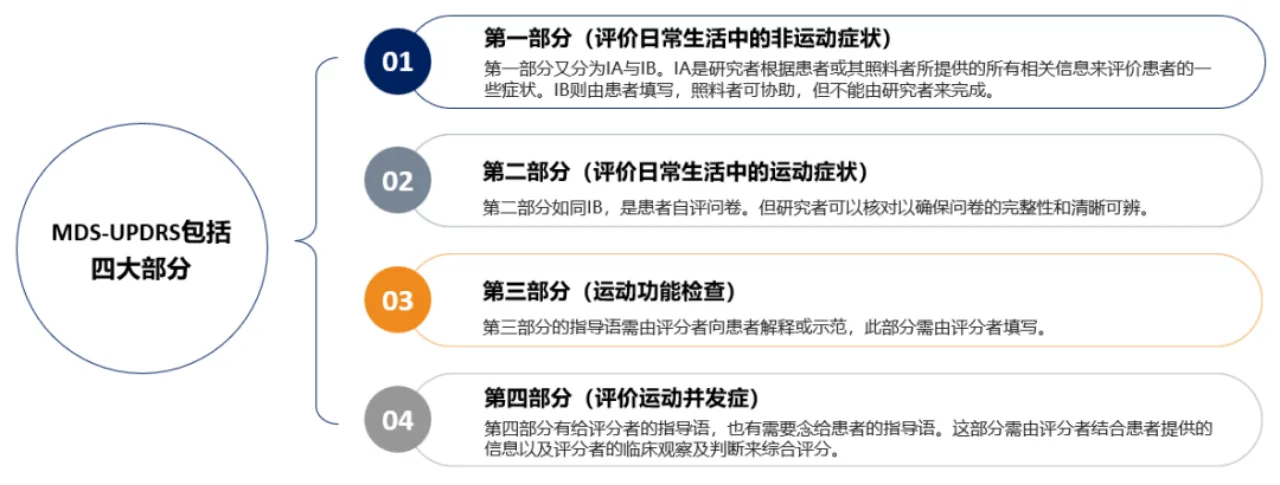
In 1987, Dr. Stanley Fahn created the UPDRS scale to assess the severity of Parkinson's disease symptoms and signs. In 2008, initiated on the recommendation of the Parkinson's disease rating scale task force and sponsored by the Movement Disorder Society (MDS), it was revised as the MDS-UPDRS. Currently, this scale is an internationally recognized rating scale for Parkinson's symptoms.
How to Improve Scale Assessment
The MDS-UPDRS assessment method is relatively complex, requiring assessments collected from the investigator, guardian, and patient, and the scale is relatively specialized, making the questions and reporting content difficult for patients to understand. Points to note during scale assessment:
Different raters may apply a certain degree of subjective judgment when scoring the scale
Inconsistent understanding of scale questions among different individuals, leading to bias in scoring results and affecting trial outcomes
Using different prompts or phrasing for the questions on each scale, misleading patients
Leading language or questions may be used during rating, causing biased results
......
As this shows, rater training is very important in neurological assessments: it not only strengthens and improves consistency and accuracy across different study sites and raters, but also helps ensure the validity and reliability of rating results throughout the clinical trial.
EClinCloud Rater Training
EClinCloud has extensive project experience in the central nervous system (CNS) field, including scale copyright management, rater training, and
end-to-end eCOA system services.
EClinCloud rater training not only provides expert-pool resources—allowing domain experts to be invited to participate throughout the project based on its indication—but also develops protocol-tailored training materials so that assessments better align with the trial follow-up workflow. In addition, different testing methods can be assigned according to the characteristics of each scale assessment, improving overall training effectiveness and precision.
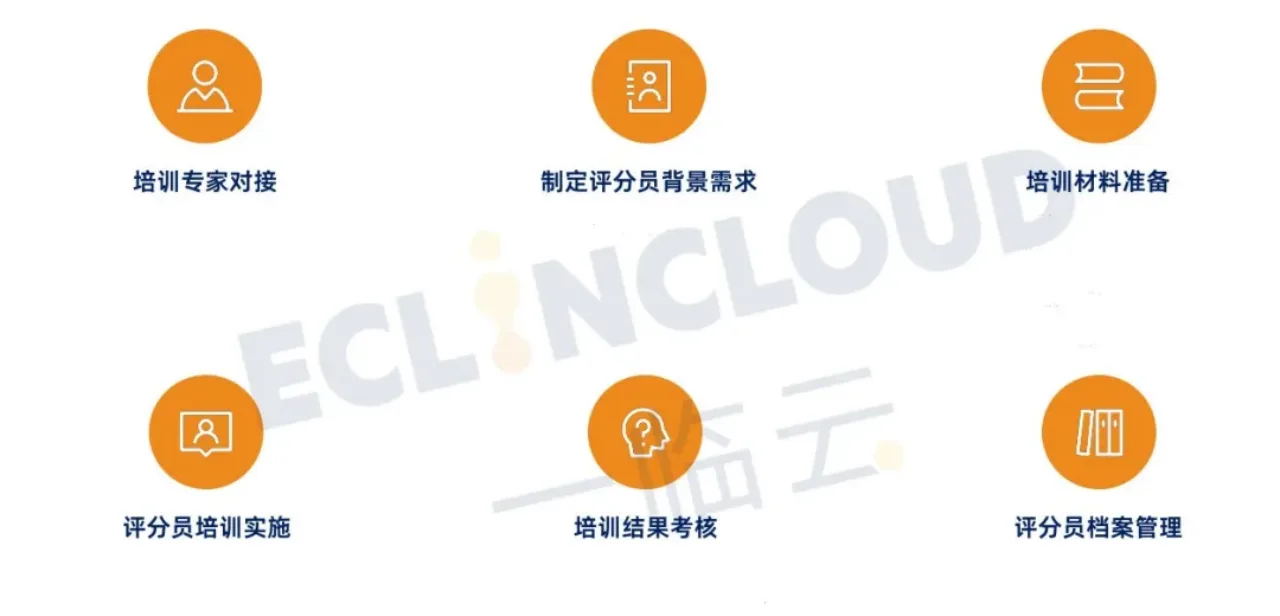
The EClinCloud
eLearning system empowers rater training by enabling role-based management for administrators, reviewers, and raters with distinct functional permissions configured for each role. This can greatly improve the training experience, bring real-time efficiency to training and testing, and make it easy for raters to review materials repeatedly to improve their assessment proficiency.
EClinCloud also has considerable experience with Parkinson's disease projects—we welcome your inquiries!
One final reminder: although hand tremors from drinking coffee
≠ Parkinson's disease, surveys in recent years indicate a trend toward earlier onset of Parkinson's disease as well. Remember not to neglect your health, no matter how busy you are.
References:
[1]
Parkinson's Disease and Movement Disorders Group, Chinese Society of Neurology, Chinese Medical Association
, Parkinson's Disease and Movement Disorders Group, Neurologist Branch of the Chinese Medical Doctor Association. Chinese Guidelines for the Treatment of Parkinson's Disease (4th Edition). Chinese Journal of Neurology, 2020, 53(12): 973-986. DOI:
10.3760/cma.j.cn113694-20200331-00233.