CDE's Step-by-Step Guide to Conducting Patient-Centered Clinical Research

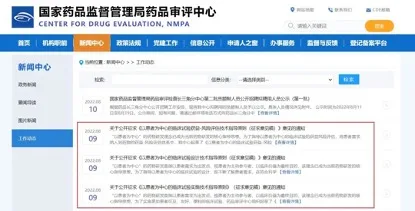
On 8/9, the CDE issued 3 draft guidelines for comment in succession:
"Technical Guidelines for Patient-Centered Clinical Trial Implementation (Draft for Comment)"
"Technical Guidelines for Patient-Centered Clinical Trial Design (Draft for Comment)"
"Technical Guidelines for Patient-Centered Clinical Trial Benefit-Risk Assessment (Draft for Comment)"
"Patient-centered" drug development refers to taking patient needs as the starting point, viewing patients as active participants, and aiming for clinical value as the ultimate goal; this concept has become the core guiding philosophy in current drug development.
As participants in drug clinical trials and recipients of medical care, patients have firsthand experience of their disease condition and treatment and can provide valuable information for drug development that aligns more closely with the expectations of the patient population.
Regulatory authorities worldwide, including the International Council for Harmonisation (ICH) and the U.S. Food and Drug Administration (FDA), are exploring how to adopt "patient-centeredness" as a core guiding philosophy and incorporate patients' experiences, perspectives, and needs into the design, conduct, and benefit-risk assessment of drug clinical trials. At the same time, China is also actively advancing patient-centered clinical drug development and has successively issued multiple guidelines aimed at clarifying how to integrate patients across the entire lifecycle of clinical research. The 3 guidelines issued by the CDE provide detailed guidance on how to design and conduct patient-centered studies and how to assess the risks and benefits of studies in a patient-centered manner.
"Technical Guidelines for Patient-Centered Clinical Trial Design"
"The design of patient-centered clinical trials should continuously seek to understand patient needs, incorporate meaningful patient experience data into the consideration of clinical trial design elements in accordance with scientific principles, and give full attention to trial participants' feelings."
"Patient-centered efficacy evaluation should not focus solely on improvements in survival duration or objective indicators brought by the investigational drug, but should also pay attention to benefits in patients' physical and mental well-being, functional status, and survival status. Efficacy evaluation methods based on clinical outcome assessment (COA) can be used to collect patient experience data in clinical trials."
The guideline not only emphasizes the importance of patient experience in clinical trial design, but also notes that COA is an effective tool for measuring patient experience, and provides a detailed description of the use of COA, including whether to use COA-based assessment data as the primary endpoint, how to select an appropriate COA to evaluate patients, using COA to evaluate the safety and tolerability of investigational drugs, and giving examples of the use of COA in certain indications. This fully reflects the CDE's positive attitude toward using COA for evaluating efficacy in clinical studies.
"Technical Guidelines for Benefit-Risk Assessment in Patient-Centered Clinical Trials"
"Benefit-risk assessment in patient-centered clinical trials incorporates patient needs into the drug's benefit-risk assessment framework."
"Reliable patient experience data can serve as one source of evidence for benefit-risk assessment, and patient experience data obtained using methodologically sound, fit-for-purpose collection tools can increase their applicability in benefit-risk assessment."
"COA-based clinical endpoints can serve as primary endpoints (single or composite) or predefined secondary endpoints for evaluating clinical benefit."
The guideline first emphasizes that patient experience data serve as important evidence for benefit-risk assessment, and advocates the use of COA-based endpoints to evaluate a drug's clinical benefit as well as its safety and tolerability. In addition, it advocates collecting other patient experience data, such as patient preference information. Therefore, in benefit-risk assessment, we must not only attach importance to COA assessment results, but also collect complex and diverse data on patients' treatment needs, convenience of medication use, adherence, and tolerance of adverse reactions.
"Technical Guidelines for the Implementation of Patient-Centered Clinical Trials"
"Patient-centered clinical trial implementation aims to improve the experience of trial participants and reduce their burden of participating in clinical trials."
"Adopt new technologies, new methods, and new models to improve trial participants' experience and reduce their burden."
"Electronic COA (eCOA) offers advantages such as the ability to capture real-time, authentic data and ease of data transcription, and can be implemented together with wearable devices or mobile electronic platforms (such as a mobile phone app) to provide convenience for trial participants."
The guidelines emphasize that digital technologies should be adopted in conducting clinical studies to reduce patient burden, note that eCOA is an effective tool for collecting patient information, and encourage converting paper COA into eCOA while ensuring reliability and validity. In addition, the CDE similarly states that mobile health (such as mobile/wearable devices) and remote monitoring (smart detection/monitoring devices) can be used to remotely collect trial participant information (including real-time vital signs, medication adherence, etc.).
In summary, the three guidelines above collectively answer 3 questions for us:
1. How should patient-centered clinical studies be conducted?
A: By collecting patient experience data, patients' feelings are incorporated into clinical study design and benefit-risk assessment considerations, and COA assessment results are incorporated into study endpoint considerations.
2. What does patient experience data include?
A: Patient experience data includes not only COA-based assessment results, but also all information provided from the patient side (though not limited to patients themselves) regarding patients' experiences, needs, views, and preferences concerning the disease and treatment.
3. How should patient experience data be collected to reduce patient burden?
A: Use electronic methods to convert paper COA into eCOA to collect subjective data while ensuring reliability and validity; appropriately use remote devices to collect objective data.
EClinCloud: Providing comprehensive "patient-centered" COA services
EClinCloud is a leading eCOA system provider in China with a professional medical team and extensive implementation experience, capable of rapid deployment and go-live while providing cost-effective, one-stop eCOA services.
EClinCloud scale management services:
Scales are currently the primary application format for COA. Committed to a patient-centric approach, EClinCloud provides one-stop scale services—covering scale due diligence, copyright acquisition, translation and validation, and usage training—to connect every stage of scale use for sponsors.
EClinCloud eCOA - Electronic Clinical Outcome Assessment System:
EClinCloud eCOA is a "patient-centric" electronic tool for clinical research that can collect detailed and accurate information from patients efficiently and conveniently through multiple modalities, including voice recordings, image capture, online interviews, electronic questionnaires, scales, electronic diaries, and wearable devices.
About EClinCloud
EClinCloud provides an integrated, unified cloud platform (including solutions such as CTMS, eTMF, EDC, RTSM, and eCOA, and consulting services such as scale management, linguistic validation, rater training, study build and configuration, and data quality analysis) as well as clinical trial endpoint assessment technologies across different therapeutic areas (including oncology, neurology, cardiology, pulmonology, dermatology, and others), combining cutting-edge technology with life data to build a globally leading, "patient-centric" clinical evidence support SaaS cloud platform that helps domestic and international pharmaceutical companies and research institutions improve R&D efficiency, accelerate the market launch of drugs/medical devices, and benefit countless patients.